


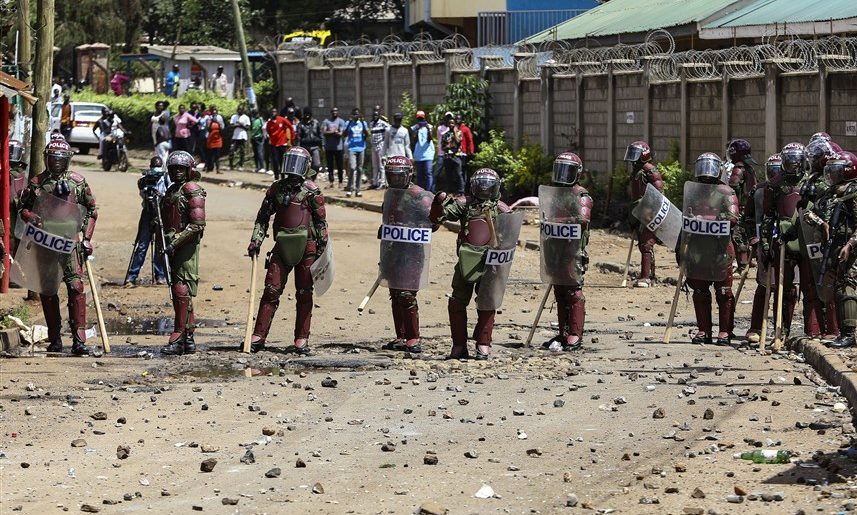
A parliamentary committee has endorsed the use of technology in policing, backing the deployment of drones and body cameras to enhance accountability as the country prepares for the 2027 General Election.
The National Assembly Departmental Committee on Administration and Internal Security urged the Independent Policing Oversight Authority (IPOA) to strengthen its oversight mechanisms, even as members raised concerns about rising violence, alleged police inaction, and gaps in adopting modern surveillance tools.
However, Teso North MP Oku Kaunya warned that while drones are effective in planned operations, they may have limited impact in spontaneous attacks.
“In cases of organised criminal activity, drones can be deployed effectively to identify what is happening. But in isolated incidents, such as goon attacks, by the time you deploy a drone, the damage has already been done,” he said.
Concerns Over Accountability and Police Response
On accountability, Homa Bay Town MP Peter Kaluma raised concerns about the compensation process for victims of police brutality, warning of possible fraudulent claims if verification is weak.
He also questioned whether increased surveillance could make officers hesitant in critical situations.
“We must balance human rights with necessary police intervention to save the state,” Kaluma said, adding that constant monitoring could risk slowing police response.
IPOA Links Policing Trends to Political Activity
Responding to the concerns, IPOA Chief Executive Officer Elema Halakhe attributed fluctuations in police conduct to political activity, noting that confrontations tend to rise during election periods.
“The reduction in incidents is largely due to reduced political activity. As we approach the campaign season, we anticipate an increase,” he said.
Halakhe acknowledged concerns over delayed police response, stating that IPOA is investigating whether this is linked to fear of accountability or command failures.
On compensation, he clarified that IPOA’s role is to provide verified data to relevant agencies, adding that a list of victims has already been submitted for consideration.
Use of Force and Election Preparedness
The discussion also addressed the use of force, with Vice-Chairperson Dido Rasso questioning how “legitimate force” is defined in a politically charged environment. IPOA said it is modelling election scenarios based on past trends to improve preparedness.
IPOA Commissioner Annette Mudola Mbogo supported the selective use of drones, noting they are most effective in planned public order situations. She also backed the adoption of body cameras, CCTV systems, and digital recording tools to improve evidence collection.
“These technologies make it more difficult to manipulate evidence,” she said, adding that uptake remains slow within the police service.
Meanwhile, IPOA officials cited cost as a key barrier, revealing that a single drone costs about Sh3 million. Deployment, they said, would be intelligence-led.
The meeting comes amid growing scrutiny of police conduct and calls for reforms to balance law enforcement with human rights protections ahead of the next election cycle.