

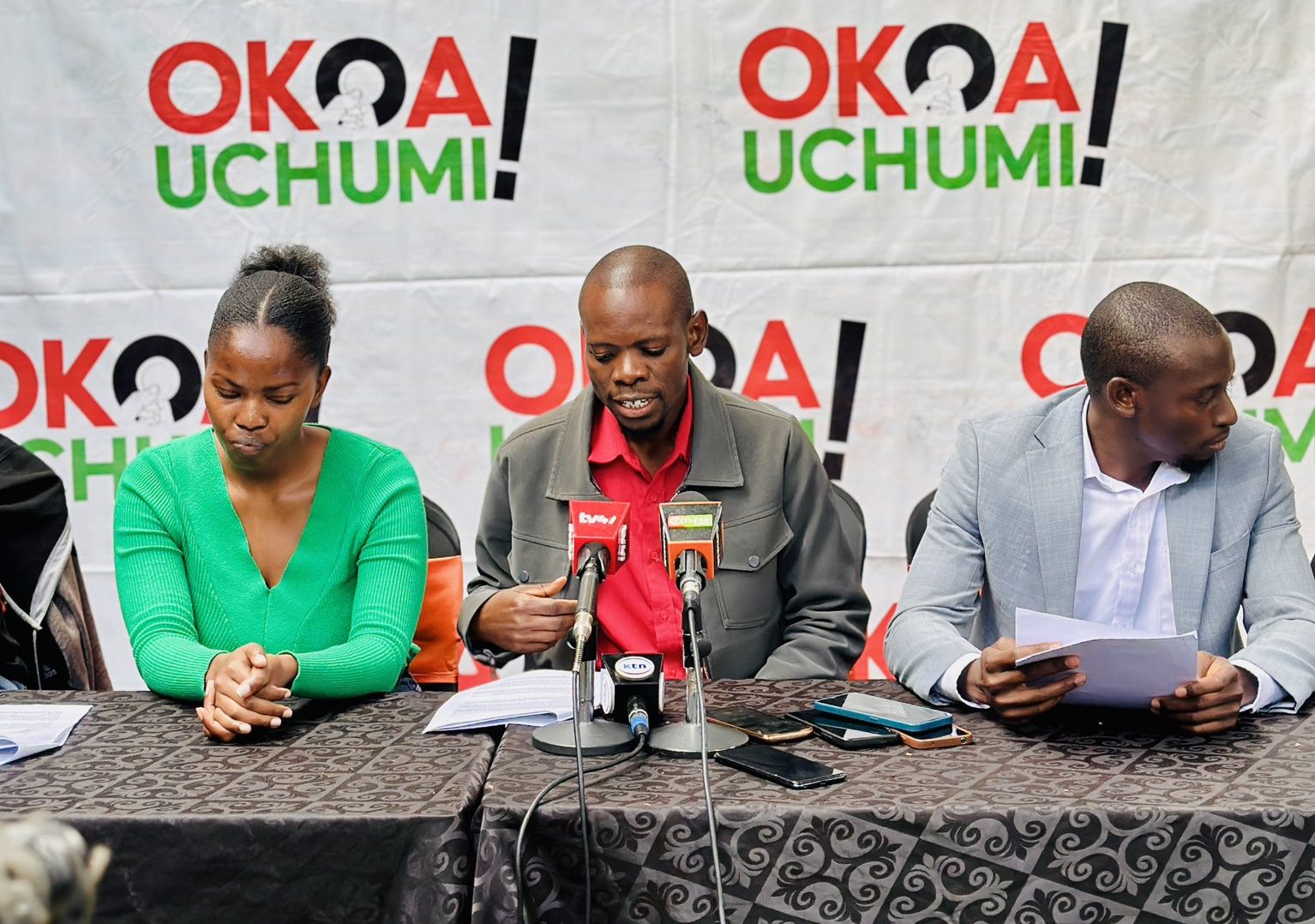
The Kenya Human Rights Commission and the Okoa Uchumi Campaign have formally written to the National Assembly seeking the public disclosure of the International Monetary Fund Governance and Corruption Diagnostic (GCD) Report for Kenya.
The petition highlights growing public concern over economic pressures, including the rising cost of living, increased taxation, and questions surrounding public resource management and debt.
Concerns Over Transparency and Public Access
According to KHRC, Kenya has been implementing economic reforms under IMF-supported programmes aimed at fiscal consolidation and macroeconomic stability. As part of this process, the government invited the IMF to conduct a Governance and Corruption Diagnostic assessment.
The assessment, conducted between March and June 2025, looked at governance issues in key areas such as public financial management, procurement processes, tax administration, state-owned companies, and anti-corruption measures.
Throughout the process, government institutions, oversight organizations, and civil society organisations, including Okoa Uchumi Campaign representatives, were consulted.
Despite being finished and handed over to the government, the report has not been made public. The petition contends that the lack of information undermines openness and restricts public engagement.
Selective Implementation Raises Questions
The petition further notes that reports indicate the government has already begun implementing recommendations from the diagnostic through internal consultations.
This amounts to selective engagement with the report while denying Parliament and the public the opportunity to scrutinise its findings.
They maintain that the report is a document of significant public interest, particularly as it addresses corruption risks, governance weaknesses, and institutional gaps affecting public resources.
Constitutional Mandate for Oversight
The petition cites several constitutional provisions, including Article 95, which mandates Parliament to oversee national revenue and expenditure, and Article 201, which emphasizes openness and accountability in public finance.
KHRC and Okoa Uchumi argue that access to the IMF report would enable Members of Parliament to better interrogate governance issues and guide reforms.
The report’s findings are expected to influence key policy decisions, including fiscal consolidation, revenue mobilisation, debt management, and the governance of state-owned enterprises.
The petition also links the issue to the National Infrastructure Fund Act, noting concerns about transparency and accountability in managing public resources outside the standard budget framework.
At a time of increased taxation, the Human Rights Commission argue that public access to the report is essential for accountability and restoring public confidence.
Key Demands to Parliament
Okoa Uchumi and the Human Rights Commission calls on the National Assembly to compel the government to table the full, unredacted report and publish it within 30 days.
Additionally, it urges that no new IMF-supported lending programme be concluded until the report is reviewed and subjected to public scrutiny.
The petition emphasizes that disclosure would align with constitutional values of transparency, accountability, and democratic participation.