


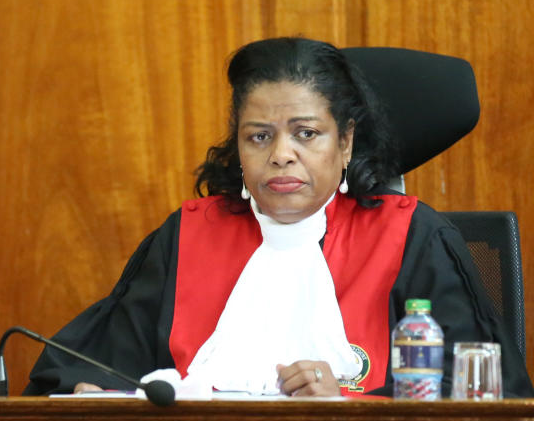
Kenya has formally launched a renewed bid for representation at the International Criminal Court (ICC) through the nomination of Lady Justice NJoki Ndungu, following what Chief Justice Martha Koome described as a deliberate, consultative, and merit-based national process.
The nomination signals Kenya’s return to the ICC judicial election cycle after the country opted not to field a candidate in 2022.
According to Koome, that decision was strategic and intended to allow more time for preparation, diplomatic engagement, and coordination between key State institutions.
Speaking during the event, Koome said the process involved close collaboration between the Ministry of Foreign and Diaspora Affairs, the Office of the President, and the Judiciary.
“We considered deferring the candidature in 2022 so that we could have sufficient time for reflection, diplomatic alignment, and preparation of a stronger and more coordinated national effort,” she said.
The Chief Justice added that Kenya believes “the time is now” to pursue renewed representation at the Hague-based court.
The nomination also builds on Kenya’s previous contribution to the ICC bench through the service of former judge Joyce Aluoch, who served at the court between 2009 and 2018. Her tenure remains one of Kenya’s most notable contributions to international justice.
Merit-Based Selection Anchored on Rome Statute
Koome said the current nomination process was initiated formally by the Attorney General following notification from the Assembly of State Parties.
The exercise was conducted in line with Article 36 of the Rome Statute and standards set by the Advisory Committee on Nominations of Judges.
Once the process was transmitted to the Judiciary, expressions of interest were invited from judges serving in Kenya’s superior courts.
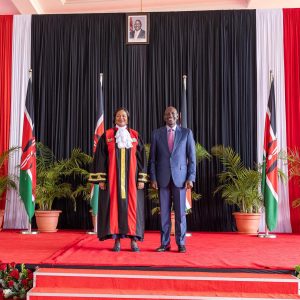
Applications were then subjected to evaluation by the Judicial Service Commission before three names were forwarded for consideration by President William Ruto.
The eventual nomination of Lady Justice Njoki Ndungu, Koome said, emerged from a highly competitive and transparent process focused on professional competence, integrity, and international legal experience.
Diplomatic Coordination Shapes Kenya’s ICC Strategy
The renewed ICC push reflects Kenya’s broader diplomatic strategy to strengthen its influence within international legal institutions.
The coordinated strategy is expected to improve Kenya’s visibility among member states ahead of the ICC judicial elections.
The move also comes at a time when African states are seeking greater representation within international justice systems.
If successful, Lady Justice NJoki Ndungu would become the second Kenyan judge to serve at the ICC, reinforcing the country’s standing in global legal and judicial affairs.
Kenya’s campaign is now expected to intensify through diplomatic engagements with Assembly of State Parties members in the months leading to the elections.