

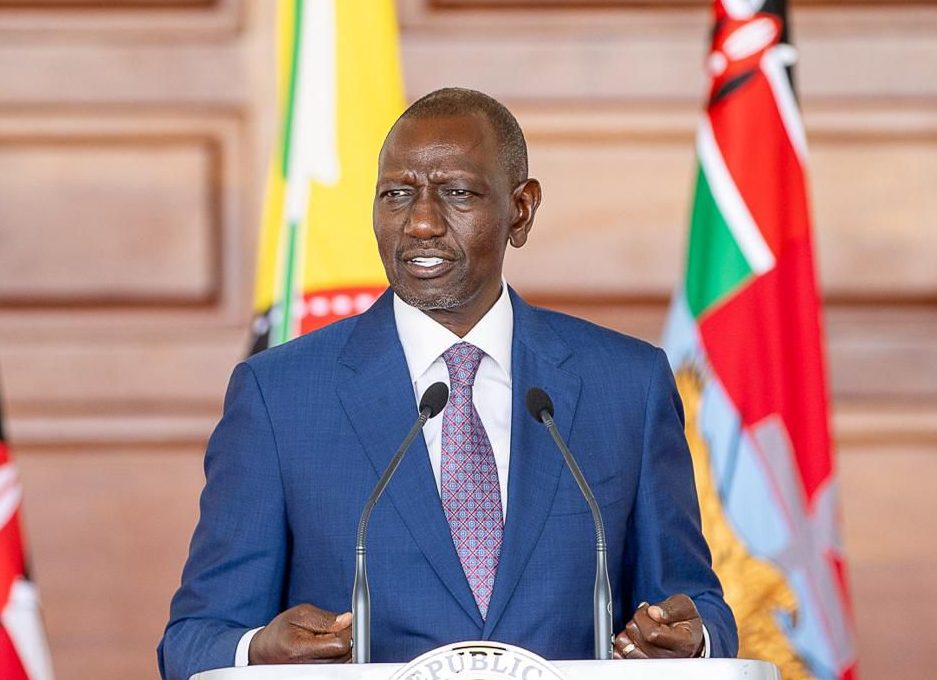
President William Ruto has called for Kenya to deliberately invest in research, science and innovation as a central pillar of national transformation, saying the country must transition from a consumption-based economy to one that produces its own knowledge and technologies.
Speaking on the role of KEMRI after awarding it a charter at State House, Ruto highlighted the global impact of leading research institutions, citing contributions in malaria, HIV, tuberculosis, maternal health and epidemic response.
He noted that institutions such as the Kenya Medical Research Institute have played a critical role in advancing scientific breakthroughs, including work linked to malaria vaccine development and evaluation used in high-burden regions.
Strengthening Kenya’s Research Institutions and Training Capacity
He stressed that Kenya must build on such foundations by strengthening its domestic scientific capacity.
“We are determined to accelerate and scale up by making KEMRI a specialized degree-awarding institution,” Ruto said, adding that the move would expand the country’s ability to train high-level scientists and researchers.
President Ruto further underscored the need to develop a new generation of biomedical scientists, epidemiologists and public health experts capable not only of responding to outbreaks but also anticipating and preventing them through advanced data, genomics and research systems.
He pointed out that the future of public health security depends on predictive science rather than reactive interventions.
According to Ruto, Kenya’s long-term competitiveness will depend on its ability to generate homegrown solutions.
“We must become producers of our own technologies, generators of our own knowledge, and a nation that adds value to what we produce, what we mine and what we grow,” he said.
He emphasized that strengthening research institutions, investing in laboratories, and supporting innovation ecosystems are not optional but strategic imperatives for national development.
The President noted that global economies that have successfully transitioned into high-income status did so by prioritizing science, research and technological advancement.
Collaboration with KEMRI and Research Ecosystems
Ruto also called for closer collaboration between government, universities, and research institutions arguing that stronger linkages would improve commercialization of research and accelerate innovation uptake in key sectors including health and agriculture.
He also urged policymakers to act decisively.
“We must deliberately, intentionally and strategically strengthen our capacity for research, science and innovation if we are to move to the next level,” he said, framing science and innovation as central to Kenya’s ambition of becoming a knowledge-driven economy.