


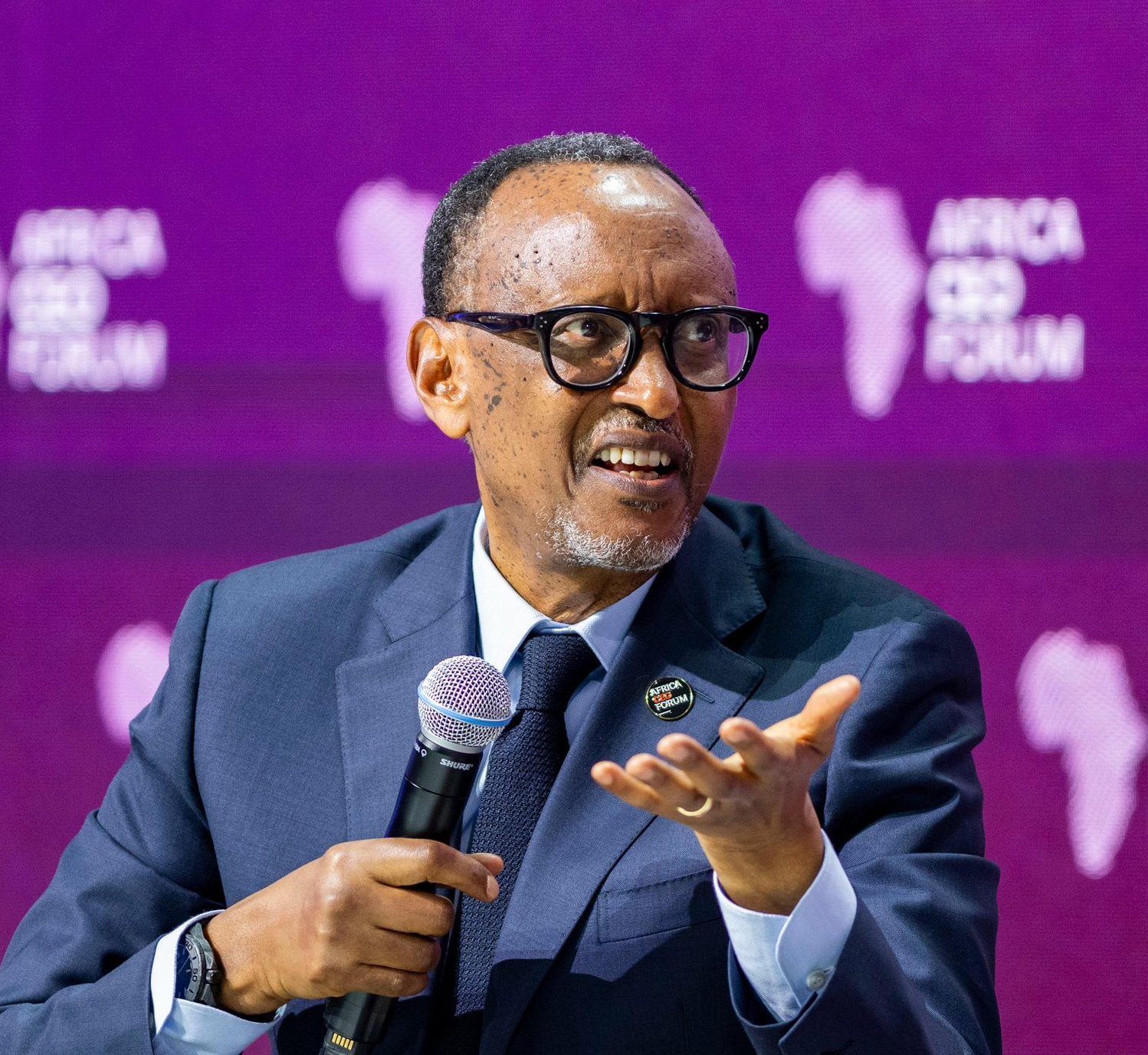
Rwandan President Paul Kagame has called on African countries to fully utilise the continent’s vast natural resources and growing human capital to overcome global economic and geopolitical challenges.
Speaking on Africa’s development potential, Kagame argued that the continent continues to remain at a disadvantage despite possessing some of the world’s most valuable resources.
According to Kagame, Africa holds nearly 60% of the world’s solar energy potential, making it one of the best-positioned regions to benefit from the global transition to renewable energy.
He also noted that the continent possesses the majority of the critical minerals needed for battery manufacturing and green technologies.
However, he warned that African countries continue to lose value by exporting these resources cheaply while foreign powers compete to control supply chains.
“Africa is home to many of the critical minerals the world is fighting over today, yet the continent remains silent or loses most of its wealth cheaply to those who understand their strategic value,” Kagame said.
Human Capital Seen as Africa’s Biggest Strength
Beyond natural resources, Kagame pointed to Africa’s expanding population and workforce as another major competitive advantage.
He said the continent is rapidly building one of the world’s largest middle classes, creating enormous opportunities for industrialisation, innovation, and economic growth.
“In terms of human capital, Africa has abundance. In a few years, Africa could be home to the largest middle class globally,” he noted.
Kagame questioned why Africa continues to struggle with poverty, unemployment, and external shocks despite having abundant resources and a youthful population.
He argued that the challenge is no longer about identifying opportunities, but rather about collective action and leadership.
Need for Regional Cooperation and Action
The Rwandan President stressed that African nations must work together to unlock the continent’s full economic potential.
He said geopolitical tensions and recurring global crises continue to expose Africa’s vulnerabilities, particularly when countries fail to coordinate policies or invest strategically in their own economies.
According to Kagame, the cost of inaction is becoming increasingly high. “We lose much more by not doing what we have to do,” he said.
His remarks come at a time when African economies are facing pressure from global inflation, debt burdens, climate-related disruptions, and shifting international trade dynamics.
However, Kagame maintained that Africa already possesses the tools needed to transform its economic future. He urged governments, businesses, and institutions across the continent to focus on value addition, energy development, industrialisation, and investment in people.
The remarks reinforce growing calls for African economies to move beyond raw material exports and build stronger regional value chains capable of supporting long-term growth and resilience.