

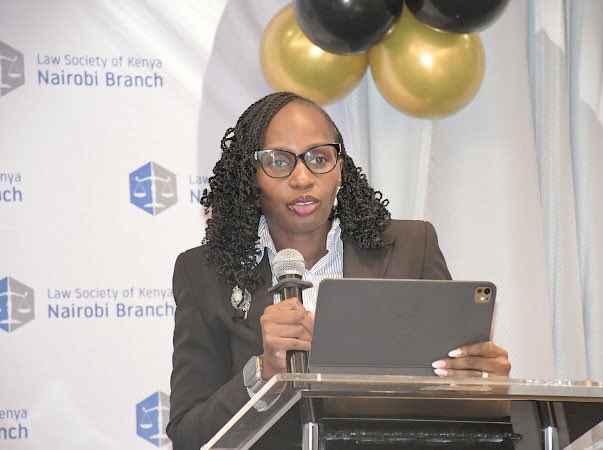
Former Law Society of Kenya (LSK) President Faith Odhiambo has raised constitutional concerns following the High Court’s judgment on the impeachment of former Deputy President Rigathi Gachagua, arguing that the decision exposes unresolved tensions in Kenya’s remedial framework and the treatment of fair hearing rights in removal proceedings.
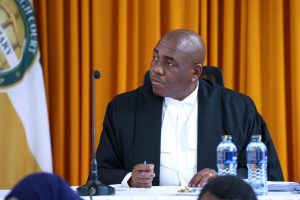
The three-judge bench found that the Senate violated Article 50 of the Constitution by failing to grant Gachagua an adjournment when he was unable to attend the impeachment proceedings, thereby denying him a fair hearing.
The court acknowledged this violation, issued declaratory orders, and awarded Ksh.50 million in constitutional damages. However, despite this finding, the bench upheld the impeachment outcome.
Questions on Separation Between Violation and Outcome
Odhiambo notes that while the court’s recognition of the violation is significant, the decision raises difficult questions about whether such a breach can be treated as procedurally separate from the final outcome.
In her view, the right to a fair hearing is a substantive constitutional guarantee, especially in proceedings that determine the removal of a high-ranking public official, and not a procedural formality that can be compensated through damages alone.
She argues that the judgment creates a doctrinal tension, if a constitutional violation is serious enough to attract substantial damages, it must also be interrogated for its effect on the legitimacy of the entire process.
Comparison With the 2017 Presidential Election Petition
Odhiambo draws comparison with the Supreme Court’s 2017 presidential election petition decision, where the court, under then Chief Justice David Maraga, nullified the election on the basis that irregularities and illegalities in the process rendered the outcome constitutionally invalid.
That ruling reinforced the principle that a defective process cannot produce a valid constitutional result, even where the final outcome may appear substantively plausible.
Against that background, she raises concern that the Gachagua ruling appears to adopt a different remedial approach acknowledging a serious constitutional breach while still preserving the final decision.
While she recognises that courts have discretion in fashioning remedies, she stresses that such distinctions must be clearly reasoned to avoid uncertainty in constitutional interpretation and future impeachment processes.
Her broader concern is the precedent the judgment may set for Parliament and the Senate. If procedural violations during impeachment can be cured through damages without affecting the final outcome, there is a risk that constitutional safeguards may be weakened in practice.
Odhiambo further points to the court’s recommendation that Parliament establish a clear statutory framework under Article 150 to guide deputy presidential removals, describing the legislative gap as one that urgently requires attention.