


Visa Study: Kenyans Embrace AI Shopping but Still Want Humans in Control
Artificial intelligence is rapidly transforming how Kenyans shop online, but when it comes to making payments, trust remains a critical factor.
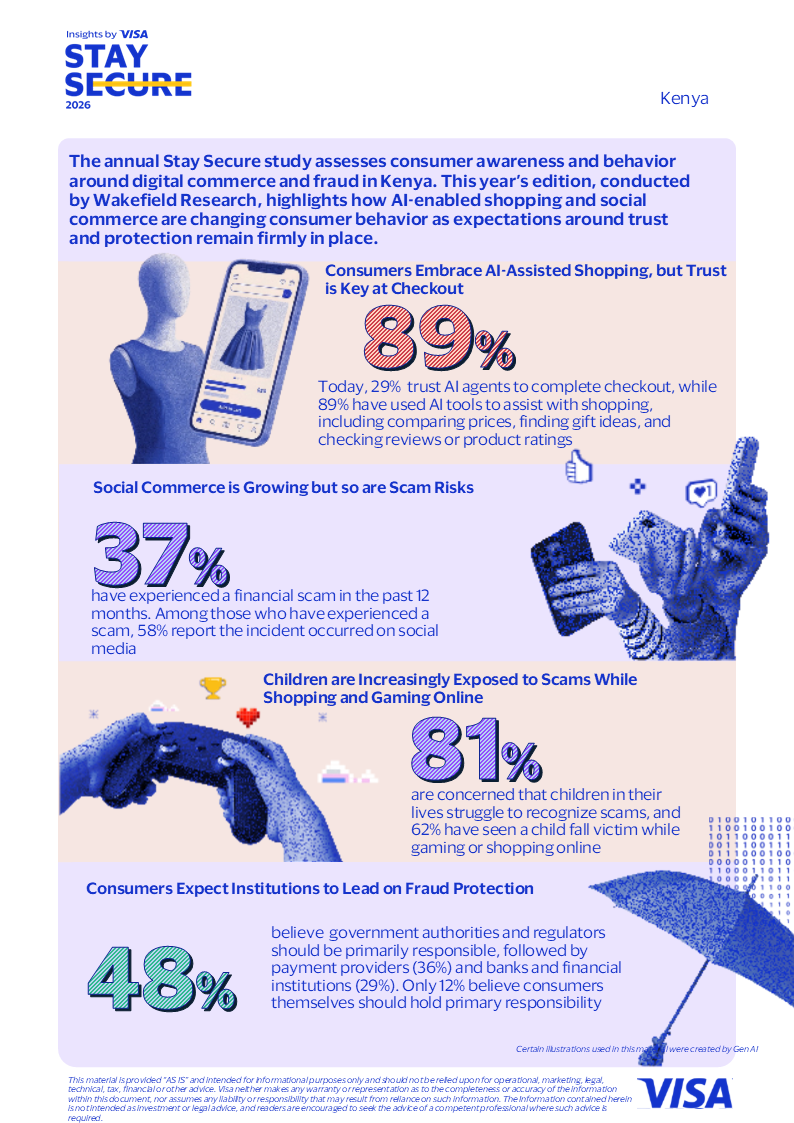
A new Stay Secure 2026 study by Visa reveals that while consumers are increasingly embracing AI-powered shopping tools, many are still reluctant to allow artificial intelligence to complete purchases on their behalf.
The study found that 89 per cent of consumers in Kenya have used AI to assist with shopping activities such as comparing prices, finding gift ideas and checking product reviews. Meanwhile, 91 per cent believe AI-powered technologies have made online shopping faster and easier.
However, despite the growing adoption of AI, only 29 per cent of consumers currently trust AI agents to complete the checkout process on their behalf.
The findings highlight an emerging reality in digital commerce: consumers are comfortable using AI to guide purchasing decisions but still want control over the final transaction.
AI Becomes Part of Everyday Shopping
As AI tools become more sophisticated, consumers are increasingly relying on them to simplify shopping experiences.
According to the study, 60 per cent of Kenyan consumers use AI to check reviews and product ratings, while 55 per cent use the technology to find gift ideas and 53 per cent rely on it to compare prices.
The technology is also influencing product discovery, with 61 per cent of respondents saying they typically discover new brands and retailers while shopping online.
Visa says these trends demonstrate the growing role of AI in shaping consumer journeys, from product discovery to purchase consideration.
At the same time, consumers are beginning to see AI as an important ally in the fight against fraud.
The study found that 44 per cent believe AI has already made scams easier to identify, while 82 per cent expect the technology to play a critical role in protecting consumers from fraud in the future.
Social Commerce Continues to Grow
The research also highlights the rapid rise of social commerce in Kenya.
According to the findings, 85 per cent of consumers have purchased products directly through social media platforms, reflecting how digital commerce continues to expand beyond traditional online stores and marketplaces.
However, the growth of social commerce is also exposing consumers to greater fraud risks.
More than a third of respondents reported experiencing a financial scam within the past year. Among those affected, 58 per cent said the fraud occurred through social media platforms, making social channels the leading source of online scams.
The findings underscore the growing challenge facing consumers as commerce becomes increasingly integrated into social networking platforms.
Rising Concerns Over Children’s Online Safety
The study also points to growing concerns about children’s exposure to scams in digital environments.
More than eight in ten consumers said children in their lives struggle to identify scams online. Additionally, 62 per cent reported knowing a child who had fallen victim to a scam while gaming or shopping online.
As digital payments become more accessible, children are interacting with online commerce at younger ages.
The research found that 37 per cent of Kenyan parents have children who can access mobile payment applications or digital wallets.
These findings are raising fresh questions about digital literacy, parental controls and online safety education.
Consumers Want Stronger Protection
While consumers acknowledge their role in staying safe online, many believe institutions should carry the primary responsibility for fraud prevention.
Nearly half of respondents said government authorities and regulators should lead fraud protection efforts. Payment providers and financial institutions were also identified as key stakeholders responsible for safeguarding consumers.
Only 12 per cent believe consumers themselves should bear the primary responsibility for fraud prevention.
The study further revealed that consumers want more proactive support from financial institutions.
Sixty-seven per cent said real-time alerts from banks or payment providers would make them feel more secure when making online payments. Another 30 per cent said seeing a familiar and trusted payment logo during checkout would increase their confidence.
Trust Will Define the Future of AI Commerce
According to Irene Auma, Head of Risk for Sub-Saharan Africa at Visa, the findings show that while consumers are embracing digital commerce and AI-driven shopping experiences, trust remains essential.
“Visa’s Stay Secure study shows that while online shopping and social commerce continue to grow, scams and fraud are evolving too. Consumers see fraud protection as a shared responsibility, but they expect financial institutions, governments and payment providers to take the lead,” she said.
Auma noted that as commerce increasingly moves toward AI-powered experiences, consumers continue to value security, transparency and control.
“As commerce moves toward more agentic, AI-powered experiences, the study shows that consumers are embracing the convenience AI can bring to shopping but remain cautious when it comes to AI completing purchases on their behalf,” she said.
The findings suggest that while AI may shape the future of commerce, trust will determine how quickly consumers are willing to hand over the final click.