


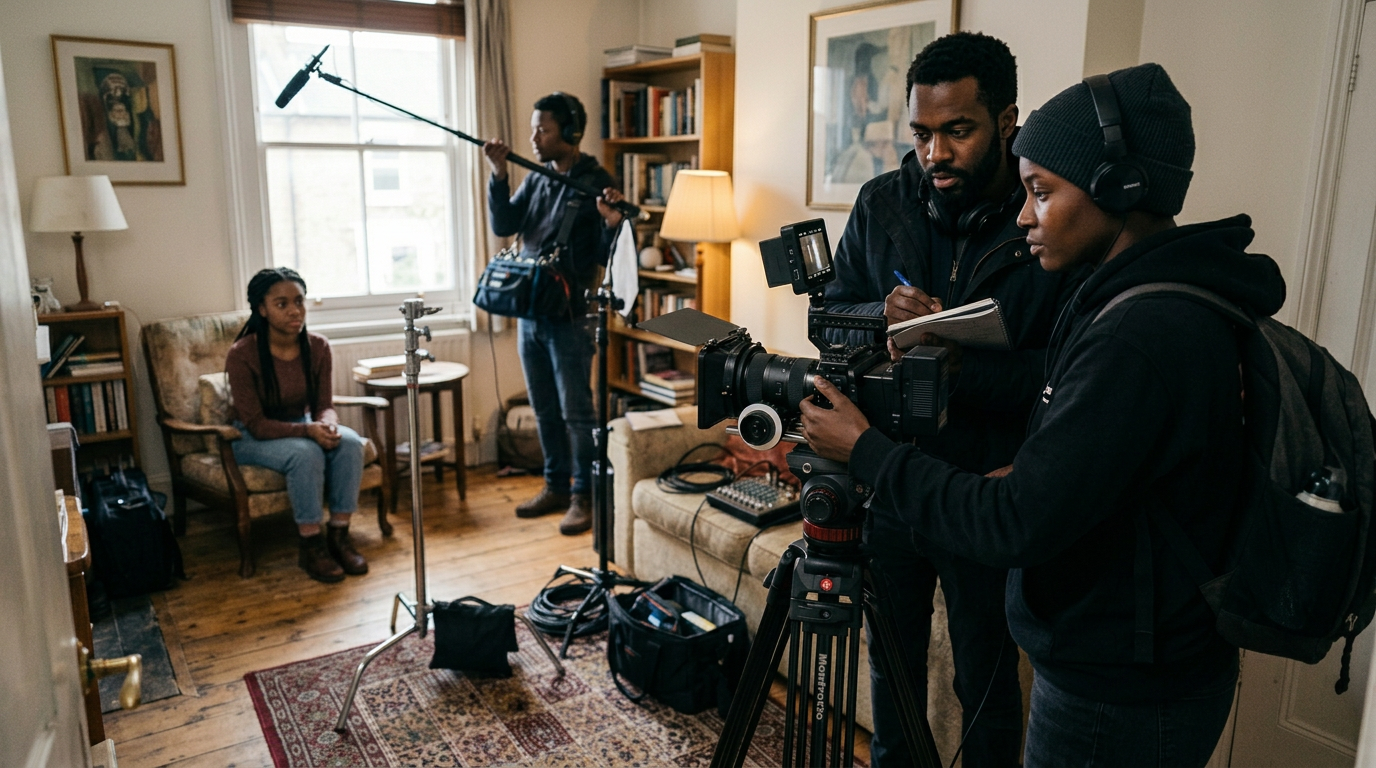
Small Budget, Big Story: How Filmmakers Can Do More With Less
Making a great film does not always require a big budget.
For independent filmmakers, having fewer resources can actually push them to make sharper creative choices, from the locations they use to the characters they build and the way they tell their stories.
The MultiChoice Talent Factory (MTF) has seen this play out across Africa. Over the past decade, the programme has trained 512 filmmakers, with its graduates producing 162 films. Many have gone on to establish production companies and build careers across Africa’s film and television industry.
So, how can filmmakers make limited resources work?
Let the story lead
The first step is knowing what the story really needs.
If your film is built around two characters and their relationship, there may be no need for ten locations, huge crowd scenes or expensive action sequences.
Strong characters, conflict and a story people care about can do more for a film than an expensive set.
Before production begins, ask a simple question: what does this story actually need?
Everything else can be reconsidered.
Turn limitations into creativity
A limited budget can force filmmakers to think differently.
Instead of filming across ten locations, perhaps two or three can tell the same story. A home, restaurant or office can also be transformed into different settings through lighting, wardrobe and production design.
Impact does not always need expensive visual effects either. Good performances, dialogue, sound and thoughtful camera work can carry a scene.
MTF alumni Nikita Neo Mokgware and Serena Serene Mmifinyana from Botswana are examples of filmmakers who have built on this approach. After establishing N&M Productions, their first feature film, The Painting, screened in Lusaka and aired on Zambezi Magic.
They later worked with Angolan filmmaker Levis Albano on Muti Mbi Ma Pessoa, which screened in Angola, Brazil, Portugal and France.
Spend money where audiences will notice
Working with a small budget does not mean cutting every possible cost.
It means knowing where your money will make the biggest difference.
Sound, lighting, performances and post-production can have a major impact on how a film feels. A filmmaker may be better off investing in good sound than spending heavily on equipment that audiences may barely notice.
MTF graduate Agola Simon recently won Best Sound Design at the Uganda Film Festival for The Unforgivable. Having worked on both production sound and post-production, his achievement is a reminder that technical skills can make a real difference to a film.
Plan before you shoot
Good planning can save a production from unnecessary expenses.
Shooting schedules, shot lists and call sheets help teams make the most of every day. Grouping scenes by location can reduce travel and setup costs, while leaving some room in the schedule can help when things do not go according to plan.
Because on a film set, they rarely do.
Budget for the final touches
Getting to the end of filming is not the end of the production.
Editing, sound mixing, colour grading, music, graphics and subtitles all need time and money. If a film is intended for different markets, filmmakers may also need to consider translations or different language versions.
Several MTF productions have gone on to reach audiences beyond their home countries, including Azeezah Sama, which was selected for the Toronto International Nollywood Film Festival and Silicon Valley Film Festival, and Ghanaian production Tejiri, which was selected for an African Cinema section at an international festival in Morocco.
A strong finish can help a film travel further.
Always leave room for surprises
Rain can change a shooting schedule. Equipment can fail. Transport can be delayed. A shoot can run longer than expected.
For a small production, even one unexpected expense can create problems.
Having a contingency budget and some flexibility in the schedule can therefore be just as important as getting the initial budget right.
Make the budget work for the story
Micro-budget filmmaking is not about making a big-budget film look cheap.
It is about understanding the story and making deliberate choices about where limited resources should go.
The filmmakers who learn to plan, improvise and spend wisely are not only learning how to make a film on a small budget. They are building skills that can serve them throughout their careers.
Because sometimes, having less simply forces you to become more creative.