


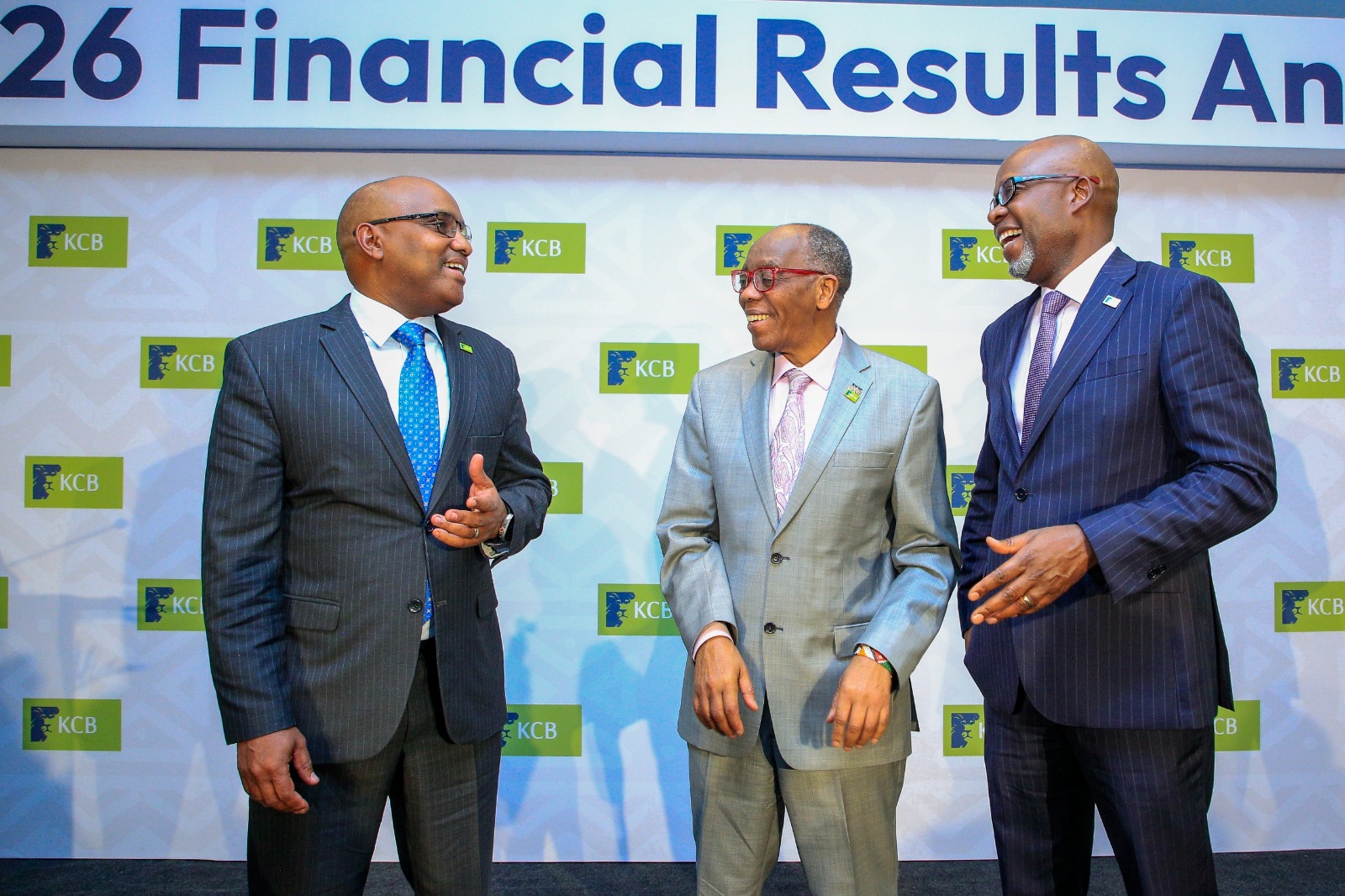
KCB Group Reports Strong Half-Year Performance as Profit Before Tax Rises 20.8%
KCB Group PLC has reported a strong financial performance for the first half of 2026, with profit before tax rising 20.8% to KShs. 49.3 billion as the lender continued to grow its business across the region.
The performance was supported by higher income, disciplined cost management and continued growth in lending and customer deposits.
KCB Group’s total income increased by 9.5% to KShs. 108.1 billion, with non-funded income rising 15.4% to KShs. 34.1 billion, while funded income grew 7% to KShs. 74 billion.
The Group’s balance sheet also expanded significantly. Total assets grew 16.8% to KShs. 2.3 trillion, supported by a 15.1% increase in customer deposits to KShs. 1.7 trillion and a 14.2% rise in gross loans to KShs. 1.3 trillion.
The growth in lending was driven by new customer acquisition and increased borrowing among retail, small and medium-sized enterprises and corporate customers.
For shareholders, the results came with a higher interim dividend. KCB’s Board recommended a dividend of KShs. 3 per share, up 50% from the KShs. 2 per share paid in the same period last year. The payout will amount to KShs. 9.64 billion.
“Our strong half-year performance reflects the resilience of KCB Group’s diversified business model, the strength of our regional footprint, and the confidence our customers continue to place in us,” said KCB Group CEO Paul Russo.
He added that the Group remained focused on supporting businesses and households, accelerating digital transformation and creating sustainable value for shareholders and communities.
Stronger Regional and Investment Business
KCB’s regional subsidiaries continued to make a significant contribution to the Group’s performance.
Businesses outside KCB Bank Kenya accounted for 27.7% of the Group’s profit before tax and 31.1% of its total balance sheet, highlighting the growing importance of its regional operations.
The Group’s non-banking businesses also recorded strong performances. KCB Investment Bank’s profit before tax jumped 226.6% to KShs. 503.2 million, supported by increased advisory mandates and capital markets activity.
KCB Corporate Trustee Services recorded a 79.8% increase in profit before tax to KShs. 142.5 million, while KCB Bancassurance Intermediary Limited contributed KShs. 335.4 million in profit before tax.
Asset Quality Improves
The lender also recorded an improvement in asset quality during the period.
Gross non-performing loans declined by KShs. 17.3 billion to KShs. 203.8 billion, from KShs. 221.1 billion a year earlier. As a result, the Group’s non-performing loan ratio fell to 15.1% from 18.7%.
KCB attributed the improvement to stronger recoveries, rehabilitation of distressed facilities and tighter credit risk management.
The Group maintained a loan-to-deposit ratio of 78.8%, while return on assets remained at 3.3%. Return on equity stood at a healthy 21.1%.
Total equity attributable to KCB Group shareholders increased 16.3% to KShs. 357 billion, up from KShs. 306.8 billion a year earlier.
Driving Digital and Sustainable Finance
Beyond its financial results, KCB continued to expand its digital, sustainability and financial inclusion initiatives during the period.
The Group launched the Pata Kwako campaign, aimed at making homeownership more accessible. Among the solutions introduced was a mortgage product backed by the Kenya Mortgage Guarantee Trust, offering 15-year terms at 9.9% per annum for MSMEs and workers with irregular income.
KCB also partnered with the Kenya Defence Forces to offer dedicated mortgage schemes to members of the disciplined forces, with interest rates starting from 4% per annum.
On digital payments, the Group introduced a flat KShs. 20 fee for PesaLink transfers, while transactions of up to KShs. 1,000 were made free.
KCB also launched Bid Express, enabling customers to generate unsecured bid bonds digitally without visiting a branch.
Sustainability remained another key area of focus. The Group’s 2025 Sustainability Report showed that KShs. 48.8 billion had been disbursed in green financing to support environmentally sustainable projects.
Through the KCB Foundation and its partnership with Hivos, the Group also launched the Tujenge Pamoja Programme, targeting the growth of a circular and inclusive green economy.
The bank further partnered with Nandi and Machakos counties to support the solarisation of public health facilities, contributing to Kenya’s renewable energy and climate goals.
Strong Capital Position
KCB Group closed the period with strong capital buffers, positioning it to continue lending, invest in growth and withstand potential market shocks.
Its Core Capital to Risk-Weighted Assets ratio stood at 18.6%, well above the regulatory minimum of 10.5%, while the Total Capital to Risk-Weighted Assets ratio stood at 21.6%, compared with the statutory minimum of 14.5%.
Group Chairman Dr. Joseph Kinyua said the results reflected disciplined execution of the Group’s long-term strategy.
“We remain focused on providing strategic oversight that enables sustainable growth, prudent risk management and continued investment in innovation,” he said.
KCB’s performance comes as the Group continues to strengthen its position across East Africa, while investing in digital banking, sustainable finance, affordable housing and financial inclusion.
The Group was also recognized during the period through several industry awards, including being named Kenya’s Best Bank by Euromoney and Best Banking Group at the World Finance Banking Awards. It was also listed among the Financial Times’ Africa’s Fastest Growing Companies 2026.