


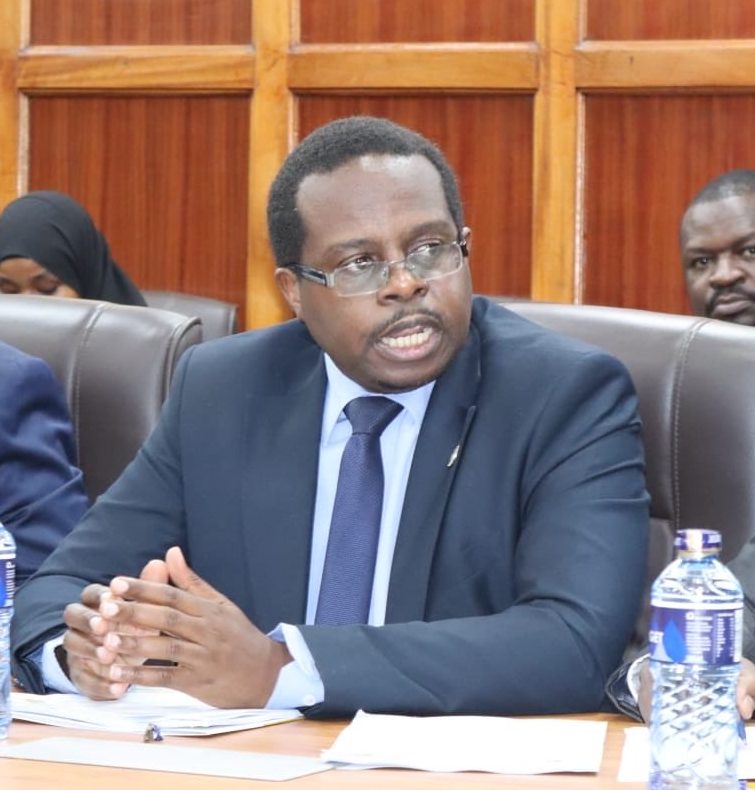
Law Society of Kenya (LSK) President Charles Kanjama has criticised the latest fuel price increase announced by the Energy and Petroleum Regulatory Authority (EPRA), warning that the move will deepen economic pressure on households and businesses across the country.
In a written statement oh his X (twitter) handle, Kanjama said the sharp rise in fuel prices, particularly the Ksh 46.29 increase in diesel costs, would trigger widespread inflationary effects throughout the economy.
Diesel remains the backbone of Kenya’s transport, agriculture, manufacturing and commercial sectors. According to Kanjama, the increase is expected to raise the cost of public transport, food production and distribution, ultimately pushing up the overall cost of living for ordinary Kenyans already struggling with economic hardship.
“The inflationary impact of this adjustment will be felt across the economy, especially by ordinary Kenyans already under strain,” he said.
Rising Fuel Costs Threaten Households and Businesses
Kanjama acknowledged that global instability and supply disruptions in the Persian Gulf continue to affect international energy markets.
However, he argued that the government still bears a constitutional responsibility to protect citizens from excessive economic burdens.
He cited Article 201 of the Constitution, which requires public finance management to promote an equitable society. According to the LSK President, fuel pricing decisions cannot be treated as purely economic measures without considering their broader social consequences.
“Fuel pricing decisions cannot be divorced from their social and economic consequences,” he stated.
President Kanjama also questioned the adequacy of the government’s intervention measures despite the use of a Ksh 5 billion subsidy under the Petroleum Development Levy.
Calls for Transparency and Accountability
While acknowledging the subsidy, Kanjama maintained that greater transparency and accountability are needed in the management of petroleum taxes and levies.
He argued that the increasing reliance on fuel-related charges as a revenue source has intensified public frustration, especially amid concerns over limited public participation in policy decisions.
He further warned that the lack of openness surrounding fuel pricing mechanisms continues to erode public trust.
“The heightened reliance on petroleum taxation and levies as a major revenue source is further aggravated by lack of accountability, openness and meaningful public participation in line with the Constitution,” Kanjama said.
The LSK President called on the government to urgently introduce additional measures aimed at cushioning vulnerable sectors of the economy from further shocks.
Among the proposals raised were stronger oversight mechanisms to prevent price exploitation and broader social protection measures targeting low-income households and small businesses.