


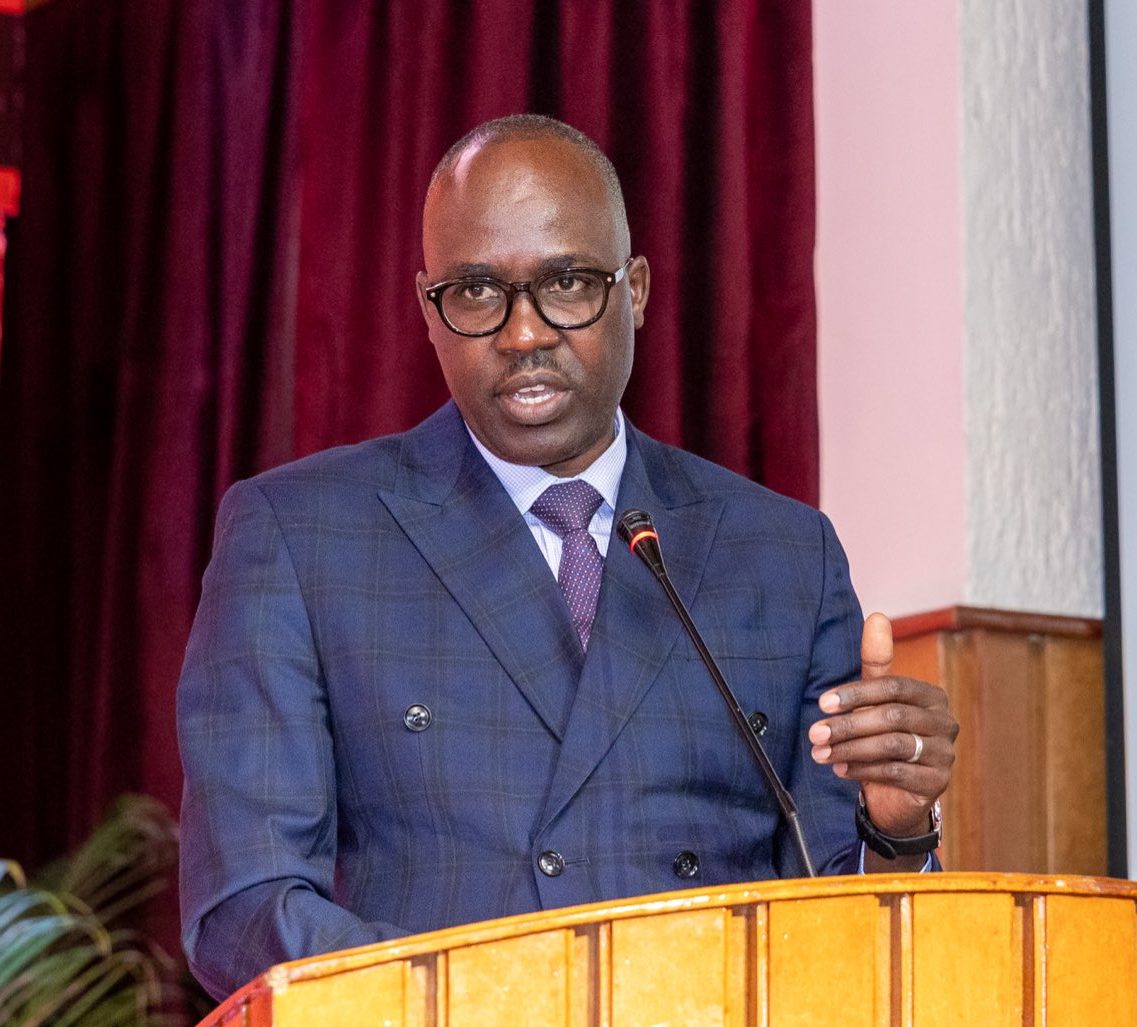
PS Korir Sing’oei has defended Kenya’s decision to scale down its police deployment in Haiti, saying the mission had reached its initial one-year mandate and achieved its core objective of restoring basic order and demonstrating that the Caribbean nation was not a “lost cause.”
Speaking on the mission’s trajectory, Singoei noted that Kenya had returned to the UN Security Council with partner countries seeking a more robust mandate and a predictable financing mechanism for the gang suppression force.
He said while the initial framework was adequate for deployment, sustainability concerns shaped discussions on the next phase of international involvement.
Korir explained that Kenya’s approach was designed to “create conditions” for broader international support, adding that the presence of Kenyan officers had shown that stability in Haiti was achievable if global partners coordinated effectively.
According to him, the drawdown followed the belief that the demonstration phase had been successfully completed.
Public Response and Debate Over Withdrawal Timing
However, Singoei acknowledged that a longer stay might have been beneficial. He noted that segments of the Haitian public had protested Kenya’s withdrawal in Port-au-Prince, citing improved security and restored public confidence under the Kenyan-led contingent.
He added that despite public sentiment, the decision had already been agreed by the Government of Kenya and the United Nations.
He confirmed that responsibility was being handed over to a new contingent from Chad, following coordination between President William Ruto and the Chadian leadership.
The transition also included discussions on training support, with Chad seeking to benefit from Kenya’s operational experience in Haiti’s complex security environment.
Strategic Lessons and Long-Term Stability Concerns
Singoei emphasized that Kenya’s role was never intended to be indefinite but catalytic, aimed at triggering sustained international engagement.
He said the mission had proven that Haiti remained a “mission possible” with coordinated global effort, even as questions remain over long-term financing and mandate enforcement.
Singoei further indicated that the broader lesson from the Haiti deployment was the need for predictable multilateral financing and clearer mandate structures for rapid response missions.
He added that Kenya’s experience has now positioned its security agencies as a reference point for training partner forces, including incoming contingents.
The ongoing coordination with Chad, he said, reflects a deliberate effort to preserve operational gains while ensuring smooth transition.
Ultimately, he maintained that Haiti’s stabilization will depend on sustained international political will, rather than the presence of any single contributing country alone in the long term ahead going forward regionally.