


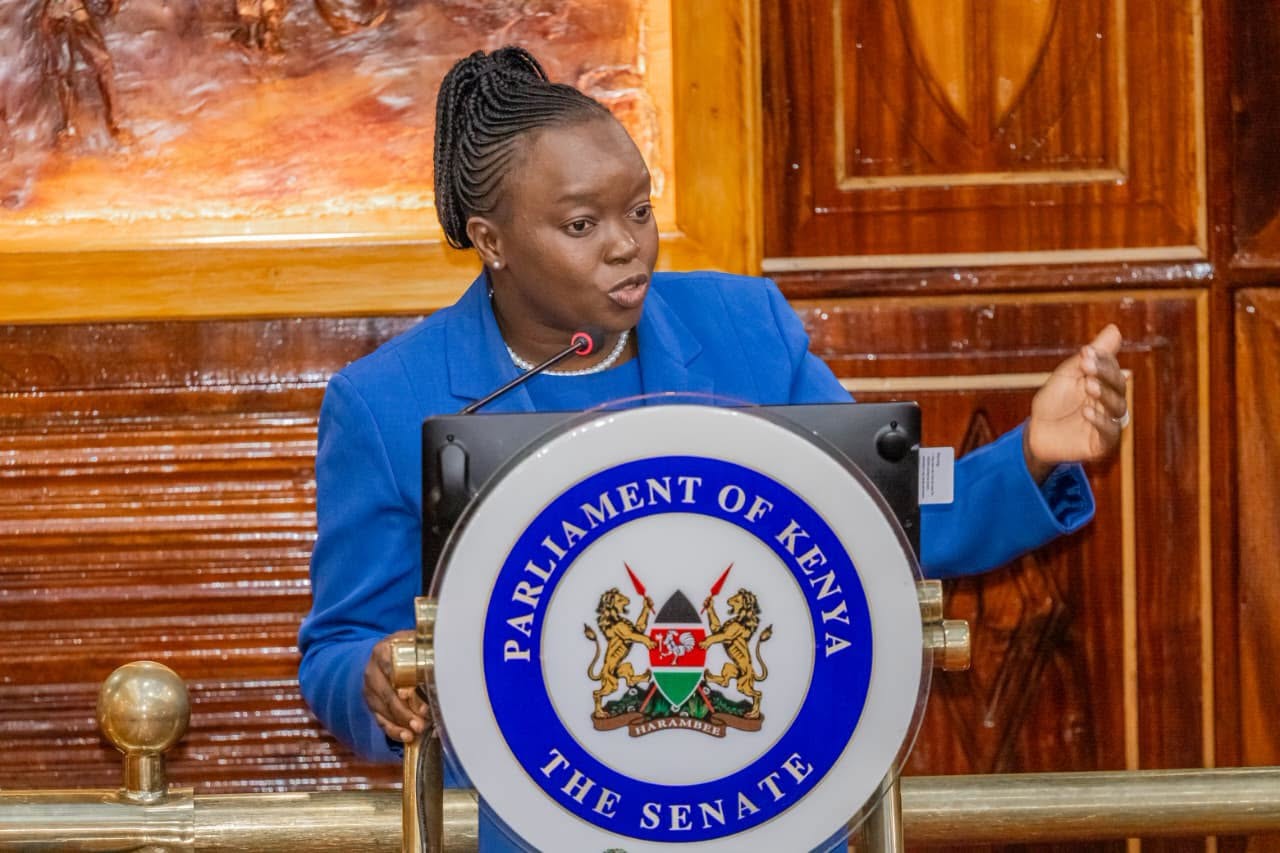
The Senate has put Environment CS Deborah Mulongo under pressure over what lawmakers described as persistent failures in tackling pollution despite Kenya’s extensive environmental laws.
Appearing before the House on Wednesday, the CS defended the Government’s efforts to curb industrial pollution, hazardous waste, and toxic exposure.
However, Senators argued that weak enforcement, rather than inadequate legislation, remains the country’s biggest challenge.
Senators Question Enforcement Record
The debate followed a question by Nominated Senator Hamida Kibwana, who sought details on measures being taken to prevent industrial pollution, unsafe electronic waste disposal, toxic dumping, and other environmental hazards.
She also sought clarification on how the Ministry coordinates with the National Environment Management Authority (NEMA), county governments, public health agencies, and other regulators in monitoring pollution hotspots and strengthening environmental protection.
In response, CS Mulongo said Kenya has a robust legal framework anchored on the Environmental Management and Coordination Act (EMCA), the Sustainable Waste Management Act, 2022, and regulations covering air quality, water quality, hazardous chemicals, waste management, and Extended Producer Responsibility (EPR).
According to the CS, these laws empower NEMA to inspect facilities, issue improvement notices, restore degraded environments, close non-compliant industries, and prosecute offenders.

Government Highlights Compliance Measures
The Environment CS told Senators that NEMA intensified enforcement during the last financial year through targeted inspections and environmental compliance programmes.
She revealed that inspectors conducted enforcement operations on 101 facilities within the Nairobi Metropolitan area to curb illegal industrial effluent discharge into rivers, while the Authority has begun identifying and shutting down 400 illegal discharge points along the Athi-Galana-Sabaki River system.
The Ministry also reported that 6,673 environmental audits were submitted during the 2024/25 financial year, with nearly 9,800 audits reviewed in the current financial year.
The Cabinet Secretary also cited findings from the Africa Environmental Health and Pollution Management Programme, implemented between 2020 and 2025, which identified open burning of waste, unsafe electronic waste recycling, weak waste collection systems, and inadequate recycling infrastructure as major contributors to environmental pollution across all 47 counties.
Despite the Ministry’s detailed response, Senators remained unconvinced, insisting that Kenya already has sufficient environmental laws but lacks consistent implementation.