


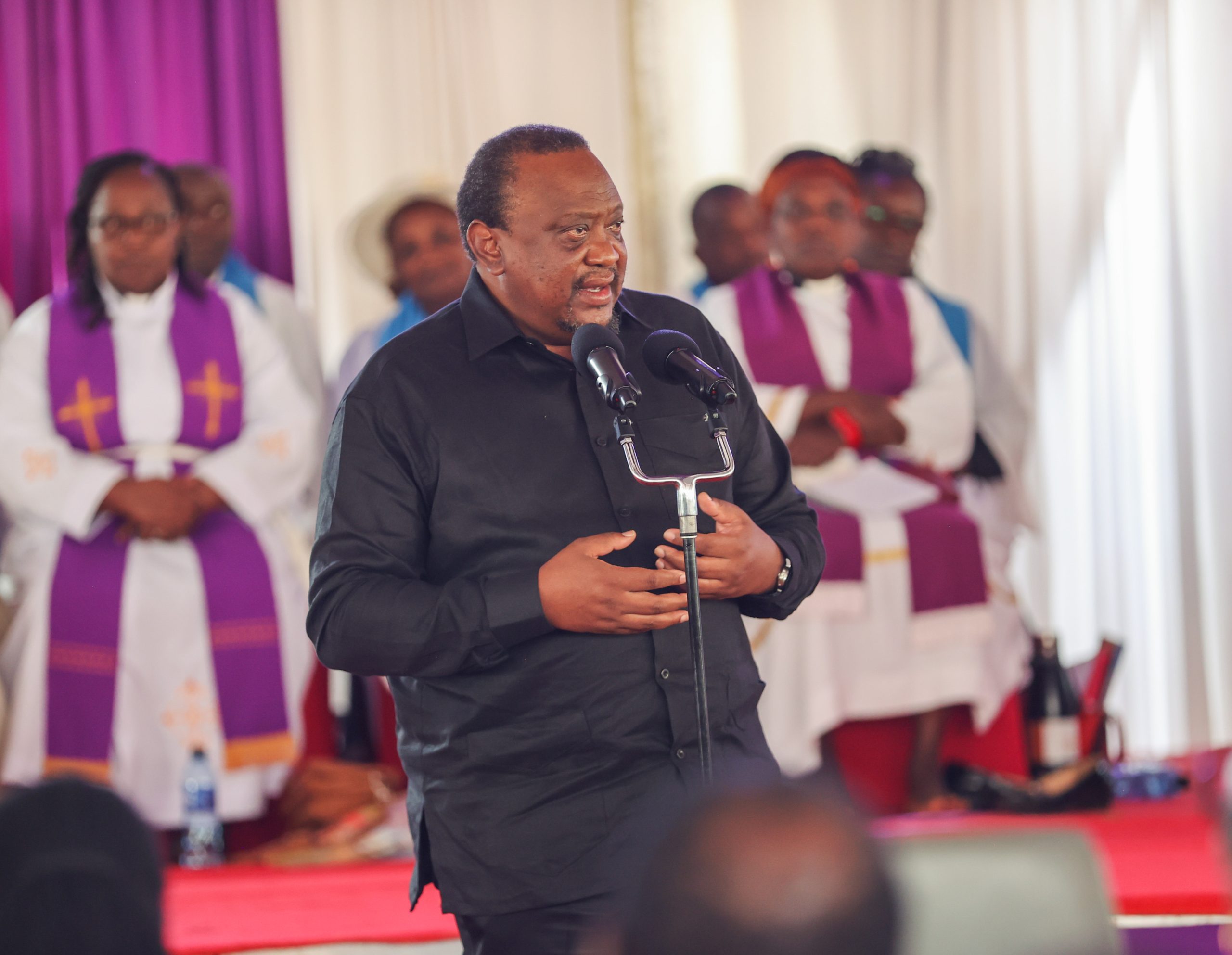
Former President Uhuru Kenyatta has explained the origins of his youth mentorship, tracing it back to his time as Member of Parliament for Gatundu South, where education-related hardship dominated constituency engagements and shaped his thinking on youth empowerment.
He notes that a significant share of constituency issues revolved around school fees and children being out of school, prompting him to begin assisting as many learners as possible.
Over time, he observed that beneficiaries who were given opportunity began to excel, revealing deeper social and personal development gaps beyond academic access alone.
From Education Access to Life Skills Development
According to him, sustained follow-up on young people exposed gaps in confidence, identity and responsibility, leading to the conclusion that mentorship should extend beyond classroom learning to include life skills, counselling and structured guidance to build a sense of belonging and purpose.
This thinking informed the expansion of the programme into a wider county-to-county exchange model, requiring participants to live with families from other regions at least once a year to promote national cohesion, cultural understanding and the demystification of stereotypes and misinformation across communities.
He adds that the initiative is closely monitored through feedback from both participants and parents, emphasizing that exposure to different environments helps young people appreciate diversity and shared national identity.
Link to INUKA and Community Empowerment Vision
Kenyatta further underscores that programmes such as INUKA align with a broader vision of empowering families and communities, arguing that sustainable youth development must combine individual opportunity with collective social transformation.
He concludes that the ultimate goal is to produce empowered young citizens who are capable of contributing meaningfully to society through skills, responsibility and a strong sense of purpose.
He situates the mentorship drive within a broader national youth development agenda aimed at addressing unemployment, inequality and social fragmentation, stressing that early intervention and sustained guidance are essential to producing resilient citizens capable of navigating economic and social challenges in a rapidly changing environment.
The former President maintains that mentorship is not a one-off intervention but a continuous process requiring collaboration between government, families and communities, adding that the success of programmes like INUKA will depend on their ability to scale impact while preserving personal engagement with young people.
He says that the ultimate measure of the programme will be seen in empowered young leaders who are not only educated but also grounded in values of unity, responsibility and service to society.