



Kenya and Italy have signed a new MoU on Migration and Mobility, marking a significant step in strengthening bilateral cooperation on labour migration, skills development and the protection of migrant workers.
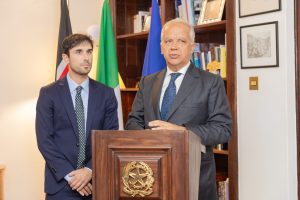
The agreement was signed in Nairobi on 2 July 2026 by Prime CS Musalia Mudavadi and Italy’s Minister of the Interior Matteo Piantedosi.
The MoU establishes a government-to-government framework aimed at promoting regular labour migration while expanding legal employment opportunities for Kenyans seeking work in Italy. It also seeks to improve vocational and language training to better prepare workers for overseas employment.
Expanding Safe and Legal Migration
According to the joint communique, the agreement reflects the shared commitment of Kenya and Italy to promote safe, orderly, regular and ethical migration.
Beyond creating legal migration pathways, the two governments will work together to strengthen the protection of migrant workers and improve skills matching between Kenyan workers and Italy’s labour market needs.
The partnership also places emphasis on combating irregular migration. Both countries will collaborate on awareness campaigns to educate Kenyans about the dangers of illegal migration while encouraging informed and lawful migration choices.
Building on Stronger Bilateral Relations
The agreement reinforces cooperation under the Kenya–Italy Sustainable Development Partnership (2023–2027) and aligns with Italy’s Mattei Plan for Africa, which seeks to deepen economic and development cooperation with African nations.
The two governments said the agreement is expected to contribute to Kenya’s national development by promoting skills exchange while addressing labour shortages in key sectors of the Italian economy.
The communique further states that both governments reaffirmed their commitment to strengthening cooperation on the return of nationals found to be in irregular situations, with voluntary return being promoted wherever possible and in accordance with each country’s national laws.
Successful implementation of the agreement will depend on close institutional cooperation, effective skills matching, language preparation and continued coordination between the two governments.