
Wednesday, September 23, 2026
Google search engine
Home Blog Page 15

Family Bank Earns Strong Credit Rating as NSE Listing Plans Gather Pace

Family Bank has received national scale credit ratings of BBB+(KE) for the long term and A2(KE) for the short term from Global Credit Ratings (GCR), reinforcing the lender’s financial strength as it advances plans toward a future listing on the Nairobi Securities Exchange (NSE).

The ratings, assigned with a stable outlook, cover the bank and its subsidiaries and reflect growing confidence in Family Bank’s capital position, funding profile, and sustained growth trajectory.

The assessment also highlights the lender’s strong position within Kenya’s micro, small and medium-sized enterprise (MSME) sector, a key pillar of its business model.


Capital Strength and Growth Drive Positive Rating
According to GCR, Family Bank has continued to strengthen its capital base while maintaining prudent liquidity and funding management practices.

The bank’s GCR Core Capital Ratio improved to 16.9 percent as of December 2025, up from 15.0 percent a year earlier. The rating agency expects capitalisation to strengthen further to around 18.0 percent over the next 12 months, supported by improving asset quality, stable funding sources, and disciplined balance sheet management.

The positive assessment comes amid a period of consistent growth for the lender, which has been expanding its market presence while strengthening its financial resilience. Family Bank CEO Nancy Njau said the rating reflects the success of the bank’s long-term strategy and its focus on sustainable growth.

“This rating is a strong endorsement of the progress we have made in strengthening our financial position and executing our aggressive five-year strategy. Our consistent year-on-year growth in profitability, assets, and capital strength demonstrates the resilience of our business model and our ability to create sustainable value for all stakeholders,” she said.

Family Bank Earns Strong Credit Rating as NSE Listing Plans Gather Pace
Digital Transformation and MSME Focus Remain Key Priorities
Family Bank continues to position itself as a leading partner for MSMEs, a segment that remains central to Kenya’s economic growth.

The lender has also intensified investments in digital transformation, customer experience, and innovative banking solutions aimed at improving accessibility and efficiency for customers.

Njau noted that maintaining a strong balance sheet remains critical as the bank pursues its growth ambitions.

“As we continue to invest in digital transformation, enhance customer experience, and deepen support for MSMEs, we remain focused on maintaining a strong balance sheet that enables us to support economic growth while delivering long-term returns to shareholders,” she said.

The latest rating provides an independent endorsement of Family Bank’s financial stability and is expected to strengthen investor confidence as the lender advances its long-term growth strategy and prepares for its anticipated NSE listing.


 

Muturi Defends Public Participation in Debate Over Laikipia Ebola Facility

Democratic Party of Kenya (DPK) Party Leader Justin Muturi has defended Kenyans’ right to access information and participate in discussions concerning international public health obligations.

In a statement issued, Muturi sought to clarify public concerns surrounding the International Health Regulations (IHR) (2005), emphasizing that the regulations are neither new nor secretive instruments.

According to Muturi, the regulations were adopted by the World Health Assembly on May 23, 2005, and came into force on June 15, 2007, making them legally binding on World Health Organization member states, including Kenya and the United States.

He noted that the framework has existed for nearly two decades and predates the tenure of many current political leaders.

“It is misleading to portray public concern, scrutiny, or calls for information regarding international public health obligations as unnecessary or uninformed,” Muturi stated.


Calls for Transparency in Public Health Policy
JB Muturi stressed that the regulations require countries to strengthen surveillance, reporting, preparedness, and risk communication systems while ensuring full respect for human dignity, human rights, and fundamental freedoms.

He argued that public information and communication are central components of the framework, making citizen engagement a critical part of implementation.

Muturi further maintained that Kenyans have a legitimate right to seek information on any matter that may affect their health, safety, and well-being.

He pointed to constitutional provisions that guarantee access to information and uphold public participation as a national value.

“The principle of informing the public and communicating health risks is embedded within the framework of the regulations,” he said.

Muturi Defends Public Participation in Debate Over Laikipia Ebola Facility
Concerns Over Public Exclusion
Muturi criticized suggestions that citizens should not be consulted or informed on matters with potential implications for public health.

He described such views as unfortunate and inconsistent with democratic governance, arguing that public trust in health policies depends on transparency and accountability.

According to him, openness is essential in building confidence in government decisions, particularly on issues that directly affect citizens.

The DPK leader called for public discussions on health measures and international obligations to be guided by facts, legal frameworks, and respect for constitutional rights.

He emphasized that citizens should not be treated as passive recipients of government decisions but as active participants in governance.

“Kenyans are not passive subjects of governance, they are sovereign citizens entitled to information and meaningful engagement on matters that affect their lives,” Muturi said.

His remarks come amid growing public debate over the proposed Laikipia Ebola Quarantine Facility.


Duale Defends Kenya’s Ebola Preparedness Amid Concerns Over  Quarantine Facilities

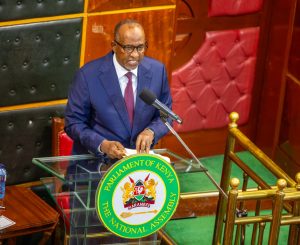
Health CS Aden Duale has assured Parliament that Kenya remains free of Ebola Virus despite growing concern over an ongoing regional outbreak and plans linked to international public health cooperation.

Appearing before the National Assembly, Duale told lawmakers that no confirmed Ebola case had been recorded in the country as of June 2, 2026.

He nevertheless emphasized that the Government was treating the regional threat seriously due to Kenya’s position as a major transport, trade, and diplomatic hub.

“Ebola is a severe disease with a high fatality rate and poses a significant public health threat,” he said.


Preparedness Measures Activated Nationwide
The Ministry of Health has rolled out preparedness measures at both national and county levels to strengthen the country’s response capacity.

At the national level, Kenyatta National Hospital has designated an eight-bed isolation and treatment unit, while the National Police Service Hospital has set aside 49 beds that can be activated during an outbreak.

County governments have also stepped up preparedness efforts. According to Duale, 29 counties have identified isolation and treatment facilities, while 1,069 health workers have undergone training on Ebola preparedness and response.

Duale Defends Kenya’s Ebola Preparedness Amid Concerns Over  Quarantine Facilities

MPs Raise Questions on U.S. Quarantine Agreement
A significant portion of the debate focused on Kenya’s agreement with the United States regarding quarantine facilities for U.S. citizens and other foreign nationals during public health emergencies.

Duale clarified that the cooperation agreement was signed in 2015, approved by Cabinet, and tabled before Parliament in 2016. He maintained that the arrangement does not compromise Kenya’s sovereignty.

Laikipia Woman Rep Sarah Korere raised concerns about the possibility of infected individuals being transported to facilities near local communities, warning of potential risks to residents and the tourism sector.

Kiharu MP Ndindi Nyoro argued that Kenya should carefully consider public concerns, noting that the United States possesses significantly greater resources to manage such emergencies.

Responding to the concerns, Duale stressed that international cooperation does not amount to surrendering national authority.

He assured Parliament that all public health decisions remain under the Government of Kenya and that any designated facilities would serve all Kenyans rather than being reserved exclusively for foreign nationals.


Faith Odhiambo Slams State Defiance Over Laikipia Ebola Facility

Former Law Society of Kenya (LSK) President Faith Odhiambo has heavily criticized the government following the Ministry of Health’s recent presentation in Parliament regarding the management of an Ebola-related facility.

Her remarks come amid rising concerns over constitutional compliance and executive accountability in handling public health emergencies.

The statement follows an appearance by Health CS Aden Duale before lawmakers, where he reportedly failed to guarantee that state decisions regarding the Ebola question align with legal boundaries.

Odhiambo warned that the executive branch appears to be positioning itself to bypass judicial oversight, undermining the rule of law.

“Listening to him, the message is clear, the court will have its say but the executive will enforce their way,” Odhiambo stated, highlighting a worrying trend of state defiance against the judiciary.

Faith Odhiambo Slams State Defiance Over Laikipia Ebola Facility

Constitutionalism and Court Orders Under Threat
At the centre of the dispute are existing conservatory orders issued by the High Court, which officially suspended operations at the designated Ebola-related facility.

Odhiambo noted that any executive attempt to press forward despite the court’s halt transforms legal compliance into an empty political catchphrase.

She emphasized that constitutional obedience cannot be treated as an optional measure or sacrificed for administrative convenience.

The former LSK President demanded immediate transparency from state officials regarding the management of the health crisis, asking who authorized the current arrangements, what legal framework supports them, and what safeguards exist to protect national sovereignty and public safety.

Sidestepping these questions, she argued, actively erodes trust in both the Ministry of Health and Parliament’s oversight capacities.

Odhiambo maintained that the state cannot genuinely protect or promote public health while simultaneously tearing down the legal structures meant to shield citizens from arbitrary executive overreach.


Vision Centres in Kenya: Expanding Access Through Innovation and Community-Based Eye Care

A new push to improve access to eye care services in Kenya is taking shape through the introduction of the Vision Centre model, a community-focused approach designed to bring essential eye health services closer to people.

The initiative was explored through a stakeholder meeting that brought together Government agencies, hospitals, faith-based institutions, eye care professionals, NGOs, community organizations, and private sector actors who had a discussion on practical solutions for strengthening primary and community-level eye care delivery.


Partnership Driving the Vision Centre Model
The discussion was convened through a partnership between Women Youth and Children Development Organization (WYCDO Kenya) and He Eye Specialist Hospital (HESH) Group.
WYCDO is leading stakeholder coordination and local engagement, while He Eye Specialist Hospital (HESH) Group introduces the Vision Centre model alongside supporting technologies, equipment, and service frameworks.

The partnership aims to explore how the model can be integrated into Kenya’s existing health ecosystem without replacing hospitals or current programmes, but instead strengthening referral systems and expanding access at the grassroots level.

The Vision Centre model is built around decentralising eye care services. These centres are designed to support early screening, basic diagnosis, refraction services, community awareness, and structured referrals to higher-level facilities when advanced treatment is required.

In more resourced areas, Vision Centres may be operated by optometrists, opticians, clinical officers, and outreach teams.

In underserved regions, trained support staff and community health workers may use AI supported screening and referral tools under professional guidance, ensuring continuity of care even where specialists are limited.

Vision Centres in Kenya: Expanding Access Through Innovation and Community-Based Eye Care

Strengthening Referral Systems and Continuity of Care
A key focus of the initiative is improving referral completion and closing gaps between screening, diagnosis, treatment, and follow-up.

Despite Kenya’s strong network of eye care programmes, many patients still access services late, and referral systems often fail to ensure continuity of care.

Limited equipment, uneven distribution of professionals, and concentration of services in urban centres continue to contribute to preventable vision loss.

The Vision Centre approach is also being positioned as a sustainable social enterprise model. Rather than relying solely on donor funding, the centres are expected to operate through service delivery, partnerships, technology integration, and locally managed business frameworks.

Potential operators include hospitals, clinics, faith-based institutions, NGOs, and private or social enterprise actors, creating opportunities for youth employment and community-based entrepreneurship in health service delivery.

Vision Centres in Kenya: Expanding Access Through Innovation and Community-Based Eye Care

Learning from International Experience
Internationally, similar models have been implemented in parts of Asia and in African countries such as Ghana and Cameroon.

However, stakeholders emphasize that Kenya’s approach will be tailored to local health system structures, regulatory frameworks, and workforce realities.

The workshop also explored the role of technology and AI-supported tools in enhancing screening accuracy, diagnosis, and referral efficiency.

Ultimately, the Vision Centre initiative is positioned as a starting point for collaboration, with stakeholders expected to engage further on possible pilot projects that could reshape access to eye care across Kenya.


Opposition Slams Ebola Secrecy, Rejects Finance Bill 2026

The United Alternative Government has issued a strong statement addressing the government’s handling of the reported Ebola arrangements, the Finance Bill 2026, and preparations for the Ol Kalou by-election, accusing the administration of secrecy, fiscal mismanagement, and erosion of democratic standards.


On the Ebola Crisis

On the Ebola crisis the coalition criticised what it termed a regime of secrecy and confusion demanding full disclosure of all agreements protocols and public health arrangements linked to Ebola preparedness.

It argued that transparency is essential for national security and public trust warning that citizens cannot be expected to trust a system that struggles to equip hospitals and supply essential medicines

The United Opposition also rejected the Finance Bill 2026 describing it as punitive and inconsistent with public expectations following years of rising taxation debt and unemployment.

They accused the government of prioritising revenue collection over accountability citing corruption wasteful expenditure and lack of value for taxpayers’ money.

The coalition aligned its position with youth-led protests against the 2024 Finance Bill reiterating calls for economic justice and reduced tax burden on households and businesses

Opposition Slams Ebola Secrecy, Rejects Finance Bill 2026

Ol Kalou By-Election

On the Ol Kalou by-election the coalition announced plans to back a single candidate selected through independent scientific surveys and opinion polling describing the approach as a commitment to unity and evidence-based politics.

The United Opposition called on the IEBC security agencies and political actors to ensure a peaceful and transparent process warning against voter bribery intimidation and misuse of state resources

The coalition concluded that the three issues reflect a broader crisis of leadership accountability and governance priorities accusing the administration of placing political interests above public welfare.

“No Government can command public confidence while withholding information from the same citizens it serves. No Government can continue taxing its people into poverty while corruption, waste and impunity remain unchecked,” they said.


Kenyan Basketball Giants Secure Hospitality Boost Ahead of Continental Campaign

Kenyan Basketball Giants Secure Hospitality Boost Ahead of Continental Campaign

Kenyan basketball continues to score major wins both on and off the court.

In a move that highlights the growing commercial appeal of the sport, Nairobi City Thunder has secured a strategic partnership with hospitality giant Sarova Hotels & Resorts ahead of another ambitious campaign in the Basketball Africa League (BAL).

The agreement names Sarova as the club’s Official Hospitality Partner for the 2025/26 season, giving the Kenyan champions access to premium accommodation and hospitality services as they prepare to once again fly the country’s flag on the continental stage.

For Nairobi City Thunder, the partnership comes at a crucial moment. The club made history as the first Kenyan team to compete in the prestigious Basketball Africa League and is now focused on building on that achievement as it prepares for BAL Season 6.

Under the partnership, players, technical staff, and club officials will benefit from hospitality services across some of the country’s most iconic properties, including Sarova Stanley, Sarova Panafric and Sarova Whitesands Beach Resort & Spa.

More Than a Sports Partnership

Beyond accommodation support, the collaboration aims to create memorable experiences for fans through exclusive content, media engagements, player interactions, and community-driven activations throughout the season.

The partnership reflects a broader trend within Kenyan sports, where leading brands are increasingly recognizing the value of investing in teams that are building strong identities and attracting growing fan bases.

Speaking during the signing ceremony, Twende Elite Limited Chief Executive Officer Colin Rasmussen described the partnership as a significant step in the club’s journey.

He noted that both organizations share similar values centered around excellence, professionalism, and delivering world-class experiences.

Kenyan Basketball Giants Secure Hospitality Boost Ahead of Continental Campaign
A Win for Kenyan Basketball

For Sarova Hotels & Resorts, the partnership represents an opportunity to support a team carrying Kenya’s sporting ambitions beyond its borders.

Sarova’s Director of Sales, Marketing and Revenue, Mita Vohra, said the company was proud to back a club that embodies discipline, ambition, and excellence while representing Kenya across Africa.

The deal also underscores the rapid rise of Nairobi City Thunder, which has established itself as one of the country’s most successful basketball clubs. The team remains a two-time unbeaten Kenya National Basketball League champion and continues to raise standards for professionalism in local sports.

As basketball’s popularity continues to grow across the continent, partnerships such as this one demonstrate increasing confidence from corporate Kenya in the sport’s future.

For Nairobi City Thunder, the road to continental success may still run through the court, but strong partnerships like this are proving just as important in helping the club compete with Africa’s best while inspiring a new generation of Kenyan basketball fans.

Karua Raises Alarm Over Return of “Rejected” Taxes in 2026 Finance Bill

Martha Karua has strongly criticised the 2026 Finance Bill, arguing that it reintroduces tax measures that were previously rejected by Kenyans during the nationwide protests of 2024.

Karua said citizens “paid a heavy price to make their voices heard,” warning that recent fiscal proposals appear to mirror the same punitive provisions that sparked widespread public anger, injuries, and loss of life.

She cautioned that economic policymaking must remain responsive to public sentiment and avoid measures perceived as exploitative or detached from the lived realities of ordinary citizens.

Recycled Tax Policies Raise Concern
Karua expressed concern that the latest finance proposals reflect what she described as a recycling of unpopular tax policies.

“It is deeply troubling to see a Finance Bill that revives many of the same punitive measures that citizens rejected,” she said, emphasizing that the message from wenye nchi remains unchanged, economic policy must serve the people rather than burden them.

She argued that ignoring this position risks deepening mistrust between the government and citizens, particularly at a time when households are already facing rising costs of living and economic strain.

Karua Raises Alarm Over Return of “Rejected” Taxes in 2026 Finance Bill

A key area of concern for Karua is taxation within the digital economy. She warned that although the bill may avoid explicitly labeling certain charges as digital taxes, the structure effectively shifts the burden onto users.

“This finance bill is the 2024 finance bill. It brings exactly the same punitive measures, but because they do not want to say they are taxing the people on the digital space,” she said, adding that taxes imposed on service providers would inevitably be transferred to consumers.

Karua concluded that the repetition of previously rejected measures signals a governance gap in public consultation and accountability.

She cautioned that reintroducing such policies “through the back door” risks reigniting public dissatisfaction and undermining confidence in fiscal decision-making.


Karua Questions Ruto Over Reported Ebola Quarantine Plan for U.S. Patients

People’s Liberation Party leader Martha Karua has criticised President William Ruto over reports that Kenya could be used to host US Ebola patients, arguing that such a decision would expose Kenyans to unnecessary health risks and bypass constitutional processes.

Speaking on the matter, Karua questioned why Kenya should accept risks that Americans themselves appear unwilling to take.

“If Ebola is considered too dangerous for Americans, why should Kenyans accept that risk?” she posed, insisting that any decision with significant public health implications must involve consultation and transparency.

Concerns Over Public Participation
Karua accused President Ruto of making far-reaching decisions without involving key institutions or the public.

According to her, there is no indication that the reported arrangement received Cabinet approval or underwent parliamentary scrutiny before being pursued. She argued that decisions affecting millions of citizens should not be handled unilaterally.

“Major decisions must follow due process, involve public participation, and be subjected to parliamentary oversight,” she said.

The PLP leader further claimed that the President was treating the country as a private enterprise rather than a constitutional democracy.

Karua Questions Ruto Over Reported Ebola Quarantine Plan for U.S. Patients

Health and Safety Concerns Raised
Karua maintained that the issue extends beyond politics and touches directly on the health and safety of Kenyans.

She noted that concerns about Ebola have already generated public unease, with sections of civil society and citizens expressing opposition to any plan that could increase the country’s exposure to the deadly virus.

Karua argued that Kenyans deserve clear information about any agreements involving the handling of infectious diseases within the country.

She also pointed to debates within the United States, where some leaders have reportedly urged their government to care for affected citizens domestically rather than transferring them.


Calls for Accountability

Karua said leaders must remain accountable when making decisions that carry national consequences.

She urged the government to provide full disclosure on any discussions or agreements related to Ebola patient transfers and to subject the matter to public scrutiny.

“Wenye nchi must never be treated as an afterthought in decisions that directly affect their lives,” she said.

Her remarks add to growing calls for transparency over the reported plan, with questions continuing to emerge about public health safeguards, legal procedures, and the role of Parliament in decisions of national importance.


IEBC Opens Accreditation for Media and Election Observers Ahead of Ol Kalou By-Election

IEBC Opens Accreditation for Media and Election Observers Ahead of Ol Kalou By-Election
The Independent Electoral and Boundaries Commission (IEBC) has invited applications from media practitioners and election observer organizations seeking accreditation for the upcoming Ol Kalou Constituency by-election scheduled for July 16, 2026.

In a public notice released by the Commission, IEBC announced that accredited observers and journalists will be granted access to polling stations and the Constituency Tallying Centre during the by-election for the Member of National Assembly seat.

Accreditation Process and Application Deadline
The accreditation exercise is part of the Commission’s preparations to ensure transparency, accountability, and public confidence in the electoral process.

Election observers and members of the media play a critical role in monitoring the conduct of elections, providing independent assessments, and keeping the public informed throughout the voting and tallying process.

IEBC Opens Accreditation for Media and Election Observers Ahead of Ol Kalou By-Election

According to IEBC, all interested organizations must submit their applications through the IEBC Accreditation Management System (AMS). The Commission has set Tuesday, June 30, 2026, at 5:00 p.m. as the deadline for submitting applications.

Applicants have been advised to ensure they have access to a stable and reliable internet connection when submitting their details through the online system. The Commission emphasized that applications received after the deadline may not be considered.

Once approved, accredited organizations will receive official badges that will allow their representatives to access designated election venues. The badges will serve as proof of authorization during the by-election and related electoral activities.