The High Court’s ruling on the impeachment of former Deputy President Rigathi Gachagua has drawn comment from Law Society of Kenya President Charles Kanjama, who described the decision as legally inconsistent and unprecedented.
Speaking during an interview, Kanjama said the court had made a clear finding that Gachagua’s right to a fair hearing was violated during the impeachment process but failed to overturn the outcome of the proceedings.
According to Kanjama, courts traditionally invalidate proceedings where a person’s constitutional right to a fair trial or fair hearing has been infringed.
“In most cases, once a court finds that the right to a fair hearing has been violated, the proceedings are set aside. The court may order a fresh hearing or invalidate the process entirely,” he explained.
Court Finds Violation but Upholds Outcome
Kanjama noted that the ruling marks the first time in his legal career that a court has acknowledged a substantive violation of fair trial rights while allowing the resulting decision to remain in force.
He argued that the judges based their reasoning on Article 145 of the Constitution, which governs the impeachment of a Deputy President.
According to the court’s interpretation, impeachment is a final constitutional process whose outcome cannot be reversed once completed. As a result, the judges held that their powers under Article 165 to review decisions made by courts, tribunals, and other quasi-judicial bodies are limited in impeachment matters.
“The court essentially said its hands were tied because impeachment is final and therefore cannot be undone,” Kanjama said.
Kanjama Weighs in on Gachagua Impeachment Ruling
Questions Over Judicial Consistency
The LSK President also pointed to what he termed a major inconsistency in the court’s position.
He recalled that during the impeachment proceedings, parties had sought court intervention to halt the process, arguing that they would be left without an effective remedy if the impeachment was allowed to proceed.
At the time, he said, the same bench declined to stop the proceedings and assured litigants that the court retained the power to overturn the outcome if constitutional violations were later established.
“Previously, the court said it could overturn the outcome of an impeachment. Today, it has said that once impeachment is completed, it cannot be reversed,” Kanjama observed.
The Mediation Committee considering the Division of Revenue Bill, 2026, has moved closer to resolving the long-running dispute between the National Assembly and the Senate over the amount of revenue to be allocated to county governments.
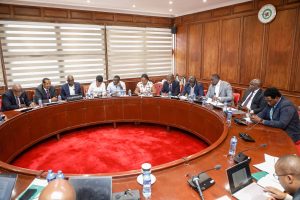
Meeting at Parliament Buildings on Monday, the joint committee reported significant progress after narrowing differences on both the fiscal allocation and key legal provisions within the Bill.
The talks were being co-chaired by National Assembly Budget and Appropriations Committee Chair Samuel Atandi and Senate Finance and Budget Committee Chair Ali Roba.
A major breakthrough was reached on Clause 5 of the Bill, which seeks to protect county governments from sudden expenditure cuts in the event of national revenue shortfalls.
Agreement Reached on Key County Protection Clause Senator Roba emphasized that the provision is critical in safeguarding county operations and ensuring compliance with Article 219 of the Constitution.
“The purpose of Clause 5 is to insulate counties from arbitrary expenditure cuts due to revenue shortfalls,” he said, noting that counties do not have the same borrowing flexibility available to the national government.
Atandi confirmed that the National Assembly had agreed to reinstate the clause following consultations with the National Treasury.
The development was welcomed by lawmakers from both Houses, with Senator Tabitha Mutinda describing the agreement as a major step toward improving predictability in county budgeting and planning.
Lawmakers Make Progress in Push for Revenue-Sharing Agreement
Revenue Allocation Gap Continues to Narrow Discussions also focused on the equitable share of revenue to be allocated to counties.
The National Assembly initially proposed KSh 420 billion, while the Senate pushed for KSh 450 billion. Through ongoing negotiations, both sides have adjusted their positions.
Atandi revealed that the National Assembly had increased its offer to KSh 425 billion, citing prevailing economic realities and revenue constraints.
The Senate, meanwhile, has lowered its position to KSh 440 billion. Senator Roba argued that counties require stronger financial support to sustain service delivery and development programmes.
Senator Eddy Oketch maintained that technical assessments place the ideal county allocation at approximately KSh 445 billion, pointing to stalled projects and outstanding obligations, including Equalisation Fund arrears.
Mwengi Mutuse suggested that future revenue surpluses could be addressed through supplementary adjustments to the revenue-sharing framework, while Christopher Aseka emphasized the need for realism amid global economic pressures.
The Kenya Urban Roads Authority (KURA) has issued a public notice announcing a series of partial road closures across key Nairobi corridors to facilitate ongoing infrastructure upgrades aimed at improving urban mobility and drainage systems.
Ngong Road Partial Closure
The first intervention affects Ngong Road, where a section between Windy Ridge and Westwood Park Road will undergo partial closure from Thursday, 11 June 2026 to Thursday, 18 June 2026.
The works will allow contractors to install twin cross culverts as part of drainage improvement works along the busy corridor.
Haile Selassie Avenue will also experience a longer-term closure running from Friday, 12 June 2026 to Monday, 12 October 2026. The four-month works will support bridge construction activities designed to enhance safety and reduce future traffic disruptions along the route.
KURA Announces Phased Road Closures Across Nairobi for Infrastructure Upgrades
Kenyatta Avenue / Valley Road / Jakaya Kikwete Road Closure
A third and most extensive closure affects the Kenyatta Avenue, Valley Road, and Jakaya Kikwete Road corridor, which will remain partially closed from Friday, 12 June 2026 to Friday, 12 February 2027.
The eight-month project will facilitate major bridge construction works aimed at improving connectivity and easing congestion in the central business district.
KURA has urged motorists to use designated diversion routes as indicated in traffic management plans, and to follow directions from traffic police officers deployed along the affected sections.
The authority has also apologized for the inconvenience, noting that the works are part of its broader mandate to transform urban mobility through safer and more efficient road infrastructure.
The Kenya Revenue Authority (KRA) has reminded taxpayers that the filing of 2025 Income Tax Returns is ongoing and must be completed by June 30, 2026.
In a public notice issued on June 8, 2026, KRA announced a temporary measure aimed at easing the filing process for taxpayers.
KRA said taxpayers will be allowed to declare valid business expenses even where such expenses are not supported by electronic invoices generated through the Electronic Tax Invoice Management System (eTIMS) or the Tax Invoice Management System (TIMS).
According to the notice, taxpayers can upload supporting documentation for these expenses during the filing process. However, the expenses will be subject to verification and validation by KRA after submission of the returns.
Temporary Relief for Businesses
The move provides relief to businesses that may have encountered challenges obtaining eTIMS or TIMS-generated invoices during the 2025 year of income.
The flexibility is expected to help taxpayers meet their filing obligations while ensuring that legitimate business expenses are not excluded from tax computations.
KRA emphasized that the concession applies only to the filing of 2025 Income Tax Returns. From the 2026 year of income onwards, all declared income and expenses must be supported by valid electronic tax invoices generated and transmitted through the eTIMS or TIMS platforms.
KRA Offers Filing Flexibility for 2025 Returns
Failure to File Could Attract Assessments
The Authority also warned taxpayers against missing the June 30 deadline. KRA stated that individuals and businesses that fail to submit their returns by the due date will be subject to default assessments in accordance with Section 29 of the Tax Procedures Act, Cap 469B.
Default assessments allow the tax authority to estimate a taxpayer’s tax liability where returns have not been filed, potentially leading to penalties and additional compliance requirements.
Taxpayers seeking clarification on the filing process have been encouraged to contact the KRA Contact Centre, visit their nearest Tax Service Office, or engage their account or relationship managers for assistance.
The Ministry of Health (MOH) has intensified efforts to strengthen Kenya’s preparedness against Ebola Virus Disease (EVD) and other public health threats as senior health officials met to review progress and align priorities for the 2026/27 Financial Year.
The high level meeting, convened by the State Department for Public Health and Professional Standards, brought together Chief Executive Officers of Semi-Autonomous Government Agencies (SAGAs), Heads of Directorates, Divisions, and Units.
The meeting served as a strategic platform to assess ongoing programmes, strengthen coordination across agencies, and ensure that public health priorities remain aligned with emerging national and global health challenges.
Ebola Preparedness Takes Centre Stage A key focus of the deliberations was Kenya’s readiness to prevent, detect, and respond to Ebola outbreaks and other public health emergencies.
MOH reviewed the country’s preparedness framework, including disease surveillance systems, laboratory capacity, emergency response mechanisms, and risk communication strategies.
Discussions also examined preparedness plans implemented across various agencies to ensure a coordinated response in the event of an outbreak.
MoH Strengthens Ebola Preparedness Ahead of 2026/27 Financial Year
The review comes at a time when countries across the region continue to monitor potential cross-border health threats and strengthen systems designed to respond rapidly to emerging diseases.
Beyond emergency preparedness, the meeting provided an opportunity for Directorates and SAGAs to present updates on their strategic priorities, achievements, and operational challenges.
The presentations highlighted progress made in delivering public health programmes while also identifying areas where greater collaboration and institutional support are required.
Whole-of-Government Approach Emphasised
PS Mary Muthoni underscored the need for heightened vigilance and stronger collaboration among government institutions.
She called for a whole-of-government approach to public health preparedness, stressing that safeguarding the country against emerging health threats requires coordinated planning, information sharing, and rapid response mechanisms.
The discussions are expected to inform implementation priorities for the 2026/27 financial year as the Ministry continues to strengthen health security and build resilience against future disease outbreaks.
DStv and GOtv Bring the Blockbusters with the Movies Showcase
DStv and GOtv invite viewers to sit back, press play and experience the magic of movies with the Movies Showcase, a celebration of storytelling that brings the biggest blockbusters, feel-good fan‑favourites and unforgettable classics straight into your living room.
Running from June through to August, this showcase delivers an entertaining lineup of movies that promise to inspire and stay with you long after the credits roll.
Enjoy and share every moment of great movies such as Spider-Man: Far From Home, You Got Served, Playing with Fire and the award-winning Wicked. Alongside these favourites, audiences can discover a variety of stories that spark conversation and keep viewers coming back for more.
This Movies Showcase is about shared moments – the scenes you quote, the laughs that linger and the films everyone talks about long after they end. With a curated mix of blockbuster hits and timeless favourites, DStv and GOtv deliver great entertainment, whenever you need it.
DStv and GOtv Bring the Blockbusters with the Movies Showcase
On DStv, viewers can look forward to these blockbusters in June:
Under Fire, Under Pressure
TNT Africa
You Got Served
MovieRoom
Spider-Man: Far From Home
MovieRoom
Fist of Fury
KIX
CN Movies
Cartoon Network
Wicked
M-Net 101
The Spongebob Movie
MM1
Rich Flu
MM1
The Roughneck
MM1
Rampage
MM2
Plane
MM2
Playing with Fire
MM3
The Dark Knight Rider
MM4
On GOtv, viewers can look forward to these blockbusters in June:
Under Fire, Under Pressure
TNT Africa
You Got Served
MovieRoom
Spider-Man: Far From Home
MovieRoom
Fist of Fury
KIX
CN Movies
Cartoon Network
Shotgun Wedding
MM3
Playing with Fire
MM3
Deliver Us From Eva
MM3
Demolition Man
MM4
The Dark Knight Rider
MM4
For more information on the Movies Showcase line-up, visit the DStv and GOtv websites.
Africa’s Golden Age: Celebrating a Continent of Champions
This Africa Day, we celebrate a magnificent continent currently experiencing an unprecedented era of sporting brilliance, highlighted by record-breaking triumphs and historic global milestones. SuperSport proudly stands at the very heart of these celebrations, bringing every breathtaking moment of African glory directly into your home.
Africa Day is far more than a date on the calendar; it is a profound celebration of resilience, rich heritage, and the boundless potential of a truly magnificent continent.
It is a day to reflect on the unifying power of our shared identity and to honour the sons and daughters of African soil who are reshaping the global narrative.
In the realm of sports, this continent has become an unstoppable force of nature, consistently producing athletes who defy limits and redefine greatness.
As the ultimate home of sporting entertainment, SuperSport remains centrally woven into the fabric of these celebrations, proudly shining a spotlight on the sheer brilliance that Africa gifts to the world.
The collective rise of African sports has never been more evident than it is right now, punctuated by the historic milestone of a record ten African teams qualifying for this year’s FIFA World Cup.
This collective triumph is beautifully mirrored by astonishing individual exploits that have left the world in awe.
Kenyan sensation Sebastian Sawe recently etched his name into the annals of athletic immortality, conquering the London Marathon to become the first human ever to finish an official marathon in under two hours with an astounding time of 1:59:30.
Meanwhile, the legendary Julius Yego, affectionately known as the “YouTube Man,” extended his magnificent legacy by capturing a historic sixth consecutive continental javelin gold at the Africa Senior Athletics Championships in Accra this year.
For Yego, this landmark triumph is deeply intertwined with a profound sense of African identity and pride.
“To me, being African is being born and raised in Africa a resilient character shaped by the vast African culture,” Yego told SuperSport.
“I love being the dark African, a strong human being.”
This latest victory marks another spectacular peak in a career he describes as an “incredible journey with lots of successes and highs, but also compounded with near misses and disappointments of injuries.
“Through the grit of his historic run, Yego aims to inspire the next wave of talent, proving that background does not dictate destiny.”
“I think my career has been a revelation to both the current and future generations of athletes,” he noted. “No matter where we are born, that can’t shape our futures; dedication to training and determination will take you far.”
Ultimately, his gold-medal legacy stands as a powerful testament to the enduring spirit he champions.
“I will still believe that being African is being resilient, culturally rooted, and shaped by traditions… we also love our diverse cultures across our communities.”
East African dominance was further celebrated when Rwanda’s Emeline Imanizabayo delivered one of the year’s most breathtaking surprises, capturing a shock 5,000m gold against heavily favoured fields at the African Senior Championships.
Across tracks, courts, and octagons, the continent’s athletes continue to leave an indelible mark.
Botswana’s Collen Busang Kebinatshipi shocked the sprinting world by clocking a phenomenal 9.89 seconds in the 100m at the Botswana Championshiops, joining an elite global fraternity capable of going sub-44 seconds in the 400m and sub-10 seconds in the 100m.
In the world of mixed martial arts, Cameroonian middleweight Ateba Gautier, fittingly nicknamed “The Storm,” secured a dominant victory in the UFC to cement his status as a terrifying new contender.
Meanwhile, South Sudans Deng Deng , who plays for ASC Ville de Dakar, has been a standout forward and has been making massive waves as one of the most explosive players to watch in the BAL.
South Africa, too, has enjoyed a year of spectacular sporting glory, contributing massively to the continent’s pedigree.
Just last night (Sunday), Mamelodi Sundowns capped off a fantastic season by being crowned African champions and winning their second CAF Champions League.
Orlando Pirates also made waves this season by winning the domestic treble, ending their league drought of 14 years.
Proteas captain Laura Wolvaardt showcased her masterful class, earning Player of the Series honours with an unbelievable batting average of 82.50 during the recent bilateral T20 International series against India.
The nation was moved to tears by the emotional return of Luvo Manyonga, who captured the national long jump title before soaring to gold at the African Athletics Senior Championships in Accra.
On the track, Akani Simbine continues to lead the international sprint division, holding the fastest 100m time globally this year at a blistering 9.90 seconds.
The nation’s fighting spirit was fiercely represented by Dricus du Plessis, the former reigning UFC Middleweight Champion, alongside rising 21-year-old boxer Tyla Promnick, who brilliantly captured the South African mini-flyweight title, and Bernice “The Badger” Ferreira, who claimed the vacant IBO World Junior Lightweight crown.
Africa’s Golden Age: Celebrating a Continent of Champions
Promnick believes her identity inside the ring is deeply rooted in the unbreakable spirit of her homeland.
Reflecting on her historic title victory, the 21-year-old boxing prodigy says that carrying the green and gold into battle is a profound responsibility.
“Winning the SA mini-flyweight title was bigger than just me,” Promnick shares. “Every time I step into the ring, I carry my family, my team, my country, and my continent with me.”
For Promnick, the grit and determination required to compete at the highest level of the sport are directly shaped by the unique dual nature of the South African character, which she describes as “carrying both resilience and warmth in the same heart.”
She attributes her fierce drive to this profound continental legacy.
“To represent Africa means representing resilience. Africans have always had to fight harder, dream bigger, and prove ourselves over and over again.”
Driven by a deep sense of pride and gratitude,Promnick is determined to keep showing the world the true, unyielding depth of African talent every single time she steps between the ropes.
Alan Hatherly of South Africa and Team Jayco AlUla competes during the 109th Giro d’Italia 2026.(Photo by Tim de Waele/Getty Images)
Adding to this immense pride, cyclist Alan Hatherly was crowned South African Sportsman of the Year following his historic and gritty Olympic bronze medal performance in Paris Olympics.
To honour our incredible athletes, SuperSport has curated a spectacular offering of content for Africa Day on Monday, the 25th of May.
Fans can immerse themselves in a sweeping marathon of athletic excellence, reliving the magic of the Kip Keino Classic, the Botswana Golden Grand Prix, and the awe-inspiring Chasing Sub 2 documentary chronicling Sebastian Sawe’s historic run.
Akani Simbine of Team South Africa crosses the finish line. (Photo by Emilee Chinn/Getty Images)
Football lovers will be treated to the ultimate continental showpieces with comprehensive highlights of the CAF Champions League and Confederation Cup finals, the breathtaking African Odyssey World Cup stories, and thrilling domestic clashes like the MTN 8 and Carling Knockout finals.
From the electrifying World Rugby Sevens triumphs of the Blitzboks across Vancouver, Cape Town, and New York, to exclusive, intimate insights on SuperSport Unplugged with Benni McCarthy, the platform is set to deliver an unforgettable tribute to African sportsmanship.
Africa’s sporting legacy is built on passion, resilience, and unforgettable moments.
This Africa Day, join SuperSport as we celebrate,through our dedicated Africa Day programming line-up, the extraordinary heritage of our athletes and teams.
Relive the memories that united nations, and experience the next chapter of African sporting excellence on SuperSport.
Experience the most affordable World Cup ever, only on DStv
Get ready for the biggest FIFA World Cup in history. DStv brings African football fans affordable access to all 104 matches live on SuperSport. Cheer on a record-breaking 10 African nations (Ghana, South Africa, Senegal, Cape Verde, Cote d’Ivoire, Egypt, Algeria, Morocco, Tunisia and the Democratic Republic of Congo (DRC) this tournament. Sign up for DStv today for complete coverage from kick-off on 11 June to the final whistle on 19 July.
Where to watch the FIFA World Cup 2026?
DStv offers the ultimate viewing experience, transforming your living room into the ultimate football stadium. Fans can watch every FIFA World Cup 2026 match live on DStv Access, DStv Family, DStv Compact , DStv Compact+ and DStv Premium. Explore the best World Cup DStv packages to secure your access.
Where to Watch and Stream the FIFA World Cup 2026
DStv delivers an unmatched viewing experience by offering:
Complete Tournament Access: Watch all 104 matches live in full HD.
Pan-African Storytelling with localized Commentary: Enjoy broadcasts that celebrate African fans, rivalries and teams with commentary available in Swahili, Pidgin, Portuguese, Zulu, Sotho, and Twi.
Dedicated FIFA World Cup Channels
Exclusive Magazine Shows
Dedicated DStv FIFA World Cup Channels
DStv will provide dedicated SuperSport FIFA World Cup channels, ensuring you can follow every match live or on demand. During the tournament, popular sports channels will transform into dedicated World Cup hubs:
SS Football Plus Africa → FIFA World Cup Central: Primary English match hub
SS EPL Africa → FIFA World Cup Extra: Secondary hub for concurrent matches
SS Football → FIFA World Cup Pass: 24/7 channel featuring documentaries and replays
SS La Liga Africa → FIFA World Cup Swahili: Swahili-language commentary hub
Plus, a bonus FIFA World Cup pop-up channel showcasing the best moments in World Cup history
Exclusive FIFA World Cup Magazine Shows
Breakfast on SuperSport (Monday–Saturday, 09:00–10:00 EAT): Your essential daily World Cup recap.
Talking Tactics (Sundays, 16:00–17:00 EAT): In-depth analysis of formations, data, and gameplay.
The Link Up (Every second Friday, 19:00–20:00 EAT): Fan-driven reactions, debates, and social culture.
Insights from America (Sundays, 15:30–18:00 EAT): On-the-ground reporting from host stadiums.
Additionally, fans can enjoy classic FIFA World Cup match rewinds, in-depth team profiles, player biographies and behind-the-scenes team camp stories.
The DStv Catch Up Experience
Rapid Replays: Full matches available on demand within 30 minutes of the final whistle
Flexible Viewing: Choose between mini-matches or extended highlights
Smart Navigation: Easily search and sort content by team, group, or match day
Plus, access exclusive digital bonus content, including uncut player and coach interviews, live press conferences, fan reaction videos from African fan zones, and bite-sized social clips.
How to stream the FIFA World Cup 2026 on mobile?
With DStv Stream, you can follow every match anytime, anywhere. Simply download the app and enjoy seamless live streaming on the go. Download the DStv Stream App for Android and iOS.
Whether at home, commuting, or travelling, the DStv Stream app allow you to:
Watch live World Cup matches on your phone, tablet, or smart TV
Catch up on full replays instantly
Stream curated tournament highlights on demand
Sign up for DStv Streamtoday and prepare for kick-off.
How the Ready-to-Drink Revolution Is Redefining Kenya’s Social Spaces
The Rise of Effortless Socializing
From impromptu meet-ups to relaxed nights in, ready-to-drink beverages are reshaping how young Kenyans connect and celebrate.
Something subtle is happening in Kenya’s social scene. The way people gather, entertain and unwind is changing, and the drinks in their hands are changing with it.
Gone are the days when hosting automatically meant stocking multiple bottles, preparing mixers, slicing garnishes and spending the evening playing bartender. Today’s social moments are increasingly spontaneous. Plans are made over a quick text, meet-ups happen on a whim, and many people simply want to spend more time enjoying company and less time managing logistics.
How the Ready-to-Drink Revolution Is Redefining Kenya’s Social Spaces
This shift helps explain why ready-to-drink (RTD) beverages are steadily finding a place in Kenya’s evolving social culture.
For years, pre-mixed drinks were often viewed as the simpler alternative to cocktails. Yet convenience has become a powerful influence on consumer choices. As lifestyles become busier and social interactions more fluid, ease of consumption is becoming just as important as flavour.
The rise of RTDs reflects a broader lifestyle shift. Urban consumers are increasingly looking for experiences that feel effortless yet memorable. Whether it is a rooftop catch-up with friends, a casual game night at home or an impromptu gathering after work, people are gravitating towards products that fit naturally into the moment rather than demanding preparation.
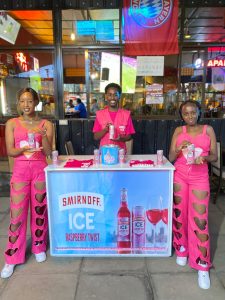
Among the latest additions to this category is Smirnoff Ice Raspberry Twist, a fruit-forward RTD designed around exactly this kind of casual socialising. Built for occasions that are unplanned and uncomplicated, it removes the need for mixing, measuring or preparation, allowing the focus to remain where it belongs: on the people sharing the experience.
At 6.5% Alcohol by Volume (ABV), the drink combines a sweet raspberry profile with a subtle tartness that adds balance without overwhelming the palate. The flavour feels approachable and familiar while offering enough character to stand out in a growing category.
Equally important is the format itself. Chilled, portable and ready to enjoy, RTDs align perfectly with a generation that values flexibility. In a market where convenience increasingly influences purchasing decisions, the ability to simply pick up a drink and enjoy it immediately has become a genuine advantage.
The popularity of RTDs also reflects changing attitudes towards hosting. Social gatherings are becoming less formal and more participatory. The pressure on hosts to curate every detail is giving way to a more relaxed approach where everyone contributes to the atmosphere and the experience feels more organic.
As Kenya’s social culture continues to evolve, products that complement these changing habits are likely to thrive. Consumers are not necessarily drinking less socially; they are simply seeking smarter and easier ways to enjoy those moments.
Ultimately, the ready-to-drink revolution is about more than convenience. It reflects a lifestyle built around spontaneity, connection and making the most of everyday experiences. And in a world that often feels increasingly busy, a little less fuss may be exactly what people are looking for.
The Ethics and Anti-Corruption Commission (EACC) has conducted a search operation at the residence of Patrick Analo Akivaga, the Chief Officer for Urban Development and Planning at the Nairobi City County Government.
Search Operation Conducted in Syokimau, Machakos County
The operation, carried out on Thursday, 4th June 2026, targeted Analo’s residence in Syokimau, Machakos County. According to EACC, the search was conducted in connection with allegations of conflict of interest, abuse of office, bribery, and possession of unexplained assets.
EACC alleges that Analo has been receiving substantial amounts of money through cash transactions and M-Pesa transfers, amounting to millions of shillings.
Investigators further suspect that he has accumulated significant assets that are not proportional to his known legitimate sources of income, prompting the probe into his financial dealings and lifestyle.
EACC Conducts Search at Nairobi Chief Officer’s Residence
Cash Recovery of KSh 65.3 Million
During the operation, EACC says it recovered key evidentiary material believed to be critical to the ongoing investigation. These include KES 51,300,000 and 113,000 US dollars, equivalent to approximately KSh 14,000,000, bringing the total cash recovered to KSh 65,300,000.
In addition to the cash, investigators also seized several items considered important for the case. These include multiple title deeds, motor vehicle log books, laptops, land and motor vehicle sale agreements, and approval plans linked to the Nairobi City County Government.
Authorities also recovered mobile phones, iPads, electronic devices, and other documentary materials that may support the investigation.
Upon conclusion of the investigations, EACC stated that the findings will inform the next course of action, which may include prosecution and recovery proceedings aimed at forfeiting unexplained assets and proceeds of corruption.