Sunday, June 28, 2026
Google search engine
Home Blog Page 21

MPs Questions Quality of Phones Issued to Community Health Promoters

A Parliamentary Committee has raised concerns over the quality and functionality of smartphones distributed to Community Health Promoters (CHPs) under Kenya’s Universal Health Coverage (UHC) programme.

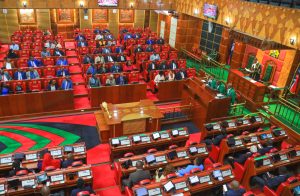
The concerns emerged during a meeting of the Departmental Committee on Health at Bunge Towers, where lawmakers reviewed the State Department for Medical Services’ Budget Estimates for the 2026/2027 financial year.

The smartphones were distributed in late 2023 to support digital registration, reporting, and data collection through the Electronic Community Health Information System.

The programme targeted 100,000 CHPs across the country and was designed to strengthen primary healthcare delivery at the grassroots level.

However, Members of Parliament said the devices have failed to meet expectations, with many reportedly becoming faulty only a few years after distribution.

MPs Raise Concerns Over Faulty Devices
Committee Chairperson James Nyikal led members in assessing the programme’s performance and whether taxpayers obtained value for money from the procurement process.

The matter emerged after Medical Services PS Ouma Oluga revealed that the ministry had prioritised the payment of Ksh 876.9 million in outstanding invoices related to the procurement of the phones.

The discovery sparked strong reactions from MPs, notably Oron Joshua and Martin Owino, who claimed to have personally engaged Community Health Promoters and confirmed numerous device failures.

“I interact with the CHPs, including recently, and I confirm that over 60 per cent of the phones distributed to the grassroots health workers do not work,” said Oron.

He added that many health promoters were unable to log into the gadgets to submit reports, raising concerns about the reliability of the government’s digital health strategy.

Similar concerns were echoed by Mathenge Duncan and Lenguris Pauline, who questioned the quality assurance measures used during procurement.

MPs Questions Quality of Phones Issued to Community Health Promoters
Committee Demands Accountability
The Committee warned that additional funding for new smartphones would not be approved until the ministry submits a detailed report on the condition and performance of the current devices.

“Kenyans need value for their money. We cannot allocate more money for the ministry to buy smartphones that did not work,” said Nyikal.

Health CS Aden Duale, Director General for Health Patrick Amoth, and PS Oluga appeared before the committee to respond to broader health sector expenditure concerns.

In response to the criticism, PS Oluga said the ministry had taken note of the issues raised and would provide the committee with the necessary documentation, including an assessment of the phones’ performance.


Africa Forward Summit Ends in Nairobi With Push for Growth, Security and Innovation

Leaders Adopt New Africa-France Partnership Framework
African leaders and representatives from the French Republic concluded the Africa Forward Summit in Nairobi on May 12, 2026, adopting a wide-ranging declaration aimed at deepening Africa-France cooperation on economic growth, security, innovation and sustainable development.

Held under the theme “Africa Forward: Africa-France Partnership for Growth and Innovation,” the summit brought together heads of state, financial institutions and development partners to discuss Africa’s role in a rapidly changing global economy.

The declaration positions Africa not only as a future market, but also as a global partner in production, industrialisation and innovation.

Leaders pledged to move beyond traditional aid models toward partnerships based on co-investment, shared value creation and mutual respect.

Peace and security emerged as a major focus of the summit. Leaders reaffirmed support for African-led peace operations through the African Union Peace and Security Architecture (APSA) and backed reforms to the United Nations Security Council to increase African representation.

The summit also called for stronger responses to terrorism, cyber threats, organised crime and instability in regions such as the Horn of Africa, Sudan, the Great Lakes and the Sahel.

Agriculture and Food Security Prioritised
On agriculture, the declaration emphasized the transformation of the sector into a modern and climate-resilient engine of industrial growth.

Governments committed to expanding agro-processing, strengthening fertilizer supply chains, supporting agricultural research and empowering youth and women through digital farming technologies and innovation hubs.

Leaders also stressed the importance of food security and regional agricultural trade under the African Continental Free Trade Area (AfCFTA).

Healthcare cooperation featured prominently, with commitments to strengthen resilient health systems, expand vaccine and medicine manufacturing in Africa, and improve pandemic preparedness.

The summit also backed increased investment in healthcare workforce development, digital health systems and regional medical supply chains.

Africa Forward Summit Ends in Nairobi With Push for Growth, Security and Innovation
Green Energy and Industrialisation Drive Growth Agenda
Energy and industrialisation formed another key pillar of the discussions. African and French representatives pledged to accelerate green industrialisation through investments in renewable energy, geothermal power, hydropower, nuclear energy and low-carbon technologies.

The declaration also called for local value addition in Africa’s critical minerals sector to support industrialisation and job creation.

The summit further highlighted the growing importance of the blue economy. Leaders committed to strengthening maritime security, protecting ocean ecosystems and supporting sustainable shipping and coastal economies.

Cooperation in tackling piracy, illegal fishing and climate-related threats to coastal communities was also prioritised.

Digital transformation and artificial intelligence were identified as strategic areas for future growth. The declaration supports investment in broadband infrastructure, regional data centres, African AI systems and local language models.

Leaders also pledged to promote ethical AI governance, digital sovereignty and protections against misinformation and cyber-enabled harm.

Africa Forward Summit Ends in Nairobi With Push for Growth, Security and Innovation
Calls for Financial Reform and Investment
On financial reform, African leaders pushed for changes to the international financial architecture, including greater African representation at the International Monetary Fund (IMF), improved access to concessional financing and reforms to global debt systems.

The summit also called for fairer global trade systems and stronger action against illicit financial flows.

The Nairobi summit concluded with a broader call for investment in infrastructure, education, skills development and entrepreneurship to unlock Africa’s economic potential.

Leaders described the declaration as a roadmap for long-term cooperation between Africa and France, anchored on sustainable growth, resilience and shared prosperity.


KPC Announces Board and Management Changes After Privatization

Kenya Pipeline Company (KPC) has announced significant changes in its Board of Directors and senior management following the completion of its privatization process and subsequent regulatory adjustments that have altered its governance structure.

The Company confirmed that Sharon Irungu-Asiyo and Mr. Mohamed Birik Mohamed have ceased to serve as directors of the Board with effect from 22nd April 2026.

Their exit follows the revocation of Kenya Pipeline Company’s designation as a National Government Entity under Legal Notice No. 33 of 2015, as issued through Legal Notice No. 72 by the CS for the National Treasury John Mbadi.

Regulatory Changes Following Privatization
The change was further reinforced after the Acting CEO of the Privatization Authority, Jane Rose Omondi, issued Gazette Notice No. 5804 under the Privatization Act, 2025, confirming the completion of the Company’s privatization process.

This effectively removed the legal requirement for representation of the Attorney General and the PS, State Department for Petroleum on the Board.


Appreciation of Outgoing Directors
In its statement, the Board expressed appreciation for the contribution of the outgoing directors Irungu-Asiyo was recognized for her strong governance input, particularly through the Board Audit Committee, where she strengthened oversight on financial reporting, risk management, and internal controls.

Her role in the Technical Committee also supported legally sound and commercially viable infrastructure expansion decisions.

Mohamed Birik Mohamed was commended for his contribution to the Nomination and Remuneration Committee, where he helped shape human capital strategy, as well as the Technical Committee, where he provided oversight on operational and infrastructure matters.

The Board highlighted his role in strengthening institutional alignment with government priorities and advancing Kenya Pipeline Company’s position as a regional energy leader.

KPC Announces Board and Management Changes After Privatization
Exit of General Manager (Supply Chain)
In other developments, the Company announced the exit of Maureen Mwenje from her role as General Manager (Supply Chain), effective 6th May 2026. The Board thanked her for her service and wished her success in her future professional endeavours.

Despite these leadership transitions, the Board emphasized that the changes do not affect the operational stability, strategic direction, or financial position of Kenya Pipeline Company PLC.

The Company assured shareholders, partners, and the investing public of its continued commitment to efficiency, infrastructure development, and long-term value creation.

The Board reiterated that Kenya Pipeline Company remains firmly focused on its mandate of delivering reliable energy transport services while strengthening corporate governance under its new ownership and operational framework.


Health Ministry Seeks Bigger UHC Budget Amid Reforms

The Government has reaffirmed its commitment to strengthening Kenya’s healthcare system through reforms, strategic financing, and closer collaboration between the national and county governments as it pushes forward with the Universal Health Coverage (UHC) agenda.

This emerged during an engagement between the Ministry of Health and the National Assembly Departmental Committee on Health at Bunge Towers in Nairobi, where Health CS Aden Duale led the presentation of the 2026/2027 Financial Year Estimates for the State Department for Medical Services.

The session focused on accelerating healthcare reforms through investments in health systems strengthening, workforce support, digital transformation, and improved service delivery across the country.

MOH outlined the mandate of the State Department for Medical Services, highlighting its role in policy direction, regulatory coordination, institutional capacity strengthening, management of national referral services, and technical support to county governments.

Digital Reforms and Local Manufacturing Prioritised
Among the major priorities presented to the committee were expansion of local manufacturing of medical products and technologies, modernization of healthcare systems through digitization, and stronger accountability mechanisms aimed at improving efficiency and access to quality healthcare.

Community Health Promoters (CHPs) featured prominently in the discussions, with the Ministry emphasizing their role in linking households to healthcare services and strengthening primary healthcare interventions at the grassroots level.

CS Duale said the government plans to replace and upgrade CHP kits to improve service delivery and support preventive and promotive healthcare initiatives within communities.

In a major welfare boost, the Ministry announced plans to transition 107,000 Community Health Promoters into the Social Health Authority (SHA) comprehensive medical scheme through a joint framework involving both national and county governments.

Health Ministry Seeks Bigger UHC Budget Amid Reforms
Ministry Pushes for Increased Health Financing
The Ministry also appealed for increased budgetary allocations to support several underfunded but critical programmes.
These include operationalisation of the East Africa Centre for Excellence in Urology and Nephrology, strengthening the Kenya National Blood Transfusion Services, scaling up the Primary Healthcare Fund to sustain outpatient services at Level 2 and 3 facilities, and increasing support for the Emergency, Chronic and Critical Illness Fund.

Additional funding was also requested for national referral hospitals facing growing operational and staffing pressures.

On UHC healthcare workers, the Ministry confirmed that contracts have been extended until June 30, 2026, to allow counties adequate time to absorb them on permanent and pensionable terms.

The committee was further briefed on ongoing reforms targeting health financing efficiency, supply chain strengthening, digital health infrastructure, and uninterrupted availability of essential medicines.

The Ministry said protecting health financing remains critical to Kenya’s economic resilience and human capital development, adding that immunization funding has been safeguarded to sustain gains made in child health and prevent outbreaks of vaccine-preventable diseases.


NTSA to Roll Out Digital Vehicle Logbooks in Major Service Overhaul

The National Transport and Safety Authority (NTSA) has announced intentions to establish an Electronic Motor vehicle Registration Certificate, also known as the eLogbook, in an effort to modernize car registration and ownership services throughout Kenya.

According to NTSA, the new digital system will replace the present paper-based logbook and be completely integrated into all motor vehicle registration operations.

These include new car registration, ownership transfers, change of particulars, inspections, and other associated transactions.


Digital Transition Targets Faster Services
The implementation is part of the NTSA’s overall digital transformation plan, which aims to improve service delivery, increase transparency, and remove administrative bottlenecks in the transportation sector.

The new framework will allow car owners to access, examine, download, and check their digital logbooks using the government’s eCitizen platform.

The Authority anticipates the transformation to drastically decrease paperwork and speed service times.

NTSA stated that the adoption of the eLogbook is intended to increase efficiency by decreasing processing delays and physical visits to NTSA offices. The Authority also claims that the system would improve document security by reducing the possibility of forgery, loss, or manipulation using modern digital protections.


Improved Data Management and Transparency
In addition, the digital records are expected to support better data management and improve coordination between stakeholders such as insurance companies, financial institutions, traffic enforcement agencies, and vehicle owners.

NTSA stated that the shift to digital services is part of a larger effort to build a seamless, technology-driven road transport ecosystem.

NTSA further indicated that service delivery timelines, which previously ranged from three to seven days and in some cases weeks could be reduced to same-day or instant processing under the new system.

The eLogbook system is expected to officially go live on Wednesday, June 10, 2026. Once operational, all motorists and clients completing vehicle-related transactions will be required to access and download their registration certificates electronically through their respective eCitizen accounts.

NTSA to Roll Out Digital Vehicle Logbooks in Major Service Overhaul
Stakeholder Training Sessions Planned
To facilitate the transition, NTSA has organised a series of virtual sensitisation and training sessions targeting various stakeholder groups. These include vehicle dealers, financial institutions, insurance firms, county governments, driving schools, transport operators, and the general public.

The sensitisation programme is scheduled to run between May 25 and June 4, 2026, with different sectors assigned specific dates and time slots.

NTSA has invited stakeholders to register for the virtual sessions through its official website. Registration for the training sessions will close on Wednesday, May 20, 2026.

The Authority says the initiative is expected to improve public access to transport services while also helping curb corruption and inefficiencies associated with manual processes.


NPS Seeks Increased Budget Allocation Ahead of 2027 General Election

The National Police Service (NPS) has requested additional budgetary allocations for the fiscal year 2026/2027, citing mounting security needs, continuing operations, and preparations for the 2027 General Election.

The request was presented to the Departmental Committee on Administration and Internal Security on May 11, 2026, during discussions on the next national budget estimates.

Inspector General of Police Douglas Kanja led the presentation, highlighting key operational and institutional issues that require immediate budgetary assistance. Key issues mentioned included ongoing security operations around the country, the recruitment of new officers, and the development of police infrastructure.

NPS stated that greater financing is required to strengthen national security and improve service delivery throughout the country.

Focus on Recruitment and Police Presence
A major concern raised by the NPS is the current police-to-population ratio, which the Service says remains below the recommended threshold.

IG Kanja noted that additional recruitment would help bridge the gap and improve police presence, particularly in underserved and high-risk areas.

The Service also emphasised the need to modernise and upgrade police stations and operational facilities across the country. According to the presentation, improved infrastructure would enhance accessibility, efficiency, and the overall working conditions for officers.

The proposals come at a time when the country continues to face evolving security threats, including organised crime and public safety challenges in urban centres.

NPS Seeks Increased Budget Allocation Ahead of 2027 General Election
2027 Election Preparations Drive Budget Push
The upcoming 2027 General Election also featured prominently in the discussions.

The Inspector General told the committee that election periods often require heightened security operations, deployment of officers, and increased logistical support.

He said adequate funding would enable the Service to effectively execute its constitutional mandate of maintaining law and order during the electoral process.

According to the NPS, early budgetary planning is critical to ensure smooth coordination, mobility, communication, and operational readiness ahead of the polls.

Modernisation Agenda Takes Centre Stage
Beyond immediate operational needs, the NPS reaffirmed its commitment to transforming the institution into a modern, professional, accountable, and people-centred police service.

The Service indicated that additional funding would support reforms aimed at improving professionalism, enhancing public trust, and strengthening internal accountability systems.


Gachagua Targets Ruto, Macron Over Sh7 Billion Road Deal

Former DP Rigathi Gachagua has accused President William Ruto’s administration of overseeing what he described as a corrupt compensation scheme linked to the Nairobi-Nakuru-Mau Summit highway project.

Speaking in reference to the visit by French President Emmanuel Macron, Gachagua claimed that the public protests and heckling witnessed at the University of Nairobi’s Taifa Hall yesterday were not acts of disrespect, but rather a message from frustrated Kenyans over alleged misuse of public funds.

Nairobi-Mau Summit Road Dispute
According to Gachagua, the controversy dates back to September 2020 when the government of former President Uhuru Kenyatta awarded French firms a Ksh 159 billion contract to construct the Nairobi-Nakuru-Mau Summit road.

However, he alleged that the project was later cancelled under President Ruto’s administration before construction had begun, paving the way for Chinese contractor CRBC to take over the project.

Gachagua claimed the switch created room for inflated costs and corruption. He alleged that while the original French-backed project was valued at Ksh 159 billion for a larger scope, the revised CRBC deal rose to nearly Ksh 200 billion despite covering a smaller scope of work.

“The difference created a corruption fund of nearly Ksh 50 billion,” Gachagua claimed.

Gachagua Targets Ruto, Macron Over Sh7 Billion Road Deal
Claims Over KSh 7.3 Billion Compensation
The former Deputy President further alleged that approximately Ksh 7.3 billion from Kenya’s fuel levy fund was irregularly diverted to compensate the French firms following cancellation of the original contract.

He referenced reports allegedly flagged by the Auditor General in May 2026, claiming the compensation amounted to proceeds of crime at a time when many Kenyans were struggling with the high cost of living.

Gachagua argued that ordinary citizens were angered by the compensation payout while schools continued to face financial strain and families struggled to afford basic necessities.

He also linked the matter to wider concerns about governance and accountability in major infrastructure projects.

In his remarks directed at President Macron, Gachagua urged France not to ignore the concerns being raised by Kenyans over the disputed payments.

He further referenced a separate dispute involving Leopard Rock Hotel in Meru County, claiming local residents risked losing access to education funding because of legal and financial demands tied to the property.


Kabogo Hosts Nigerian Minister of Communication Bosun Tijani

Information, Communications and the Digital Economy CS William Kabogo hosted Nigeria’s Minister of Communications, Innovation and Digital Economy Bosun Tijani for a courtesy call at his Nairobi office, on the sidelines of the ongoing Africa Forward Summit currently taking place in Nairobi.

Focus on ICT Collaboration and Digital Transformation
Pivotal discussions centered on strengthening Kenya–Nigeria collaboration in the information and communications technology (ICT) sector, with both sides exploring opportunities in innovation ecosystems, digital infrastructure development, cybersecurity cooperation and skills exchange programmes aimed at accelerating Africa’s digital economy and broader technological advancement.
Kabogo Hosts Nigerian Minister of Communication Bosun Tijani

Minister Bosun Tijani commended Kenya’s significant progress in technology adoption and digital infrastructure rollout, particularly highlighting the ongoing 100,000-kilometre national fibre connectivity programme as a transformative foundation for inclusive connectivity and innovation-driven growth across both urban and rural areas.

CS Kabogo reaffirmed the remarks made by President William Ruto during the summit’s opening ceremony, emphasizing that Africa’s development agenda must be driven by Africans through effective utilization of local talent, innovation and resources in order to achieve sustainable economic transformation across the continent.

Kabogo Hosts Nigerian Minister of Communication Bosun Tijani

The discussions form part of broader engagements at the Africa Forward Summit held in Nairobi from 11th to 12th May, is focused on accelerating continental collaboration in digital innovation, policy harmonisation and investment in technology-driven growth sectors, positioning Africa as a competitive and emerging global digital hub.

Strengthening Bilateral Engagements for Digital Growth
Kabogo expressed optimism about continued engagements with Dr Tijani, noting that sustained partnerships between Kenya and Nigeria would further enhance innovation capacity, unlock new investment opportunities and strengthen Africa’s position in the evolving global digital economy and ecosystem.


DCI Links Nakuru Cleric Murder to Notorious Armed Gang as Probe Intensifies

The Directorate of Criminal Investigations (DCI)has issued an update on the ongoing investigation into the murder of Reverend Julius Ndumia Ngari, which occurred on the night of May 3, 2026 at PCEA Tabuga Church in Nakuru North Sub-County.

DCI says sustained forensic and intelligence-led operations have significantly advanced the case, linking the incident to a notorious armed criminal gang first profiled in 2022.


Link to Armed Criminal Gang
They further indicate that the gang is known for violent armed robberies executed using an L1A1 firearm while disguised in security forces attire.

The same firearm, investigators note, was recovered by police in 2024 and is now being re-examined as part of the evidentiary chain connecting the suspects to multiple crimes across Nakuru County.

Investigators have also linked the gang to a violent robbery on May 1, 2026, during which Sh600,000 was reportedly transferred from a victim’s bank account to mobile numbers associated with the syndicate.

Authorities say the pattern of coordinated attacks suggests a wider criminal network operating within the region.

DCI Links Nakuru Cleric Murder to Notorious Armed Gang as Probe Intensifies
Forensic and Scientific Investigations
DCI says advanced forensic examinations, including scientific scene reconstruction and digital analysis, are ongoing to firmly place suspects at the crime scene. The agency emphasizes that these processes are critical in building a robust case that can withstand prosecution in court.

DCI also notes that detectives are pursuing multiple leads relating to a series of violent robberies and attacks reported in Nakuru and surrounding areas, which are believed to bear operational similarities to the Tabuga Church incident.

Public Advisory and Appeal for Information
The DCI cautions that investigations remain active and urges members of the public to avoid speculation.

Citizens are encouraged to share credible information through the #FichuaKwaDCI hotline, including toll-free 0800 722203 or WhatsApp 0709570000, to assist ongoing inquiries.

DCI reiterates its commitment to a thorough, professional and impartial investigation aimed at ensuring all perpetrators are brought to justice. Further updates will be communicated as the probe progresses.


Special Fund Committe Questions National Drought Fund Over Emergency Response Capacity

The Special Funds Accounts Committee on Tuesday held a session at Bunge Towers to review the Auditor-General’s Report on the financial statements of the National Drought Emergency Fund covering financial years 2020/2021 to 2024/2025.

The meeting brought together officials led by Chief Executive Officer Mr Hared H. Adan, who appeared before Members to respond to questions on the Fund’s preparedness, resource adequacy and accountability in responding to drought emergencies across the country.


Concerns Raised on Emergency Preparedness and Funding
Lawmakers wanted to know if the Fund had enough funds to respond quickly to crises or whether it continues to rely on supplemental government assistance during emergencies.

In response, Mr Adan told the Committee that the Fund had resources set aside to deal with crises while also working on long-term mitigation plans to enhance resilience in drought-prone areas.

He pointed out that during the most recent drought, the Fund was able to satisfy basic humanitarian requirements for impacted populations, demonstrating operational preparedness in the face of conflicting economic demands.

He did, however, emphasize the significance of long-term investment to improve readiness and decrease future risk.

Special Fund Committe Questions National Drought Fund Over Emergency Response Capacity
Questions on Allocation Criteria and Transparency
Committee Members further questioned the criteria used in allocating funds across different projects and regions, seeking transparency on prioritisation and distribution mechanisms.

Mr Adan explained that allocations are determined by the nature and scale of infrastructure or interventions required, with funding levels varying depending on the specific needs of each region.

He added that emergency response projects are assessed on urgency, impact and resource availability to ensure equitable distribution.

The CEO also appealed for continued support from stakeholders and policymakers to strengthen the Fund’s capacity to respond effectively to future drought emergencies and climate-related shocks.

He emphasised that climate variability continues to pose significant risks, requiring enhanced financing, coordination and preparedness measures at both national and county levels.

Committee Pushes for Stronger Oversight and Efficiency
The Committee reiterated the need for strengthened oversight and improved efficiency in the management of the Fund, noting that timely interventions are critical in mitigating the humanitarian impact of droughts.

Members also stressed the importance of aligning resource allocation with early warning systems and strengthening institutional coordination to avoid delays in response.

The session concluded with a commitment to further scrutiny of the Auditor-General’s findings as part of ongoing parliamentary oversight on emergency funds.

Further engagements are expected as the Committee continues its review process in coming sittings.