
Sunday, June 28, 2026
Google search engine
Home Blog Page 22

Kenya’s Infrastructure Fund Raises 1 Billion Dollars in Four Months

President William Ruto has reported that in its infrastructure financing agenda, approximately 1 billion dollars has been raised through the newly established National Infrastructure Fund within a period of four months.

The Fund is designed as a long-term domestic capital platform aimed at channeling private and institutional investment into strategic national development projects across Kenya.

According to President Ruto, the performance underscores growing investor confidence in Kenya’s evolving infrastructure financing framework and highlights the untapped potential of domestic resource mobilisation.

The Fund is part of a broader policy shift aimed at reducing reliance on external borrowing by leveraging local savings, pension funds, and private sector capital to finance development priorities.

Government Strategy: Partnering with the Private Sector
President Ruto said the government is deliberately working with the private sector to build trust, reduce investment risks, and crowd in capital into transformative public infrastructure projects.

He emphasized that the model is structured to ensure that private investors can participate securely and profitably while supporting national growth objectives.

“Our objective is simple: to create credible mechanisms through which private capital can participate securely and profitably in Africa’s growth story,” the President noted.

He added that Kenya’s experience demonstrates what is possible when governments design clear frameworks for domestic capital mobilisation and align them with long-term development planning.

Kenya’s Infrastructure Fund Raises 1 Billion Dollars in Four Months

The National Infrastructure Fund is expected to support key sectors including transport, energy, affordable housing, and industrial development. By pooling resources domestically, the government aims to accelerate project delivery while easing pressure on public debt and external financing conditions.

Strengthening Kenya’s Infrastructure Financing Model
The government has maintained that infrastructure remains central to its economic transformation agenda, with ongoing reforms focused on improving efficiency, transparency, and investment attractiveness.

The National Infrastructure Fund is positioned as a key pillar in this strategy, designed to bridge Kenya’s infrastructure financing gap.


KWS Issues Public Alert After Hyena Sighting in Syokimau

The Kenya Wildlife Service (KWS) has issued a public notice following reports of a hyena sighting in Syokimau, urging residents to remain vigilant as response and monitoring operations continue in the affected area.

The alert comes after an incident reported on Sunday, 11th May 2026, along Mwananchi Road off Eastport Drive.

According to KWS, although the animal was not directly sighted by the responding Problem Animal Control (PAC) team, fresh footprints were discovered, confirming recent movement of a hyena within the locality.

The findings have prompted intensified ground surveillance, with wildlife officers expanding patrols across bushy and isolated sections behind Jomo Kenyatta International Airport (JKIA) towards Katani, where preliminary tracking suggests the animal may be moving.

Heightened Surveillance and Response Measures
KWS has assured residents that all necessary precautionary measures are actively being implemented to contain any potential risk to human life and to safely manage the situation without harm to wildlife.

KWS emphasized that there is currently no cause for panic, but called for heightened awareness among residents in Syokimau and surrounding neighborhoods.

Residents have been advised to avoid approaching or provoking any wild animals, keep children under close supervision, and promptly report any wildlife sightings to the nearest KWS station or local authorities.

The Wildlife Service further stressed that early reporting is critical in enabling rapid response and preventing possible human-wildlife conflict.
KWS Issues Public Alert After Hyena Sighting in Syokimau
KWS Reaffirms Commitment to Safety and Conservation
KWS reiterated its commitment to safeguarding both human life and wildlife, noting that coordinated ground teams remain on high alert as tracking operations continue.

For emergencies and assistance, KWS has provided a 24-hour toll-free contact line: 0800 597 000, which residents are encouraged to use for immediate reporting of wildlife sightings or incidents.

As surveillance operations continue, authorities are expected to maintain increased patrols in Syokimau and adjacent areas until the situation is fully contained.


Ruto: World Bank, IMF Alone Cannot Finance Africa’s Development Ambitions

Structural Inequality in the Global Financial System
President William Ruto has said the World Bank and International Monetary Fund (IMF) alone cannot finance Africa’s development ambitions, arguing that the current international financial system remains structurally unequal and limits the continent’s ability to fund its transformation agenda at scale.

He noted that African economies continue to face higher borrowing costs and constrained access to concessional financing, which slows infrastructure and industrial growth.

President Ruto pointed out that distorted risk perceptions and bias in global credit rating systems continue to penalize African economies, increasing the cost of capital and discouraging long-term investment in productive sectors.

He said this imbalance is neither sustainable nor just, and remains one of the principal constraints on financing infrastructure, industrialization, climate adaptation, and economic transformation across the continent.


Support for the African Credit Rating Agency
Ruto emphasized Africa’s support for the African Credit Rating Agency, describing it as a step toward fairer and more evidence-based assessment of African economies and investment opportunities.

He said the initiative is not intended to replace existing global institutions such as the IMF or World Bank, but to correct long-standing distortions in risk perception that have increased borrowing costs and discouraged investment.

He further stressed that even as reforms in the global financial system continue, Africa must rethink its financing model.

“Africa must increasingly finance Africa,” he said, noting that the continent holds more than four trillion dollars in long-term domestic savings, including over one trillion dollars in pensions and insurance assets and more than 500 billion dollars in central bank reserves.

Ruto: World Bank, IMF Alone Cannot Finance Africa’s Development Ambitions

Despite this liquidity, governments still struggle to finance infrastructure, energy systems, industrial parks, logistics networks, and affordable housing, showing that the challenge is not liquidity but risk architecture.

Kenya therefore reaffirmed its support for the alliance of African multilateral financial institutions as a platform for mobilizing capital, sharing risk and coordinating project execution.

Ruto said building a stronger and more resilient financial architecture is key to ensuring Africa’s long-term self-sustaining development and reducing overreliance on external financing channels.


Kenya Railways Re-advertises Major Rail Upgrade Tender Under KUMIP

Kenya Railways has readvertised a major procurement opportunity under the Kenya Urban Mobility Improvement Project (KUMIP), inviting renewed interest from eligible firms for the supply of 24 Diesel Multiple Unit (DMU) air compressors.

The Request for Expression of Interest (EOI), classified under consulting services and firms’ selection, signals the corporation’s renewed push to attract qualified bidders following a prior procurement cycle.

World Bank Procurement Framework Guides Competitive Bidding
According to the notice, the procurement is being conducted under international competitive bidding procedures in line with the World Bank’s Procurement Regulations for IPF Borrowers.

The process emphasizes transparency, fairness, and value for money, with evaluation criteria including technical compliance and price competitiveness.

Eligibility Requirements and Submission Guidelines
Eligible bidders are required to demonstrate experience in supplying similar equipment and must meet strict qualification requirements outlined in the tender documents.

The evaluation process will apply a two-stage system, with technical evaluation weighted at 80% and financial evaluation at 20%.

Kenya Railways noted that interested firms can access detailed tender documents through its official website, the Public Procurement Information Portal, and World Bank Group Procurement Notices.

Kenya Railways Re-advertises Major Rail Upgrade Tender Under KUMIP

Kenya Railways has also encouraged prospective bidders to submit applications electronically, ensuring compliance with the submission guidelines.

All bids must be delivered to the designated Kenya Railways headquarters in Nairobi by 11th June 2026. Late submissions will not be accepted, and all bids will be opened publicly at the procurement office in the presence of bidders’ representatives who choose to attend.

The tender forms part of broader investments under KUMIP aimed at modernising Kenya’s rail-based urban mobility systems, reducing congestion, and improving commuter experience in major cities.

The project is also expected to enhance capacity within Kenya Railways’ commuter and freight services through upgraded equipment and improved reliability.

Kenya Railways has reiterated its commitment to strengthening procurement integrity and ensuring that all processes adhere to both national regulations and World Bank standards.


Ruto Pushes for Stronger Pharmaceutical Manufacturing Across Africa

President William Ruto has outlined a renewed push to position Kenya as a leading pharmaceutical manufacturing and health innovation hub in Africa.

President Ruto said Kenya is taking deliberate steps to strengthen its pharmaceutical ecosystem and expand local manufacturing capacity.

Speaking during the Africa Initiative for Medical Access and Manufacturing (AIM2030) meeting ahead of the Africa Forward Summit in Nairobi, the President said Kenya is taking deliberate steps to strengthen its pharmaceutical ecosystem and expand local manufacturing capacity.

The move forms part of a broader strategy aimed at reducing Africa’s dependence on imported medical products while improving access to quality and affordable healthcare solutions across the continent.

Regulatory Reforms Target Global Standards
A major pillar of the government’s plan is strengthening Kenya’s National Regulatory Authority to achieve the World Health Organisation’s Maturity Level 3 status.

According to the President, attaining the benchmark will reinforce international confidence in the quality, safety, and efficacy of pharmaceutical products manufactured in Kenya.

The certification is expected to improve the competitiveness of Kenyan-made medicines and medical products in regional and international markets. It would also position the country to attract more pharmaceutical investments and partnerships.


Kenya Eyes Regional Manufacturing Leadership

The President said Kenya’s ambition is to become a regional hub for pharmaceutical manufacturing, health innovation, and medical supply chains serving both local and wider African markets.

He pointed to Kenya’s strategic position as the gateway to Eastern Africa’s rapidly growing economic bloc as a key advantage in achieving that goal.

Ruto noted that the country is supported by a strong and expanding domestic market, improving logistics infrastructure, and an increasingly dynamic investment environment.

The government believes these factors provide a strong foundation for scaling local manufacturing and creating a more resilient healthcare supply chain.

Ruto Pushes for Stronger Pharmaceutical Manufacturing Across Africa
Call for Continental Cooperation
President Ruto also urged African governments to accelerate implementation of commitments on regulatory harmonisation, industrial policy, and market integration.

He argued that fragmented regulations and inconsistent industrial policies continue to slow Africa’s manufacturing growth and limit intra-African trade opportunities.

According to the President, stronger cooperation among African states is necessary to unlock the continent’s manufacturing potential and reduce overreliance on external supply chains.

The push comes as African countries continue exploring ways to strengthen local pharmaceutical production following lessons learned during the COVID-19 pandemic, which exposed vulnerabilities in global medical supply systems.

Kenya has increasingly positioned itself as a key player in regional healthcare manufacturing, with growing investments in pharmaceuticals, medical technologies, and health research expected to drive the sector’s next phase of growth.


Tourism CS Under Fire Over Absence From Budget Session

Tourism CS Rebecca Miano has come under sharp criticism from Members of Parliament after failing to appear before a National Assembly Committee during deliberations on the Ministry’s 2026/27 Budget Estimates.

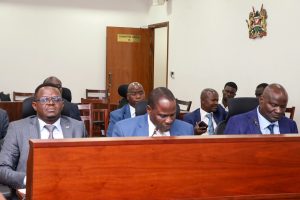
The session, held at Bunge Towers on Monday, was chaired by Kareke Mbiuki, who accused the CS of disregarding a critical parliamentary process. Legislators expressed frustration after learning that Miano had skipped the meeting for the second consecutive time.

Tourism PS John Ololtuaa appeared before the Committee on behalf of the CS. However, he informed members that Miano was unavailable because she was at State House preparing for a dinner hosting guests attending the Africa Forward Summit.

The explanation triggered sharp reactions from lawmakers, who questioned the CS’s priorities.

“Waziri should choose her priorities right. Today’s budget meeting was extremely crucial to her Ministry and she cannot skip it because of other assignments,” said Mbiuki.

MPs Question CS Priorities
The Committee Chair further noted that Miano had also missed a similar sitting the previous week, delaying scrutiny of the Ministry’s budget allocations.

MPs argued that the meeting was central to determining funding for projects under the Ministry of Tourism and Wildlife.

Abdi Chome criticised the CS for prioritising engagements outside her docket over discussions tied directly to ministry financing.

“Today’s budget meeting was meant to deliberate on resource allocations for projects being undertaken by the ministry. If the CS is serious about her work, she should have been here much earlier than members,” he said.

Captain Ruweida Mohamed also expressed frustration, revealing that she had incurred extra costs to rearrange her travel plans in order to attend the session.

“I had to pay a fee to reschedule my flight to Mombasa so that I could participate in deliberations on financing development programmes within the ministry. It is unfortunate that the CS chose otherwise,” she said.

Tourism CS Under Fire Over Absence From Budget Session
PS Ololtuaa Struggles to Defend Budget
Despite the uproar, the Committee allowed PS Ololtuaa to proceed with presenting the Ministry’s proposed KSh 17.5 billion budget for the 2026/27 financial year.

However, the PS also faced criticism after struggling to defend the proposed expenditure figures. Committee members accused him of presenting allocations that were not clearly reflected in the financial documents submitted before them.

Mbiuki faulted the presentation, saying the Committee could not process figures that lacked proper documentation.

“Budget matters are about figures, not stories. Since you are ill-prepared, the Committee has no option but to send you back for proper preparation,” he said.

The Ministry of Tourism is now expected to reappear before the Committee on Wednesday to defend its budget estimates.


SHA Unveils Expanded Benefits for Maternity, Cancer and Sickle Cell Care

The Government has expanded the Social Health Authority (SHA) benefit package under Legal Notice No. 78 of 2026, introducing broader access to maternity, cancer and sickle cell treatment services.

The reforms are part of the Government’s wider push towards Universal Health Coverage (UHC). The changes are aimed at reducing out-of-pocket healthcare costs while improving access to specialised treatment across the country.

Free Maternity Services Rolled Out
One of the key reforms is the introduction of free maternity services at Level 2 and Level 3 primary healthcare facilities.

Under the new package, all registered SHA beneficiaries will access maternity care on a walk-in, walk-out basis without additional charges. The cover includes both normal deliveries and caesarean sections.

The services will be financed through the Primary Healthcare Fund, easing the financial burden on expectant mothers while supporting safe motherhood initiatives.

The Government says the move is expected to increase access to skilled delivery services, particularly in underserved areas where maternal healthcare costs remain a major challenge.

SHA Unveils Expanded Benefits for Maternity, Cancer and Sickle Cell Care
Cancer Cover Increased to Ksh 800,000
The reforms also significantly expand cancer care support. The annual Cancer Benefits Package has been increased from Ksh 550,000 to Ksh 800,000, reflecting rising treatment costs and growing demand for specialised oncology services.

The enhanced package now includes oncology consultations, chemotherapy, radiotherapy and advanced diagnostic services such as CT scans, MRI and PET scans.

Patients will also have access to specialised treatment options including Brachytherapy and SBRT/SBRS, alongside supportive care services.

The increase is expected to cushion families from catastrophic medical expenses, which have remained one of the biggest barriers to cancer treatment in Kenya.


Support for Sickle Cell Patients

In addition, the Government has introduced dedicated support for patients living with sickle cell disease.

Under the revised package, SHA will now cover apheresis platelets at Ksh 20,000 and Red Cell exchange at Ksh 70,000.

Each service will be accessible up to three times within a policy period, offering relief to patients who often face high recurring treatment costs.

The inclusion of sickle cell interventions marks a broader effort to strengthen care for chronic and specialised conditions under the national health insurance framework.

Government Pushes Inclusive Healthcare
According to CS Duale, the reforms are designed to build a more inclusive, responsive and people-centred healthcare system.

The Government says the enhanced package reinforces its commitment to ensuring that no Kenyan is left behind in accessing quality healthcare services.

The changes also come as authorities continue implementing broader health financing reforms aimed at improving efficiency, affordability and equity under the SHA system.


ODM Opens 2027 Presidential Ticket as Party Begins Early Preparations

The Orange Democratic Movement officially opened applications for party members intending to run for different elective positions in the 2027 General Election, including the highly anticipated presidential ticket.

In a notice issued by the party’s National Elections Coordinating Committee (NECC), ODM invited interested members to apply for a position in six critical posts. These positions include President, Governor, Senator, County Woman Representative, National Assembly Member, and County Assembly Member.

The statement signals the start of ODM’s early political preparations for the 2027 elections, at a time when succession politics and coalition realignments are already transforming Kenya’s political environment.

According to the notice dated May 11, 2026, the application exercise is being conducted pursuant to Article 61(1) of the ODM Constitution together with Rule 7(1) and Part VIII of the party’s Elections and Nomination Rules.

Aspirants have been directed to submit their applications through the party’s online portal before June 30, 2026. The party also stated that all applicants must be registered voters to qualify for consideration.

ODM Opens 2027 Presidential Ticket as Party Begins Early Preparations
Presidential Race Expected to Draw Attention
While the notice covers all elective positions, attention is expected to focus heavily on the presidential slot, which ODM has now formally declared open.

The move could pave the way for multiple high-profile figures within the party to express interest in carrying the ODM flag in the next General Election.

It also comes amid growing national debate over the future leadership of the opposition movement and the possible political direction ODM will take.

Membership Verification and Internal Mobilisation
ODM has further urged members to verify their membership details through the party verification code provided. The exercise appears aimed at strengthening the credibility of the nomination process while ensuring that party registers are updated ahead of the primaries.

The NECC also encouraged continuous engagement between members and the elections committee for clarification throughout the application period.

Early Signal Ahead of 2027 Political Realignments
The opening of the ODM ticket comes as political parties across the country begin positioning themselves for the next electoral cycle. With alliances expected to shift and new political formations likely to emerge, ODM’s early move places it among the first major parties to formally begin its internal election roadmap.

The development is expected to intensify conversations around potential presidential contenders, coalition negotiations, and the broader opposition strategy heading into 2027.


Kenya Met Warns of Continued Heavy Rains Across Several Regions

The Kenya Meteorological Department has forecast continued rainfall across several parts of the country over the coming days, with heavy downpours expected in some regions during the first half of the forecast period.

According to Kenya Met, rains will persist in the Highlands East and West of the Rift Valley, the Lake Victoria Basin, the Rift Valley, parts of the Coast, and North-western Kenya. The intensity of the rainfall, however, is expected to reduce from May 15, 2026.

The weather Department warned that heavy rainfall could trigger flooding and landslides, especially in vulnerable areas. Residents in low-lying and landslide-prone zones have been urged to remain cautious.

“Avoid walking or driving through moving water,” Kenya Met stated. The department also cautioned members of the public against sheltering under trees or near grilled windows during thunderstorms.

Kenya Met Warns of Continued Heavy Rains Across Several Regions
Nairobi and Rift Valley Among Areas Expected to Receive Rains
In the Highlands East of the Rift Valley, including Nairobi, morning rains are expected over a few areas during the first half of the forecast period. Afternoon showers and thunderstorms are likely over several places before gradually reducing in intensity later in the week. Night showers are also expected in some areas.

A similar pattern is forecast for the Lake Victoria Basin and Rift Valley regions. Morning rains are likely in a few places, while afternoon showers and thunderstorms are expected over several areas during the early part of the forecast period. Night showers may also occur in isolated locations.

In North-western Kenya, morning rains are expected over a few to several places during the first half of the period, with afternoon and night showers likely in some areas.

Sunny Conditions Expected in Some Regions
Meanwhile, North-eastern Kenya and the South-eastern Lowlands are expected to experience sunny intervals during the day and partly cloudy conditions at night. However, occasional morning rains and afternoon or night showers may still occur in a few places.

Along the Coast, the Meteorological Department forecasts morning, afternoon, and night showers over a few areas during the first half of the forecast period.

The latest forecast comes amid ongoing concerns over the impact of heavy rains experienced in different parts of the country in recent weeks. Authorities continue to urge residents to monitor official weather updates and take necessary precautions during periods of intense rainfall and thunderstorms.


Mbadi Explains Why PAYE Relief Was Left Out of Finance Bill 2026

Treasury CS John Mbadi has indicated that the government is considering adjustments to Pay As You Earn (PAYE) tax bands that could reduce the tax burden for salaried workers, even as the move risks creating a Ksh 35 billion revenue shortfall.

Speaking on the ongoing review of personal income tax reforms, Mbadi said the Treasury is analysing revenue data for March, April and May to assess the impact of recent Kenya Revenue Authority reforms before finalising the proposal.

He noted that the proposed changes may be included directly in the current Finance Bill instead of waiting for a separate Tax Laws Amendment Bill later in the year.

Proposal Targets Lower PAYE Burden
Under the proposal, employees earning up to Ksh 30,000 per month would pay zero income tax.

Currently, workers earning up to Ksh 24,000 effectively pay no PAYE because the available tax relief offsets the tax due.

“We wanted to move that to Ksh 30,000 and zero-rate it,” Mbadi said.

The Treasury is also proposing to reduce the PAYE rate for workers earning between Ksh 30,000 and Ksh 50,000 to 25%, down from the current 30% charged on part of that income bracket.

According to Mbadi, the combined effect of the proposed changes would significantly lower government revenue collections.

“From Ksh 24,000 to Ksh 30,000 is also a reduction to zero. Now all that compounded gives a budget hole, meaning we are going to collect less by Ksh 35 billion,” Mbadi explained.

Mbadi Explains Why PAYE Relief Was Left Out of Finance Bill 2026
Treasury Explores Ways to Cover Revenue Gap
The Treasury is now evaluating how to offset the expected shortfall while maintaining fiscal balance.

Mbadi said one option is to rely on increased tax compliance and efficiency improvements being implemented by the Kenya Revenue Authority.

“Our initial projection was to use the increased revenue collection from personal income tax out of the reforms that we are carrying out at the Kenya Revenue Authority to compensate for this,” he said.

He added that stronger collections from rental income tax could also help bridge the gap.

Despite the projected loss in revenue, Mbadi signalled that the government remains committed to implementing the PAYE relief measures if ongoing reforms generate sufficient additional revenue.

“As a matter of fact, chances are that if the reforms bear fruit, we will collect much more from personal income tax, which will directly compensate this,” CS Mbadi said.

The proposed changes are expected to provide relief to formal sector workers facing high living costs, while testing the government’s ability to balance tax cuts with revenue mobilisation.