
Sunday, June 28, 2026
Google search engine
Home Blog Page 8

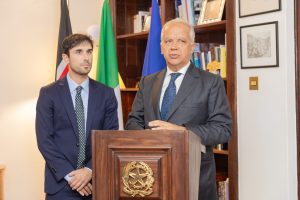
Murkomen, Sakaja Benchmark NYPD as Nairobi Plans Metropolitan Police Unit

Interior Cabinet Secretary Kipchumba Murkomen and Nairobi Governor Johnson Sakaja are leading efforts to establish a specialised Nairobi Metropolitan Police Unit, drawing lessons from the New York Police Department (NYPD) as Kenya seeks to strengthen security in the capital.

The initiative comes amid growing concerns over evolving security threats in Nairobi, one of Africa’s fastest-growing city. The proposed unit is expected to enhance public safety, improve law enforcement coordination, and address emerging forms of crime across Nairobi and its surrounding towns.

Murkomen said the Government is benchmarking against some of the world’s most effective metropolitan police services to inform the design and operations of the new unit.

“Our goal is to build a modern, professional, and technology-driven police unit capable of effectively responding to emerging security threats and safeguarding our city and its environs,” Murkomen said.


NYPD Partnership Takes Shape
During a visit to New York, Murkomen held talks with New York Police Commissioner Jessica Tisch on a proposed Memorandum of Understanding (MoU) between Kenya’s National Police Service and the NYPD.

The discussions focused on collaboration in the establishment of the Nairobi Metropolitan Police Unit, including training, intelligence sharing, and operational best practices.

The Kenyan delegation is particularly interested in learning from New York’s experience in intelligence-led policing, community engagement, emergency response coordination, and specialised urban security operations.

Murkomen, Sakaja Benchmark NYPD as Nairobi Plans Metropolitan Police Unit

Technology and Data at the Centre

As part of the benchmarking mission, the delegation received detailed presentations on how the NYPD investigates crimes and tracks criminal trends.

Officials were briefed on the department’s use of technology and data analytics, including integrated camera systems, social media monitoring, facial recognition tools, and vehicle identification systems.

The approach has enabled the department to detect crime patterns, improve response times, and strengthen preventive policing measures. Kenya hopes to adapt some of these strategies to improve urban security management in Nairobi and its metropolitan region.

Accompanying Murkomen during the visit were Governor Sakaja, Kenya’s Ambassador to the United States David Kerich, Deputy Inspector General of Police Eliud Lagat, and other senior government officials.

The visit forms part of a broader effort by the Government to modernise policing and strengthen public safety infrastructure in major urban centres.


Managing Money Without the Stress with #NiSareKabisa

Managing Money Without the Stress with #NiSareKabisa

For many young Kenyans, managing money can sometimes feel like a balancing act. Between rent, transport, groceries, airtime, family obligations, and the occasional social outing, every shilling seems to have a destination before it even reaches your account.

It is a reality many can relate to. The days when a few coins could comfortably get you through the day may be long gone, but the need to make every shilling count remains as important as ever.

In today’s economic environment, where the cost of living continues to rise and consumers are becoming increasingly conscious of their spending, financial wellness is no longer just about earning more money it is about managing the money you already have more effectively.

This is the thinking behind I&M Bank Kenya’s #NiSareKabisa campaign, an initiative designed to help customers keep more money in their pockets by offering free transfers between I&M Bank accounts and mobile money wallets for personal and sole proprietor business accounts.

The campaign recognizes a simple truth: financial stress is often caused not only by large expenses but also by the small, recurring charges that quietly accumulate over time.

Whether sending money to family, paying suppliers, moving funds between accounts, or making everyday transactions, these costs can gradually reduce disposable income.

By eliminating bank-to-mobile money transfer charges, the #NiSareKabisa campaign provides customers with an opportunity to save on everyday transactions while enjoying the convenience of digital banking.

Small Savings, Big Impact

Many people underestimate the impact of small financial decisions. A transaction fee here, a transfer charge there, and before long, a significant amount of money has been spent on costs that could otherwise have been avoided.

For young professionals starting their careers and sole proprietors managing small businesses, every saving matters.

Money saved on transaction costs can be redirected toward personal goals, emergency funds, investments, business growth, or daily household needs.

The #NiSareKabisa campaign reflects a growing demand among consumers for financial solutions that are practical, affordable, and aligned with their everyday realities.

Building Financial Confidence

Managing money without stress begins with understanding where money goes and finding ways to reduce unnecessary expenses.

Financial experts often emphasize the importance of budgeting, saving consistently, and making informed financial decisions.

While these habits remain important, reducing avoidable banking costs can also contribute significantly to overall financial wellness.

Through #NiSareKabisa, I&M Bank Kenya is helping customers simplify money management by removing one of the barriers that often discourage seamless digital transactions.

Managing Money Without the Stress with #NiSareKabisa
Supporting Everyday Financial Needs

The campaign arrives at a time when many Kenyans are paying closer attention to their financial decisions.
Rising living costs and increased economic pressures have made affordability a key consideration for households and small businesses alike.

For sole proprietors, reducing transaction expenses can support daily business operations and improve cash flow management.

For individuals, it means retaining more of their hard-earned income and enjoying greater flexibility in managing finances.

Building Financial Confidence

At its core, #NiSareKabisa is about ensuring that customers keep more of their money instead of losing it to routine transaction charges.

The campaign goes beyond banking convenience. It speaks to a broader need among Kenyans for financial solutions that make everyday life easier, less stressful, and more rewarding.

In a world where every shilling matters, managing money without stress often starts with finding smarter ways to save.

Through #NiSareKabisa, I&M Bank Kenya is reminding customers that sometimes financial wellness is not about making more money it is about keeping more of the money you already earn.

Oya’s Formula for Growth

Oya’s Formula for Growth

Access to credit can help businesses unlock new opportunities, but financial success requires more than funding alone. For many entrepreneurs, understanding how to manage money, plan for growth, and make sound financial decisions is what ultimately determines whether a business thrives.

This belief has been at the heart of Oya Micro Credit Kenya’s growth over the past four years. As the lender celebrates its fourth anniversary, the company is reflecting on a journey that has seen it expand to 110 branches across the country while serving thousands of customers every month.

According to Chief Executive Officer Wycklife Ochola, the company’s success has been driven by a simple philosophy: combine access to finance with financial education and long-term customer support.

“Credit is a powerful tool for economic empowerment, but it must be accompanied by financial education. When clients understand how to manage their finances and use credit responsibly, they are more likely to succeed in their businesses and achieve their goals,” he says.

More Than Just Loans

For many people, borrowing money is often viewed as a quick solution to immediate business needs. However, Oya believes sustainable growth comes from understanding how and when to use credit effectively.

The company works closely with customers before and after loan disbursement. Staff engage entrepreneurs directly, helping them understand their borrowing capacity, repayment obligations, and growth plans.

“We do not view our relationship with clients as a simple lender-borrower transaction. We walk the journey with them and help them make informed financial decisions,” says Ochola.

This hands-on approach has helped the institution build strong relationships with customers while promoting responsible borrowing practices.

Oya's Formula for Growth
Oya’s Formula for Growth
Helping SMEs Build Strong Foundations

Small and medium-sized enterprises (SMEs) play a vital role in Kenya’s economy. They create jobs, support families, and drive innovation in communities across the country.

Despite their importance, many entrepreneurs face challenges related to budgeting, cash flow management, and financial planning.

According to Ochola, some businesses struggle not because they lack customers, but because they lack the financial skills needed to manage growth effectively.

“We have seen businesses with great potential fail to reach the next level because they do not have the financial knowledge required to manage expansion and maintain healthy cash flow,” he explains.

To address this challenge, Oya has integrated financial literacy into its lending model. Customers receive guidance on budgeting, repayment planning, and business management, helping them build stronger financial foundations.

Growing Together

One of the company’s unique approaches is its loan graduation model. Customers who successfully complete a loan cycle can gradually access larger financing amounts as their businesses grow.

The model allows entrepreneurs to expand sustainably while reducing the risks associated with overborrowing.

“We want businesses to grow with us. As clients demonstrate responsible borrowing and repayment, they can access higher levels of financing that match their growth journey,” says Ochola.

The approach reflects the company’s broader commitment to supporting long-term success rather than focusing solely on loan disbursement.

Oya's Formula for Growth
Oya’s Formula for Growth
Using Technology to Reach More People

Technology is also playing an increasingly important role in financial education.

Oya has invested in an AI-powered WhatsApp platform that gives customers access to financial literacy content, budgeting tips, and business management advice. The platform complements support available through branch staff and customer service teams.

“Technology allows us to reach more people and provide guidance whenever they need it. We want our customers to have access to information that helps them make better financial decisions,” says Ochola.

The combination of digital tools and physical branch support ensures that customers can access assistance in a way that suits their needs.

Over the past four years, Oya Micro Credit has expanded rapidly across Kenya. The company now operates 110 branches, including new locations in the Eastern region.

Its network spans Nairobi Metropolitan, Nyanza, Western Kenya, parts of North Eastern Kenya, and the Coast region, with further expansion planned.

The institution currently serves approximately 20,000 customers every month and has created more than 500 jobs across its nationwide operations.

“As we celebrate this milestone, we are proud of the impact we have made on both our customers and employees. Their support and dedication have been central to our growth,” says Ochola.

Looking Ahead

The company plans to continue expanding its reach while introducing new financial products to meet changing customer needs. Future offerings may include startup financing and emergency loan solutions designed to support entrepreneurs and households.

Expansion beyond Kenya is also part of the long-term vision, with plans to enter additional African markets in the coming years.

For Ochola, however, growth is about more than numbers.

“Sustainable lending goes beyond disbursing loans. When borrowers succeed, businesses grow, jobs are created, and communities prosper. That is the impact we want to achieve.”

As Oya enters its fifth year, the company is betting that the combination of financial access, education, and customer support will continue to create opportunities for entrepreneurs across Kenya. In a rapidly changing economy, that formula may prove to be one of its greatest strengths.

65 Teams Set for Rhino Charge 2026 as Conservation Drive Heads to Samburu

65 Teams Set for Rhino Charge 2026 as Conservation Drive Heads to Samburu

The stage is set for the 37th edition of the Rhino Charge, with 65 teams preparing to tackle one of Africa’s most demanding off-road competitions in Ngilai, Samburu County. Beyond the thrill of the 4×4 challenge, the event continues to serve a greater purpose—raising funds to support the conservation of Kenya’s critical water tower ecosystems.

This year’s event has attracted competitors across three categories: Modified, Super Modified, and Unmodified. Among the notable entrants are Safaricom-sponsored teams EV Explorers led by Richard Kiplagat, AK44 led by Adil Khawaja, and the all-female team Zambarau Heels on Wheels.

The annual competition raises funds for Rhino Ark Kenya Charitable Trust, which works to protect Kenya’s mountain ecosystems that play a vital role in water catchment, biodiversity conservation, and climate resilience.

KES 114 Million Boost for Conservation Efforts

This year’s Rhino Charge has received KES 114 million in sponsorship support from Safaricom PLC and the M-PESA Foundation.

The M-PESA Foundation contributed KES 94 million towards Rhino Ark’s conservation initiatives, including the protection of the Mount Elgon Forest (Suam Block) and restoration activities within the Mau Forest Complex across Narok, Kericho, and Bomet counties.

Safaricom PLC provided an additional KES 20 million to support participating teams and ensure network connectivity during the event.

Under the sponsorship arrangement, Car No. 44 (AK44) received KES 15 million, while EV Explorers and Zambarau Heels on Wheels each received KES 1 million. The remaining funds have been allocated towards communication infrastructure and connectivity at the event site.

Defending Fundraisers Return

Car No. 44, led by Adil Khawaja, returns to this year’s competition after emerging as the top fundraising team during the previous edition.

The team raised an impressive KES 139.8 million in 2025, contributing significantly to conservation efforts targeting Kenya’s water towers.

“The car is in great condition and the entire team is excited and ready to take on the course. I would like to sincerely thank all our sponsors, especially Safaricom and M-PESA, for their tremendous support. As defending top fundraisers, we are hopeful of retaining our position while continuing to champion this noble cause of environmental conservation,” said Khawaja.

Last year’s Rhino Charge, held at Simo-Soi in Baringo North, raised a total of KES 269.5 million. Car No. 23, led by Peter Kinyua, emerged as the second-highest fundraising team with KES 13.5 million, while Car No. 63, led by Tim Carstens, raised KES 8.6 million.

65 Teams Set for Rhino Charge 2026 as Conservation Drive Heads to Samburu
Electric Vehicles Return to the Challenge

One of the highlights of this year’s event is the participation of EV Explorers, marking the second consecutive year that an electric vehicle will compete in the rugged off-road challenge.

The team’s first appearance in 2025 made history as the first electric vehicle entry in Rhino Charge history. Following lessons learned during the debut, the team has made several improvements to enhance performance.

“This marks our second participation in the Rhino Charge with an electric vehicle, following last year’s historic debut of an EV in the competition. We gained valuable lessons from that experience and have since made significant improvements to the vehicle. As a team, we feel more confident and better prepared for tomorrow’s challenge,” said Richard Kiplagat, Team Lead of EV Explorers.

Focus on Conservation

Organisers say preparations for the event have been completed, with all participating vehicles successfully undergoing scrutineering and safety inspections.

“The stage is fully set for this year’s Rhino Charge, with 65 car entries ready to take on the challenge. Today’s scrutineering process was focused on ensuring that all participating vehicles meet the required standards, and I am pleased to confirm that everything is in place, including the necessary security arrangements,” said Christian Lambrechts, Executive Director of Rhino Ark.

He added that continued support from sponsors, partners, and participants remains critical to the success of the event and its conservation objectives.

For nearly four decades, the Rhino Charge has combined motorsport, adventure, and environmental conservation. Funds raised through the event support Rhino Ark’s efforts to protect Kenya’s mountain forests and water catchment areas, which provide essential ecosystem services to millions of people across the country.

As competitors prepare to navigate the challenging Samburu terrain, the ultimate victory will extend far beyond the finish line, contributing to the long-term protection of Kenya’s natural heritage and critical water resources.

The Hidden Cost of “Free”: How Digital Piracy Threatens Kenya’s Creative Future

The Hidden Cost of “Free”: How Digital Piracy Threatens Kenya’s Creative Future

Kenya has spent years building its reputation as a growing hub for creativity, innovation, and digital talent. From film and music to sports broadcasting and online media, the country’s creative economy continues to emerge as one of the most promising drivers of growth and employment.

Yet behind this progress lies a growing threat that continues to undermine the sector,  digital piracy.

What many consumers dismiss as “free content” has become a multibillion-shilling crisis affecting creators, businesses, investors, and the wider economy. According to Partners Against Piracy (PAP), Kenya loses approximately KES 17.38 billion in tax revenue every year due to piracy, while the wider creative sector loses an estimated KES 92 billion annually. Local creators alone lose nearly KES 15 billion each year.

These losses represent more than missing revenue. They translate into fewer jobs, fewer productions, reduced investment, and lost opportunities for young Kenyan talent.

The Hidden Cost of “Free”: How Digital Piracy Threatens Kenya’s Creative Future
Piracy Is Hurting Kenyan Creators

Behind every film, sporting event, song, or television production are thousands of people whose livelihoods depend on legal content consumption.

When consumers access illegal streams or pirate IPTV services, the impact stretches far beyond major media companies. It affects filmmakers, editors, producers, musicians, broadcasters, technicians, and countless other creatives trying to build sustainable careers.

For many young Kenyan creators, piracy has become one of the biggest barriers to turning talent into a viable business.

At a time when young people are encouraged to innovate and embrace the digital economy, illegal content distribution continues to strip creators of the rewards of their work.

The concern is no longer simply about intellectual property rights. It is about whether Kenya can build a sustainable creator economy capable of competing globally.

The Cybersecurity Risks Behind Illegal Streaming

Digital piracy also carries serious cybersecurity and consumer protection risks.

Many illegal streaming sites and pirate platforms operate within networks linked to malware, online fraud, phishing schemes, and cybercrime activities. Users often expose personal information, financial data, and devices to significant security threats without realizing it.

As Kenya continues expanding its digital economy, experts increasingly warn that piracy now intersects with broader concerns around cybersecurity and national digital infrastructure protection.

The issue has therefore evolved beyond entertainment and media into a matter of economic security and public trust.

A National Conversation Is Emerging

The recent national forum convened by the Ministry of Information Communications and the Digital Economy signals growing recognition that piracy requires a coordinated national response.

Industry stakeholders have proposed measures such as IP blocking tools aimed at disrupting illegal streaming platforms, particularly during high-value live broadcasts and sporting events.

However, experts argue that enforcement alone cannot solve the problem.

Long-term solutions will require stronger public awareness, affordable legal content access, digital literacy, and greater support for creators and media businesses.

The challenge ultimately comes down to consumer choices.

Every illegal stream contributes to a system that weakens local industries, discourages investment, and reduces opportunities for future creators.

Protecting Kenya’s Creative Economy

Kenya’s creative industry remains one of the country’s most important economic and cultural assets.

If piracy continues unchecked, the country risks becoming a consumer of global content rather than a producer and exporter of its own stories, music, and creative experiences.

Supporting legal platforms and protecting intellectual property will play a critical role in determining whether Kenya’s digital economy can continue creating jobs, attracting investment, and empowering local talent.

As the debate around piracy intensifies, the country now faces an important decision whether to actively protect its creators and digital future or continue allowing illegal content networks to undermine one of its fastest-growing sectors.

By Leonard Agufa

Head of Operations Support at MultiChoice Kenya

PPB Issues Public Alert Over Falsified Cancer Drug in Kenyan Market

The Pharmacy and Poisons Board (PPB) has issued a public alert over a falsified batch of Phesgo (Pertuzumab/Trastuzumab) circulating in the Kenyan market, warning that the product poses a serious risk to patient safety and public health.

The product is identified as Phesgo 600mg/600mg in 10ml, Batch Number C5290S20. According to the regulator, the batch does not match any authentic batch produced by Roche, the manufacturer of the cancer treatment medicine.

Surveillance Detects Falsified Batch
PPB said the discovery was made during routine post-marketing surveillance activities conducted as part of its mandate under the Pharmacy and Poisons Act, Cap 244.
The Board is responsible for regulating the pharmacy profession and ensuring that health products and technologies in Kenya meet the required standards of quality, safety, and efficacy.

The Board noted that the suspicious vials contain a white powder, while authentic Phesgo is supplied as a ready-to-use liquid solution. Genuine Phesgo is described as a clear to opalescent, colourless to slightly brownish liquid intended for subcutaneous administration and does not require reconstitution.

PPB Issues Public Alert Over Falsified Cancer Drug in Kenyan Market
Serious Public Health Risks
PPB warned that falsified medicines may contain harmful, incorrect, or insufficient ingredients, making their safety and effectiveness impossible to guarantee.

“Use of this product poses a serious risk to patient safety and public health,” the Board stated.

Phesgo is commonly used in the treatment of certain types of breast cancer, making the circulation of falsified oncology products particularly concerning for healthcare providers and patients.

The Poisons Board has directed procurement agencies, distributors, wholesalers, retailers, pharmacists, pharmaceutical technologists, healthcare professionals, and members of the public to immediately stop the distribution and use of the affected batch.

PPB warned that procuring medicines from unlicensed suppliers not only endangers patients but also violates Kenyan law.

To strengthen reporting and surveillance, PPB has encouraged the public and healthcare professionals to report suspected falsified or substandard medicines through its official reporting channels, including the online pharmacovigilance portal, the *271# USSD code, email or telephone hotline.


Ministry of Gender Activates Child Protection Response After Utumishi Academy Fire

The Ministry of Gender, Culture and Children Services, under CS Hanna Wendot, has expressed profound sorrow following a tragic fire incident at Utumishi Girls Academy Senior School that has resulted in loss of life and injuries among learners.

CS Hanna Wendot extended condolences to bereaved families, guardians, the school community, and all affected parties, while wishing a swift recovery to learners receiving medical care.

The Gender CS noted that the incident represents a significant national tragedy affecting children and has immediately activated child protection response mechanisms in line with the Children Act, 2022.

The State Department for Children Services confirmed deployment of Children Officers and child protection personnel to the school and affected areas to coordinate urgent interventions.

These include safeguarding affected learners, supporting family tracing and reunification processes, and ensuring access to emergency child protection services for all impacted children.


Child Protection and Emergency Response Measures Activated

According to the State Department, the immediate focus is on the safety and welfare of survivors, with structured case management systems established to monitor each affected child.

Wendot emphasized that all interventions are being guided by the principle of the best interests of the child as enshrined in national law.

Ministry of Gender Activates Child Protection Response After Utumishi Academy Fire
Psychosocial Support and Family Assistance Framework
The Gender CS further announced coordinated psychosocial support and trauma counselling services targeting survivors, bereaved families, teachers, and first responders.

Family support and information desks are being established to facilitate communication between authorities and guardians, streamline updates, and assist in emotional and administrative support during the recovery period.


The State Department is working jointly with the Ministry of Education, county authorities, emergency response teams, Kenya Red Cross, and other stakeholders to support ongoing investigations.

These efforts will focus on determining the cause of the fire, assessing compliance with school safety standards, and recommending corrective measures to prevent similar tragedies in the future.

CS Wendot urged the public and media to respect the dignity and privacy of affected learners and families by avoiding circulation of graphic content, identities of minors, or unverified reports.


Ruto Defends Fuel Subsidy Strategy After Talks with Transport Sector Leaders in Mombasa

President William Ruto has said that he met transport sector leaders in Mombasa last week to address concerns surrounding fuel availability and pricing, defending his administration’s subsidy approach as a necessary corrective measure to past policy failures.

He said the three-hour engagement revisited the 2022 fuel crisis, when long queues, dollar shortages, and panic buying disrupted supply chains.

President Ruto argued that reckless subsidies had previously cost the country over KSh 150 billion without securing fuel stability, warning against repeating historical mistakes.

Current Fuel Stability and Pricing
The President stated that current interventions have ensured stable fuel availability across petrol stations, contrasting the situation with earlier shortages.

He noted that diesel prices, which would otherwise stand at KSh 273, are currently retailing at KSh 232 due to government subsidies amounting to KSh 88 billion in the last two months.

Ruto added that oil marketers acknowledged the situation after reviewing the facts presented during the meeting, with reports indicating they called off a planned strike following the engagement. He maintained that the decision was not coerced but informed by data and sector realities.

He further described a moment of prayer after the meeting, using it to emphasise national unity and faith-driven governance. Ruto said Kenya’s ability to manage economic pressures reflects a combination of prudent policy choices and belief in collective resilience.

Ruto Defends Fuel Subsidy Strategy After Talks with Transport Sector Leaders in Mombasa
Lessons from Past Economic Disruptions
Concluding his remarks, Ruto urged leaders to learn from historical economic disruptions and avoid policy errors that could destabilise essential sectors such as transport and energy.

The President also framed the subsidy programme as a targeted intervention aimed at stabilising transport costs, noting its role in cushioning households and preventing inflationary pressure across essential commodities linked to fuel prices.

He emphasized that fiscal discipline remains central to his administration’s energy policy, insisting that future subsidies will continue to be guided by data-driven assessments and economic sustainability considerations.

Away from the immediate policy outcomes, the President used the occasion to reinforce his broader governance message, urging national cohesion and resilience in the face of recurring economic shocks.


Tragic Fire at Utumishi Girls Academy Leaves 16 Dead as Police Launch Full Investigation

A devastating fire at Utumishi Girls Academy in Gilgil on 28 May 2026 has left 16 students dead and 79 others injured, prompting a major emergency response led by the National Police Service and multiple government agencies.

Following the tragedy, the Deputy Inspector General of the Police, Eliud Lagat, arrived at the school to coordinate rescue, evacuation, and initial recovery operations.

According to the National Police Service, police units working alongside emergency responders and medical teams, ensured swift evacuation of injured students to nearby health facilities.

Tragic Fire at Utumishi Girls Academy Leaves 16 Dead as Police Launch Full Investigation

Casualties and Medical Update
NPS stated that 71 of the injured students have since been discharged after receiving treatment, while 8 remain under medical care in stable condition. The fatalities have been moved to designated morgues as families are being notified and supported through the identification process.

Lagat later briefed the CS for Interior, Kipchumba Murkomen, and the Education CS Julius Migos Ogamba, on the progress of the rescue operation and ongoing coordination efforts at the scene. The briefing emphasized inter-agency collaboration in managing both the emergency response and aftermath.

Tragic Fire at Utumishi Girls Academy Leaves 16 Dead as Police Launch Full Investigation

During a press briefing held at the school, government officials extended condolences to the families of the deceased students and wished a speedy recovery to those injured. They also confirmed that counselling and psychosocial support services will be provided to students, parents, and staff affected by the tragedy.


Investigation into Cause of Fire

The National Police Service, through specialized investigative units under the Directorate of Criminal Investigations led by Mohammed Amin, has launched a comprehensive probe to determine the cause of the fire.

Investigators are working alongside forensic experts and other relevant agencies to establish whether the incident was accidental or resulted from negligence or other factors.

A dedicated hotline, 1199, has been activated for inquiries, counselling, and psychological support for affected families and the public.


Budget Committee Backs Independent Funding for Auditor-General

The Budget and Appropriations Committee has endorsed proposals to establish an independent financing framework for the Office of the Auditor-General, alongside calls for stronger enforcement of audit recommendations and improved controls on public revenue collection.

The move follows scrutiny of the 2026/27 Budget Estimates where lawmakers raised concerns over delayed audits, widening backlogs, and persistent revenue leakages in county governments.

The Chair, Samuel Atandi said the current funding structure compromises institutional independence, noting that the audit office should not compete for resources with entities it audits.

Independent Financing Model Proposed
The Committee signaled support for a structured financing model anchored on a fixed percentage of audited national revenue to enhance the Auditor-General’s independence and operational efficiency.
Lawmakers argued that predictable funding would strengthen oversight capacity and reduce dependence on annual budget negotiations that often constrain audit priorities.

The Office of the Auditor-General warned that its mandate continues to be constrained by inadequate funding despite a rapidly expanding audit universe covering more than 12,000 entities.

Deputy Auditor-General Isaac Ng’ang’a told MPs that the institution is currently managing a backlog of over 8,150 unaudited financial statements, with planned audits scaled down due to resource limitations.

Budget Committee Backs Independent Funding for Auditor-General
Revenue Accountability and County Systems
David Ochieng raised concerns over weak linkages between audit findings and performance outcomes, particularly in county governments where cash-based revenue systems continue to create risks of under-reporting and leakages.

Makali Mulu questioned whether the country has a clear estimate of county revenue potential and why persistent under-collection continues despite repeated audit findings, prompting the Auditor-General’s Office to cite previous Commission on Revenue Allocation estimates and call for stronger policy alignment to improve own-source revenue performance.


Strengthening Enforcement of Audit Recommendations

The Office also proposed amendments to the Public Finance Management framework to introduce administrative and legal sanctions against accounting officers who fail to implement audit recommendations, arguing that enforcement remains a key weakness in public financial accountability.

On education audits, the Auditor-General’s Office called for alignment of reporting timelines for public schools and TVET institutions with the academic calendar, proposing December as a reporting period to improve accuracy, reduce reconciliation challenges, and ease pressure on audit cycles.

The Budget Committee also urged broader reforms to strengthen enforcement of audit findings, accelerate performance audit reviews, and enhance oversight of public expenditure to curb wastage and improve transparency across government institutions going forward across all public sectors generally.