


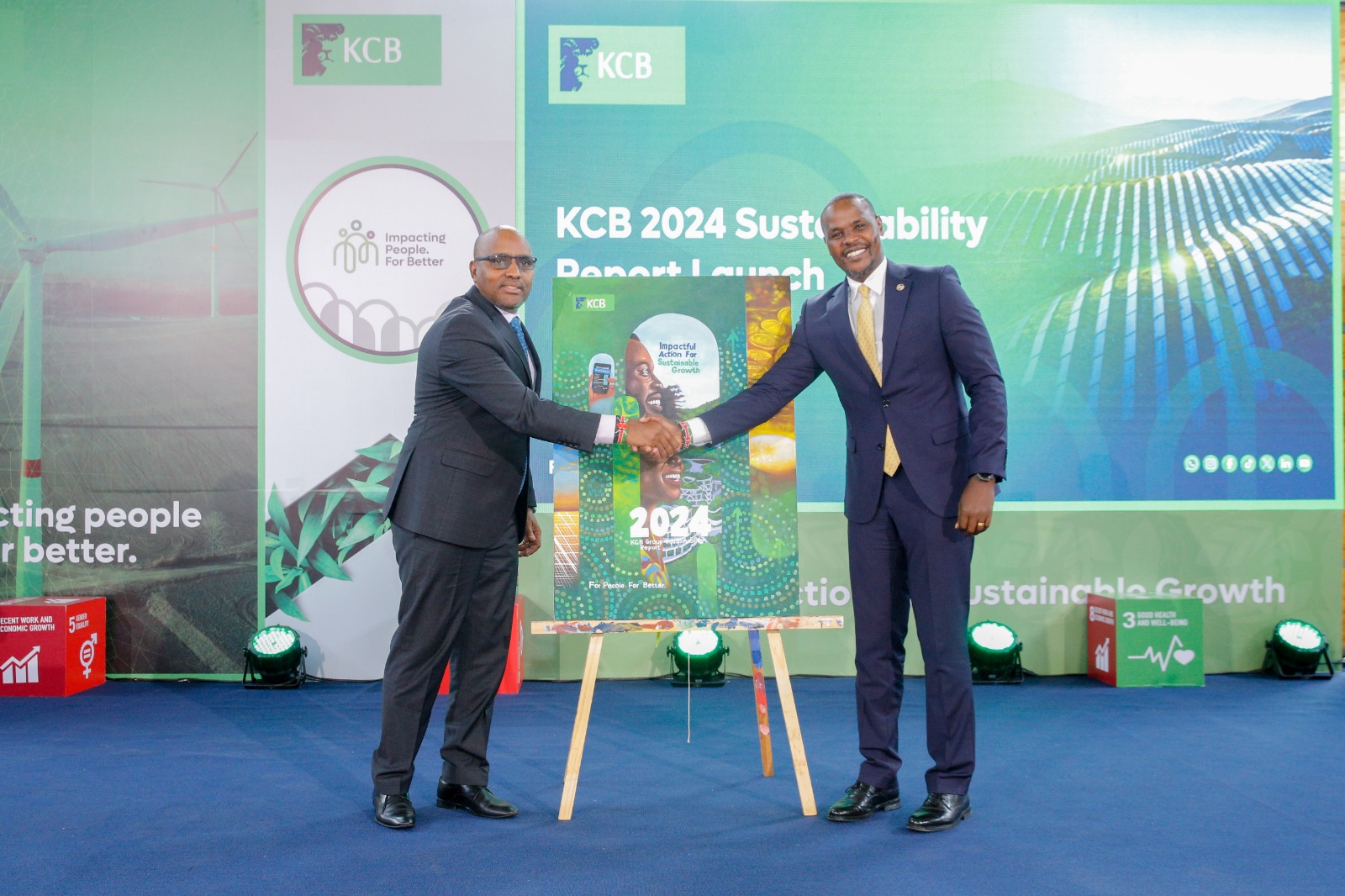
KCB Champions Kenya’s Shift to a Greener Economy
KCB Group is stepping up its sustainability efforts with major progress in green and inclusive financing, marking a new milestone in its journey toward environmental and social responsibility.
In 2024, the bank screened loans worth KShs. 578.3 billion for environmental and social risks, ensuring that its lending decisions support sustainable growth. This brought the total amount assessed since 2020 to over KShs. 2.5 trillion through its Environmental and Social Due Diligence (ESDD) process.
At the same time, KCB extended KShs. 53.2 billion in green loans, a big jump that saw its green portfolio rise to 21.3 percent from 15 percent in 2023. These funds went to projects in clean energy, the blue economy, electric mobility, and climate resilience.
Nearly half of this financing, worth KShs. 24.1 billion, was verified through the Climate Assessment for Financial Institutions (CAFI) tool to enhance transparency and credibility.
According to KCB Group CEO Paul Russo, sustainability now stands at the center of the bank’s strategy. “Our focus is to align business growth with environmental stewardship and social impact,” he said. “It’s about driving progress that benefits both people and the planet.”
Building a Low Carbon Future
The recently launched 2024 KCB Group Sustainability Report highlights the bank’s strides in climate action and financial inclusion.
The report, independently verified by Deloitte, remains the only one of its kind among Kenyan financial institutions and was prepared in line with IFRS S1 and S2 sustainability standards, well ahead of the 2027 global deadline.
KCB reduced its overall resource use by 4 percent and offset 1.3 metric tonnes of carbon by planting over 1.3 million trees. The bank is also monitoring financed emissions in key sectors such as vehicle financing, commercial real estate, and business loans.
Speaking during the report launch, Dr. Eng. Festus Ng’eno, Principal Secretary for Environment and Climate Change, praised KCB’s role in advancing climate smart financing.
“Finance today is more than capital; it’s a catalyst for sustainable livelihoods,” he said. “KCB has shown how institutions can support farmers, small enterprises, women, and youth to innovate for a greener future.”
So far, KCB has financed green projects valued at more than KShs. 160 billion, a clear indication of its long-term commitment to Kenya’s transition to a low carbon economy.
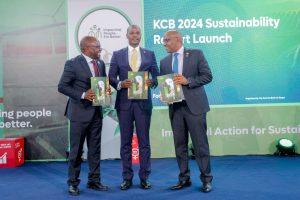
Empowering Communities Through Shared Value
Beyond environmental impact, KCB continues to invest heavily in people and communities. Through the 2Jiajiri programme, implemented via the KCB Foundation, the bank disbursed KShs. 2.58 billion in loans to 4,000 youth owned MSMEs, 38 percent of which are women led.
It also equipped 9,699 young entrepreneurs with essential business skills, supported over 37,000 small enterprises, and created more than 60,000 jobs across the country.
In Kenya’s arid regions, KCB’s Mifugo ni Mali programme has boosted livestock productivity while connecting poultry farmers and blue economy entrepreneurs to markets and financial support.
The Group has also strengthened its commitment to inclusive procurement by awarding KShs. 913 million, or 7.5 percent of total contracts, to businesses owned by women, youth, and persons with disabilities.
Kenya Bankers Association CEO Raimond Molenje commended KCB’s transparency in sustainability reporting. “When banks publicly share their progress and gaps, they inspire change across the sector,” he said.
“KCB’s approach to aligning growth with environmental and social integrity sets the benchmark for sustainable banking.”
Supported by KShs. 69 million from the Green Climate Fund, KCB plans to unlock an additional KShs. 15.5 billion in future climate financing to benefit over 100,000 micro, small, and medium enterprises.
From renewable energy projects to youth empowerment and financial inclusion, KCB is proving that business success and sustainability can move forward together. As Paul Russo summed it up, “Our ambition is simple: to protect the planet and its people while pursuing profitable growth. That’s the future we’re building.”