


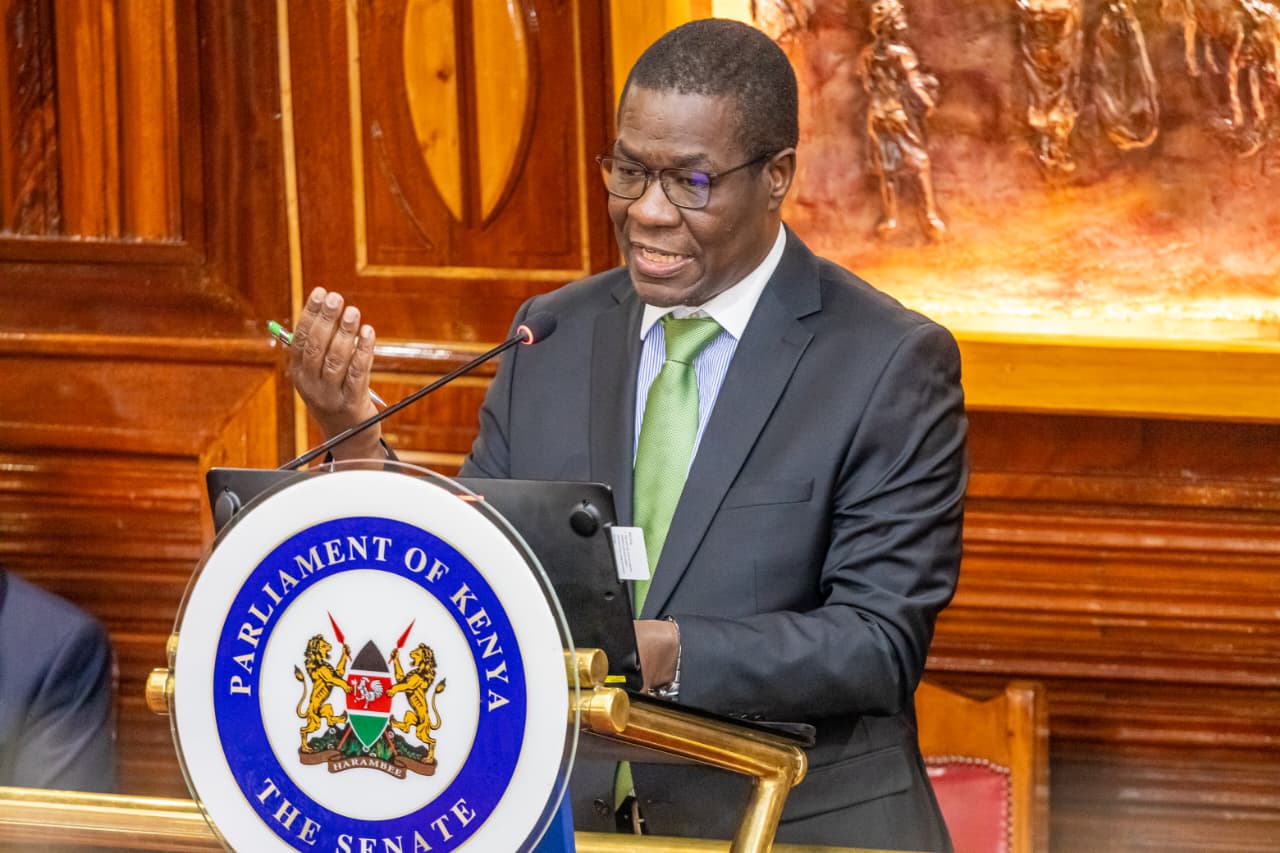
Energy CS Opiyo Wandayi has assured Kenyans that the country’s fuel supply remains stable despite rising geopolitical tensions in the Middle East, saying the Government has activated strategic interventions to protect consumers from global energy disruptions.
Wandayi stated before the Senate Plenary on Wednesday, May 6, 2026, that the Ministry of Energy and Petroleum is actively following global trends and collaborating with key partners to maintain consistent fuel availability and price stability across the country.
He noted that Kenya is still protected against supply shocks because of deliberate policy initiatives such as improved cooperation with suppliers and reinforced importation regulations.
Temporary Fuel Disruption Resolved
Opiyo Wandayi also addressed reports of fuel shortages experienced in parts of the country earlier in the week, clarifying that the disruption was temporary and caused by a technical and administrative hitch.
He confirmed that the issue had been fully resolved and normal fuel supply had resumed by Wednesday, urging Kenyans to remain calm and avoid panic buying.
Wandayi further highlighted the Government-to-Government (G2G) fuel importation arrangement as a key stabilising mechanism that has helped shield the country from volatility in global energy markets.
Compensation for Affected Landowners Ongoing
Wandayi informed Senators that compensation for landowners affected by major transmission projects is ongoing, with 836 Project Affected Persons identified across key corridors including Kajiado–Namanga and Sultan Hamud–Loitoktok lines.
He noted that 108, 37, and 18 affected persons along different project routes are still awaiting compensation, attributing delays to documentation gaps and land ownership disputes.
The Ministry, he said, is working to clear all outstanding payments and prevent similar delays in future infrastructure projects.
Infrastructure Resilience Strengthened
Wandayi also addressed power disruptions in Nairobi caused by severe rains and flooding, stating that the government has adopted remedial measures such as drainage enhancements surrounding substations, storm water channel clearance, and vegetation control along power lines.
He said that long-term changes are being implemented to climate-proof the energy network, including smart grid technologies, underground cabling, and the replacement of timber poles with concrete structures to boost resilience.