

When Every Second Counts: How to Save a Life Through CPR
By Dr Barbara Karau, Consultant Cardiologist, and Dr Salim Abdallah Salim, Cardiology Fellow at Aga Khan University Hospital, Nairobi
Someone collapses at home. A footballer suddenly drops during a match. A passenger slumps over in a matatu.
In these moments, people often freeze. Someone calls for an ambulance while others look for transport to the nearest hospital.
However, when the heart suddenly stops, every second matters. The person standing nearby could be the first to save a life.
Every October 16, World Restart a Heart Day highlights the importance of cardiopulmonary resuscitation (CPR). The campaign reminds us that the first response to cardiac arrest does not always come from a doctor. It may come from you.
Heart Attack and Cardiac Arrest Are Different
Although people often confuse them, a heart attack and cardiac arrest are not the same.
A heart attack occurs when a blocked artery cuts off blood supply to part of the heart muscle. Symptoms may include chest pain, sweating, nausea and shortness of breath. The person is usually conscious.
Cardiac arrest, however, happens when the heart suddenly stops pumping blood effectively. This is often caused by an electrical malfunction that produces a dangerous heart rhythm.
The person may collapse, become unresponsive and stop breathing normally. Without immediate help, death can occur within minutes.
The two conditions are closely linked. A heart attack is the most common trigger of cardiac arrest in adults. Other causes include diseases of the heart muscle, inherited heart conditions and abnormalities in the arteries supplying the heart.
In young people, cardiac arrest can occur during sports or other physical activity. Sometimes, an inherited heart condition or an abnormal coronary artery causes the collapse. Inflammation of the heart muscle following a viral infection can also contribute.
However, cardiac arrest does not always start with a heart problem. Drowning, choking, severe asthma attacks, major blood loss, blood clots in the lungs, serious infections and certain drug overdoses can also cause it.
Recognize. Call. Push.
What should you do when someone suddenly collapses?
First, recognize the emergency. Check whether the person responds when you speak loudly and tap their shoulders. If they are unresponsive and are not breathing normally, including occasional gasping, suspect cardiac arrest.
Second, call for help. Ask someone to contact emergency medical services and bring an automated external defibrillator (AED), if available. If you are alone, call on your phone’s speaker function so you can begin CPR while seeking assistance.
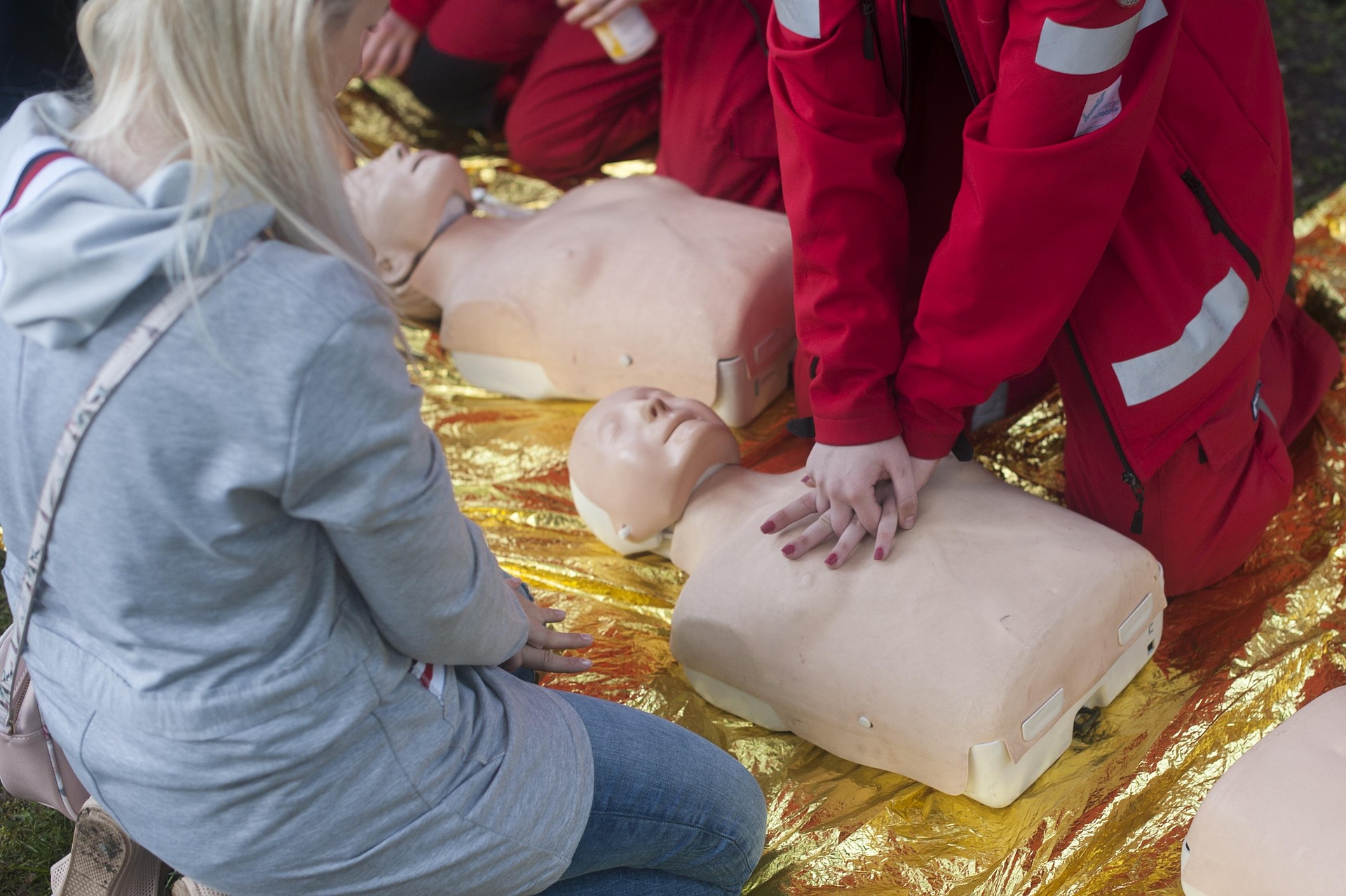
Third, start chest compressions. Place the heel of one hand in the centre of the person’s chest, on the breastbone. Place your other hand on top and interlock your fingers. Push hard and fast, aiming for 100 to 120 compressions per minute. Allow the chest to return to its normal position between compressions.
Continue until emergency help takes over, the person shows clear signs of life, or you are physically unable to continue. Follow the emergency dispatcher’s instructions.
If you have not received CPR training, do not let that stop you from helping. Hands-only CPR is recommended for an untrained bystander responding to an adult who suddenly collapses and is not breathing normally.
In Kenya, reaching a hospital may take time because of traffic, distance and gaps in pre-hospital emergency services. Therefore, the first treatment may come from a bystander rather than a healthcare professional.
Teachers, parents, students, drivers, security guards and sports coaches can all learn CPR. The more people who know what to do, the greater the chance of saving lives.
Why AEDs Matter
An automated external defibrillator, or AED, is a portable device that checks the heart’s rhythm. When appropriate, it delivers an electric shock to help restore a normal rhythm.
The devices are designed for use by members of the public. Once switched on, an AED provides spoken instructions to guide the user.
However, AEDs remain unfamiliar to many Kenyans. They are not commonly encountered in places such as markets, schools, matatus, shopping centres and stadiums.
Making these devices more accessible in public spaces could strengthen Kenya’s emergency response. Training frontline workers to recognize cardiac arrest, perform CPR and use AEDs would also help.
Nevertheless, having a defibrillator is not enough. Someone must recognize the emergency and begin CPR while the device and emergency services are being sought.
Survival Does Not End at Restarting the Heart
When the heart starts beating again, the emergency is not over.
The patient needs urgent hospital care to identify the cause, stabilize the heart and protect the brain and other organs. The hours following resuscitation are critical.
Survival depends on several connected steps: recognizing cardiac arrest quickly, starting CPR, using a defibrillator when indicated, getting emergency medical assistance and receiving appropriate hospital treatment.
If these steps are delayed or missing, the chances of survival can fall.
Everyone Has a Role to Play
World Restart a Heart Day is a reminder that CPR is not a skill reserved for doctors and nurses. Ordinary people can make a difference when someone collapses.
As a country, Kenya needs wider access to CPR training and greater consideration of AEDs in public spaces. These measures could help communities respond faster while emergency services are on their way.
The first step, however, begins with each of us. Learn CPR, encourage others to learn it and be prepared to act.
When someone is unresponsive and not breathing normally, do not simply stand and watch.
Recognize. Call. Push. Your actions could save a life.