
Sunday, June 28, 2026
Google search engine
Home Blog Page 18

First Salary? I&M Bank Kenya’s #NiSareKabisa Campaign Warns Against Common Money Mistakes

First Salary? I&M Bank Kenya’s #NiSareKabisa Campaign Warns Against Common Money Mistakes

Whenever I hear the phrase Ni Sare Kabisa, my mind drifts back to campus life the days when KES 24 was enough to buy a satisfying plate of rice and ndengu, the kind of meal almost every comrade remembers with nostalgia. Life was simpler then, but every shilling still counted. You thought twice before spending on anything unnecessary, avoided extra charges where possible, and learned how to stretch the little you had.

Today, many young professionals are still living by that same reality, only now the responsibilities are bigger rent, transport, bills, and the pressure that comes with trying to stay afloat in a tough economy. That is why something as simple as eliminating transaction charges can resonate deeply with many Kenyans.

That is the space I&M Bank Kenya’s #NiSareKabisa campaign is stepping into helping customers save more by offering free bank-to-mobile money transfers for personal and sole proprietor business accounts.

The campaign was introduced following the return of bank-to-mobile transfer charges, positioning the bank as a partner focused on practical financial relief while encouraging digital banking adoption.

Its relevance has become even more significant as Treasury proposes a 16 per cent VAT on fees charged by payment platforms including M-Pesa, Airtel Money, Pesapal and Kenswitch a move likely to increase transaction costs for consumers if implemented.

For young earners who rely heavily on mobile money for transport, shopping, rent payments, and daily expenses, avoiding additional transfer charges can help preserve already stretched incomes.

First Salary? I&M Bank Kenya’s #NiSareKabisa Campaign Warns Against Common Money Mistakes

Lifestyle Pressure and Overspending

One of the most common mistakes first salary earners make is spending beyond their means. The pressure to appear successful often pushes young professionals toward expensive gadgets, impulsive shopping, and lifestyles that quickly consume their salaries.

Financial experts say many young earners underestimate how small daily expenses and transaction costs gradually eat into their income.

The #NiSareKabisa campaign taps into this reality by promoting smarter money movement and reducing avoidable banking charges that frequently affect individuals and small business owners.

Ignoring Budgeting

Many young professionals begin earning without a clear financial plan. Without budgeting, it becomes difficult to track spending, prioritize essentials, or build savings.

According to I&M Bank Kenya, financial wellness starts with understanding spending habits, planning finances carefully, and creating room for future goals.

Experts recommend that first salary earners separate needs from wants and start saving consistently, even in small amounts.

Overdependence on Loans

Relying on digital loans to support lifestyles they cannot comfortably afford is another common mistake among young earners.

Financial experts warn that borrowing for non-essential spending can quickly lead to debt cycles and financial stress early in one’s career.

Instead, initiatives such as #NiSareKabisa are increasingly encouraging young people to reduce unnecessary costs, spend responsibly, and build healthier financial habits.

Saving More by Spending Smarter

As Kenya’s economy continues to evolve, young professionals are becoming more conscious about financial planning and everyday spending.

Recent economic developments, including proposals for higher transaction-related taxes and rising living costs, are making cost-saving financial solutions increasingly important.

For many first-time earners, financial success is no longer just about how much money one earns, but how much one manages to keep, save, and grow.

Through #NiSareKabisa, I&M Bank Kenya is positioning itself as part of that conversation by encouraging young Kenyans to avoid unnecessary money mistakes, embrace digital convenience, and build smarter financial habits from the very beginning of their financial journeys.

EPRA Raises Fuel Prices in Latest Monthly Review

The Energy and Petroleum Regulatory Authority (EPRA) has announced a sharp increase in fuel prices for the period between May 15 and June 14, 2026, driven largely by rising global oil prices and higher import costs.

Under the latest review, the price of Super Petrol has increased by Ksh 16.65 per litre, while Diesel has recorded a steeper rise of Ksh 46.29 per litre. Kerosene prices, however, remain unchanged during the pricing cycle.

The revised prices now place Nairobi motorists among the highest-paying consumers in the region. In the capital, Super Petrol will retail at Ksh 214.25 per litre, Diesel at Ksh 242.92, and Kerosene at Ksh 152.78.

In Mombasa, consumers will pay Ksh 211.09 for Petrol, Ksh 239.64 for Diesel, and Ksh 149.49 for Kerosene. Kisumu and Eldoret recorded nearly identical prices, with Petrol retailing at Ksh 213.91 and Ksh 213.92 respectively, while Diesel crossed the Ksh 243 mark in both towns.

Nakuru motorists will pay Ksh 213.15 for Petrol and Ksh 242.33 for Diesel, while Kerosene will retail at Ksh 152.21 per litre.

Government Moves to Cushion Consumers
Despite the increases, the government has stepped in to cushion consumers through the Petroleum Development Levy (PDL) Fund.

EPRA said approximately Ksh 5 billion will be used to subsidies Diesel and Kerosene prices in a move aimed at easing pressure on households and businesses already grappling with high transport and energy costs.

The prices include Value Added Tax (VAT) in line with the VAT Act 2013, the Finance Act 2023, and the Tax Laws (Amendment) Act 2024. EPRA noted that the pricing formula also factors in revised excise duty rates adjusted for inflation.

EPRA Raises Fuel Prices in Latest Monthly Review
Global Oil Prices Push Import Costs Higher
According to EPRA, the latest increases were triggered by a significant rise in the landed cost of imported petroleum products.

The average landed cost of Super Petrol rose by 10% from 823.27 US dollars per cubic metre in March to 906.23 US dollars in April. Diesel recorded the sharpest jump, increasing by 20.32% from1,073.82 US dollars to 1,291.98 US dollars per cubic metre.

Kerosene import costs also rose marginally by 1.59% to 1,332.73 US dollars per cubic metre.

Kenya imports all its refined petroleum products, making local fuel prices highly sensitive to fluctuations in international oil markets and the exchange rate between the Kenya Shilling and the US Dollar.

EPRA said the petroleum pricing regulations are designed to cap retail fuel prices while ensuring oil marketers recover prudently incurred importation and distribution costs.

The regulator added that it remains committed to protecting both consumers and investors while maintaining fair competition in the energy sector.


DCI Hosts INTERPOL’S Director of Global Outreach

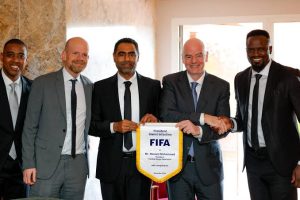
The Directorate of Criminal Investigations(DCI) has reaffirmed its commitment to strengthening international policing cooperation following high-level talks between Director of Criminal Investigations Mohamed Amin and INTERPOL Director of Global Outreach and Regional Support Abdulaziz Obaidalla in Nairobi.

The meeting, held at DCI Headquarters, focused on three key priorities: enhancing international law enforcement collaboration, modernising operational systems, and improving public service delivery through coordinated policing efforts.

DCI Hosts INTERPOL’S Director of Global Outreach
Regional Security Cooperation Takes Centre Stage
The discussions come at a time when cross-border crimes, cyber threats, terrorism, and human trafficking continue to challenge security agencies globally.

Kenya has increasingly positioned itself as a regional hub for intelligence sharing and coordinated security operations in Eastern Africa.

Speaking during the engagement, Amin reaffirmed Kenya’s role within the INTERPOL framework and stressed the importance of stronger partnerships in tackling transnational crime.

In his capacity as Africa’s Executive Committee Representative at INTERPOL, Amin said closer collaboration among law enforcement agencies remains critical in improving intelligence sharing and joint operations across borders.

The talks also highlighted Kenya’s growing influence in regional policing cooperation, with the DCI seeking to leverage international partnerships to strengthen investigative capacity and adopt advanced policing technologies.

DCI Hosts INTERPOL’S Director of Global Outreach
INTERPOL Pledges Technical Support
For his part, Obaidalla commended the DCI for its proactive leadership and continued engagement within the INTERPOL network.

He noted that Kenya remains a strategic anchor for regional security cooperation and reaffirmed INTERPOL’s readiness to support the DCI through technical assistance, specialised training, and access to advanced intelligence and policing tools.

The meeting further underscored the increasing role of technology-driven policing in combating emerging security threats. Both sides emphasised the need for modern systems that can improve investigations, data sharing, and operational coordination among agencies.

Following the discussions, the delegation toured the National Central Bureau offices, where they engaged officers on operational cooperation, capacity building, and strategies aimed at addressing emerging security threats.

The engagement reflects the deepening partnership between the DCI and INTERPOL as both institutions seek to strengthen international security through more coordinated and intelligence-led policing efforts.


KNCHR Warns Public Over Fraudulent Compensation and Reparations Claims

The Kenya National Commission on Human Rights (KNCHR) has issued a public advisory warning Kenyans against fraudsters soliciting money from victims under the guise of facilitating compensation and reparations claims.

In the advisory dated 14th May 2026, the Commission said individuals posing as KNCHR representatives have been approaching members of the public and demanding payments in exchange for registration, processing, or access to compensation services.

The Commission clarified that all KNCHR services are offered free of charge.

“KNCHR does not charge any fees. All our services are free,” the statement reads.

The human rights body further stressed that it does not collect money through private M-Pesa numbers or personal paybill accounts for any of its processes.

According to KNCHR, anyone requesting money in exchange for compensation or reparations is a fraudster and has no affiliation with KNCHR.

Public Urged to Stay Vigilant
The warning comes amid growing concerns over exploitation of vulnerable victims seeking justice and reparations through official channels.

KNCHR urged members of the public who may have been contacted by such individuals to report the matter immediately to the nearest police station and maintain records of all transactions or communication.

The Commission also encouraged the public to verify any information directly through its official communication platforms before engaging with anyone claiming to represent the institution.

KNCHR Warns Public Over Fraudulent Compensation and Reparations Claims

Commitment to Transparent Reparations Process

KNCHR reiterated its commitment to ensuring that compensation and reparations programmes remain transparent, dignified, and accessible to all victims.

The Commission noted that official communication is only conducted through verified channels and authorised platforms.

It warned the public against relying on unofficial social media pages, personal phone numbers, or individuals claiming to fast-track compensation.


Growing Concern Over Compensation Scams

The warning reflects a wider trend of fraud cases targeting citizens seeking government or institutional compensation programmes.

By issuing the advisory, KNCHR aims to raise public awareness and prevent further losses among victims already affected by human rights violations or unresolved compensation claims.

The Commission said it is working closely with relevant authorities to pursue legal action against individuals involved in the fraudulent schemes.


Kagame: Africa Must Use Its Resources to Overcome Global Crises

0

Rwandan President Paul Kagame has called on African countries to fully utilise the continent’s vast natural resources and growing human capital to overcome global economic and geopolitical challenges.

Speaking on Africa’s development potential, Kagame argued that the continent continues to remain at a disadvantage despite possessing some of the world’s most valuable resources.

According to Kagame, Africa holds nearly 60% of the world’s solar energy potential, making it one of the best-positioned regions to benefit from the global transition to renewable energy.

He also noted that the continent possesses the majority of the critical minerals needed for battery manufacturing and green technologies.

However, he warned that African countries continue to lose value by exporting these resources cheaply while foreign powers compete to control supply chains.

“Africa is home to many of the critical minerals the world is fighting over today, yet the continent remains silent or loses most of its wealth cheaply to those who understand their strategic value,” Kagame said.

Human Capital Seen as Africa’s Biggest Strength
Beyond natural resources, Kagame pointed to Africa’s expanding population and workforce as another major competitive advantage.

He said the continent is rapidly building one of the world’s largest middle classes, creating enormous opportunities for industrialisation, innovation, and economic growth.

“In terms of human capital, Africa has abundance. In a few years, Africa could be home to the largest middle class globally,” he noted.

Kagame questioned why Africa continues to struggle with poverty, unemployment, and external shocks despite having abundant resources and a youthful population.

He argued that the challenge is no longer about identifying opportunities, but rather about collective action and leadership.

Kagame: Africa Must Use Its Resources to Overcome Global Crises
Need for Regional Cooperation and Action
The Rwandan President stressed that African nations must work together to unlock the continent’s full economic potential.

He said geopolitical tensions and recurring global crises continue to expose Africa’s vulnerabilities, particularly when countries fail to coordinate policies or invest strategically in their own economies.

According to Kagame, the cost of inaction is becoming increasingly high. “We lose much more by not doing what we have to do,” he said.

His remarks come at a time when African economies are facing pressure from global inflation, debt burdens, climate-related disruptions, and shifting international trade dynamics.

However, Kagame maintained that Africa already possesses the tools needed to transform its economic future. He urged governments, businesses, and institutions across the continent to focus on value addition, energy development, industrialisation, and investment in people.

The remarks reinforce growing calls for African economies to move beyond raw material exports and build stronger regional value chains capable of supporting long-term growth and resilience.


LSK Joins Regional Legal Bodies in Petition Over Advocate’s Deportation

The Law Society of Kenya (LSK) has joined regional legal organisations in filing a constitutional petition challenging the detention and deportation of Zimbabwean advocate Brian Kagoro from Kenya.

According to the statement released by LSK, the legal challenge seeks to question what the organisations describe as unlawful state action during Kagoro’s detention at JKIA.

The petition argues that the advocate was detained incommunicado, denied access to legal representation, and removed from the country without lawful justification or due process.

The legal bodies further claim that authorities failed to disclose the reasons behind the deportation.

LSK says the matter raises broader constitutional concerns regarding the use of immigration powers and the treatment of advocates operating within regional legal frameworks.

The society maintains that the case goes beyond one individual and touches on key constitutional principles, including access to justice, rule of law, and protection of fundamental rights.

Regional Cooperation Shapes Legal Challenge
The case reflects growing collaboration between regional legal institutions in addressing cross-border human rights and governance issues.

By joining forces with PALU, EALS, and ICJ-Kenya, LSK is positioning the petition as a wider regional concern rather than a domestic legal dispute alone.

Senior Counsel Elisha Ongoya is leading representation for the petitioners before the High Court.

LSK said the proceedings also seek to safeguard the independence of the legal profession and resist what it termed unlawful state action both within Kenya and across the region.

The petition places particular focus on due process in deportation procedures and whether constitutional safeguards were followed during the advocate’s detention and removal.

LSK Joins Regional Legal Bodies in Petition Over Advocate’s Deportation
Case Scheduled for High Court Hearing
The matter is scheduled for hearing on applications on 8 June 2026 at 9:00 AM before the Constitutional and Human Rights Division of the High Court at Milimani.

LSK has invited its members to attend the proceedings, describing the case as an important constitutional matter with implications for legal practice and civil liberties.

The case is expected to attract attention from legal practitioners, civil society organisations, and regional observers monitoring governance and human rights issues in East Africa.


Ruto Pushes for Stronger Science, Research Capacity in Kenya

President William Ruto has called for Kenya to deliberately invest in research, science and innovation as a central pillar of national transformation, saying the country must transition from a consumption-based economy to one that produces its own knowledge and technologies.

Speaking on the role of KEMRI after awarding it a charter at State House, Ruto highlighted the global impact of leading research institutions, citing contributions in malaria, HIV, tuberculosis, maternal health and epidemic response.

He noted that institutions such as the Kenya Medical Research Institute have played a critical role in advancing scientific breakthroughs, including work linked to malaria vaccine development and evaluation used in high-burden regions.

Strengthening Kenya’s Research Institutions and Training Capacity
He stressed that Kenya must build on such foundations by strengthening its domestic scientific capacity.

“We are determined to accelerate and scale up by making KEMRI a specialized degree-awarding institution,” Ruto said, adding that the move would expand the country’s ability to train high-level scientists and researchers.

President Ruto further underscored the need to develop a new generation of biomedical scientists, epidemiologists and public health experts capable not only of responding to outbreaks but also anticipating and preventing them through advanced data, genomics and research systems.

He pointed out that the future of public health security depends on predictive science rather than reactive interventions.

Ruto Pushes for Stronger Science, Research Capacity in Kenya

According to Ruto, Kenya’s long-term competitiveness will depend on its ability to generate homegrown solutions.

“We must become producers of our own technologies, generators of our own knowledge, and a nation that adds value to what we produce, what we mine and what we grow,” he said.

He emphasized that strengthening research institutions, investing in laboratories, and supporting innovation ecosystems are not optional but strategic imperatives for national development.

The President noted that global economies that have successfully transitioned into high-income status did so by prioritizing science, research and technological advancement.

Collaboration with KEMRI and Research Ecosystems
Ruto also called for closer collaboration between government, universities, and research institutions arguing that stronger linkages would improve commercialization of research and accelerate innovation uptake in key sectors including health and agriculture.

He also urged policymakers to act decisively.

“We must deliberately, intentionally and strategically strengthen our capacity for research, science and innovation if we are to move to the next level,” he said, framing science and innovation as central to Kenya’s ambition of becoming a knowledge-driven economy.


UoN Names Prof Ayub Gitau VC, Aduda DVC Finance

The University of Nairobi has appointed Prof Ayub Gitau as its 9th Vice-Chancellor, alongside Prof Josiah Aduda as Deputy Vice-Chancellor (Finance, Planning & Development), following a special Council sitting held on May 14, 2026.

The announcement marks a key leadership transition at University of Nairobi, signaling renewed focus on governance, academic excellence, and financial sustainability.

The appointments come at a time when the institution is seeking to strengthen its competitiveness amid rising regional pressure, digital transformation in higher education, and growing demand for research output and innovation-driven training.

The Council indicated that the new leadership is expected to enhance excellence, innovation, and global competitiveness.

Council Confirms New Leadership Appointment
The University of Nairobi Council, chaired by Chacha Nyaogotti, confirmed the appointments and emphasized their strategic importance.

“These appointments mark a new chapter for the University of Nairobi as we strengthen leadership for excellence, innovation, and global competitiveness,” he said.

The Council is expected to work closely with the new Vice-Chancellor, Ayub Gitau, and Deputy Vice-Chancellor Josiah Aduda, to implement reforms in finance, planning, and institutional development.

The leadership change is widely viewed as a critical step in aligning the university’s governance structures with its long-term strategic plan and addressing emerging operational challenges.

UoN Names Prof Ayub Gitau VC, Aduda DVC Finance
Acknowledgment of Acting Vice-Chancellor
The Council also expressed appreciation for outgoing Acting Vice-Chancellor Margaret Hutchinson for her service during the transition period, noting her role in maintaining institutional continuity and administrative stability.

Her tenure is credited with ensuring smooth operational management during a period of leadership uncertainty and ongoing reforms within the institution.

The new appointments are expected to shape the university’s financial and academic direction, particularly in areas such as resource mobilization, infrastructure development, and research expansion.

The inclusion of a dedicated finance and planning leadership role is seen as an effort to enhance accountability and improve long-term fiscal planning within the institution.


PS Sing’oei Defends Haiti Troop Drawdown Over Mandate Completion

PS Korir Sing’oei has defended Kenya’s decision to scale down its police deployment in Haiti, saying the mission had reached its initial one-year mandate and achieved its core objective of restoring basic order and demonstrating that the Caribbean nation was not a “lost cause.”

Speaking on the mission’s trajectory, Singoei noted that Kenya had returned to the UN Security Council with partner countries seeking a more robust mandate and a predictable financing mechanism for the gang suppression force.

He said while the initial framework was adequate for deployment, sustainability concerns shaped discussions on the next phase of international involvement.

Korir explained that Kenya’s approach was designed to “create conditions” for broader international support, adding that the presence of Kenyan officers had shown that stability in Haiti was achievable if global partners coordinated effectively.

According to him, the drawdown followed the belief that the demonstration phase had been successfully completed.

Public Response and Debate Over Withdrawal Timing
However, Singoei acknowledged that a longer stay might have been beneficial. He noted that segments of the Haitian public had protested Kenya’s withdrawal in Port-au-Prince, citing improved security and restored public confidence under the Kenyan-led contingent.

He added that despite public sentiment, the decision had already been agreed by the Government of Kenya and the United Nations.

He confirmed that responsibility was being handed over to a new contingent from Chad, following coordination between President William Ruto and the Chadian leadership.

The transition also included discussions on training support, with Chad seeking to benefit from Kenya’s operational experience in Haiti’s complex security environment.

PS Sing'oei Defends Haiti Troop Drawdown Over Mandate Completion
PS Sing’oei Defends Haiti Troop Drawdown Over Mandate Completion
Strategic Lessons and Long-Term Stability Concerns
Singoei emphasized that Kenya’s role was never intended to be indefinite but catalytic, aimed at triggering sustained international engagement.

He said the mission had proven that Haiti remained a “mission possible” with coordinated global effort, even as questions remain over long-term financing and mandate enforcement.

Singoei further indicated that the broader lesson from the Haiti deployment was the need for predictable multilateral financing and clearer mandate structures for rapid response missions.

He added that Kenya’s experience has now positioned its security agencies as a reference point for training partner forces, including incoming contingents.

The ongoing coordination with Chad, he said, reflects a deliberate effort to preserve operational gains while ensuring smooth transition.

Ultimately, he maintained that Haiti’s stabilization will depend on sustained international political will, rather than the presence of any single contributing country alone in the long term ahead going forward regionally.


MPs Raise Alarm Over Nil Budget Allocation for Tourism Agencies

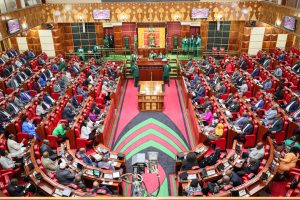
Parliament is sounding the alarm over a looming funding gap affecting key tourism agencies after concerns emerged that several Semi-Autonomous Government Agencies (SAGAs) under the tourism docket were excluded from the 2026/27 national budget estimates.

The National Assembly Departmental Committee on Tourism and Wildlife questioned why critical institutions mandated to promote, regulate, and develop Kenya’s tourism sector were left without any financial allocation.

Among the affected agencies are the Tourism Regulatory Authority, Tourism Research Institute, Kenya Tourism Board, Kenya Utalii College, the Tourism Fund, and the Kenyatta International Convention Centre.

MPs warned that the absence of funding could severely disrupt marketing, training, research, and infrastructure development in the sector.

MPs Raise Alarm Over Exclusion of Key Tourism Agencies
The concerns were raised during a budget review session with Tourism CS Rebecca Miano, who appeared before the committee after missing two consecutive sittings, an issue that had previously drawn criticism from MPs.
Miano apologised for her earlier absences, citing official engagements at the Africa Forward Summit.

“Allow me to sincerely apologise for my absence during the Committee session on Monday as I was engaged in official duties at the just-concluded Africa Forward Summit,” she said.

Committee members argued that the tourism sector remains a key foreign exchange earner and requires sustained investment, warning that a “nil budget” for core agencies risks reversing gains made in Kenya’s global tourism competitiveness.

Innocent Mugabe strongly opposed the proposed allocation structure, insisting that SAGAs are central to sector performance. “SAGAs are key players in promotion of tourism. They deserve to be given more money and not to be allocated a nil budget,” he said.

Other MPs echoed concerns that underfunding could weaken destination marketing campaigns, reduce research capacity, and stall hospitality training programs at a time when regional competition for tourists is intensifying.

MPs Raise Alarm Over Nil Budget Allocation for Tourism Agencies
Sh17.9 Billion Allocated to Tourism Docket Amid Scrutiny
The committee was informed that the State Department for Tourism has been allocated Ksh 17.9 billion in the 2026/27 financial year.

Of this, Ksh 11.9 billion is earmarked for recurrent expenditure, while Ksh 6 billion is allocated for development projects.

However, legislators maintained that without direct allocations to implementing agencies, the budget framework risks becoming ineffective in achieving its strategic tourism objectives.