
Sunday, June 28, 2026
Google search engine
Home Blog Page 26

KEG Calls Out Media Exclusion

The Kenya Editors Guild (KEG) has decried the barring of journalists from Standard Media Group and Mediamax from covering a recent presidential event, calling the decision a major attack on media freedom and independent journalism.

In a press statement issued on May 7, 2026, KEG stated that the decision to bar journalists from attending a public event, along with disparaging statements about The Standard’s ownership, demonstrated a rising hostility against the media.

The Guild stated that the event occurred just days after Kenya commemorated World Press Freedom Day, showing a contrast between public claims supporting press freedom and growing intolerance of critical media.


Media Freedom and Accountability Under Threat
“The media is not an extension of the State. Neither is it a public relations department for those in power,” Kananu said.

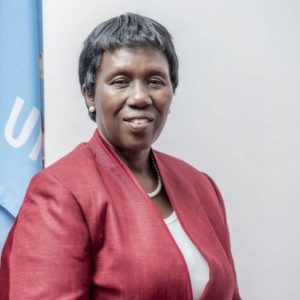
KEG President Kananu defended the role of journalism in society, noting that the media exists to question, investigate, critique and hold leaders accountable on behalf of the public.

According to Zubeidah Kananu, it was concerning that some leaders appeared unwilling to respond to criticism through openness and accountability, instead resorting to exclusion, intimidation and public attacks against media institutions.

KEG President further criticised the use of inflammatory language and personal attacks against media ownership, warning that such conduct creates a hostile environment for journalists and media houses.

KEG Calls Out Media Exclusion
Concerns Over Constitutional Violations
Kananu argued that the exclusion of journalists based on editorial position or perceived criticism directly violates Article 34 of the Constitution of Kenya, which guarantees freedom and independence of the media.

She, Zubeidah Kananu also warned against the dangers of normalising hostility toward the press, saying democratic societies often begin sliding toward authoritarianism through gradual attacks on independent media voices.

“Kenya must not walk that path,” KEG President said.

The organisation condemned what it termed as inflammatory rhetoric directed at sections of the media and called on all public officials, including the President, to publicly demonstrate commitment to constitutionalism, accountability and press freedom.

Call for Respect for Independent Journalism
The President urged leaders to uphold tolerance and respect for independent journalism, especially when media coverage is critical or uncomfortable.

Kananu maintained that criticism should not be viewed as sabotage and that scrutiny is a necessary part of democratic governance.

“Leaders in public office must remember that criticism is not sabotage, scrutiny is not hostility, and journalism is not treason,” added Kananu.


Kenya Met Warns of Intensified Heavy Rainfall Across Several Counties

The Kenya Meteorological Department has issued a rainfall notice, saying that rains presently falling in many parts of the country are projected to intensify between May 8 and 14, 2026.

Kenya Met has said that rainfall is anticipated to surpass 20mm within 24 hours in the Highlands West and East of the Rift Valley, as well as the Central Highlands, which include areas of the Southeastern Lowlands.

According to the Meteorological department, the intensity of rainfall is expected to peak between May 10 and 13, 2026, before gradually decreasing beginning May 14. However, rainfall is anticipated to persist in numerous areas even after the intensity decreases.

The advisory further noted that the heavy rains are also expected to spread to parts of the Northwestern sector during the forecast period.

Counties Expected to Experience Heavy Rainfall
Areas expected to be affected include Migori, Nyamira, Bungoma, Busia, Kakamega, Vihiga, West Pokot, Baringo, Elgeyo Marakwet, Trans Nzoia, Nandi, Uasin Gishu, Nakuru, Siaya, Kisumu, Homa Bay, Kisii, Kericho, Bomet, Kiambu, Embu, Murang’a, Kirinyaga, Nyandarua, Nyeri, Laikipia, Tharaka-Nithi, Meru, Nairobi and Narok.

Parts of Turkana, Samburu, Kajiado and Machakos counties are also expected to experience the intensified rainfall.

Kenya Met Warns of Intensified Heavy Rainfall Across Several Counties
Kenya Met Issues Safety Precautions
The department warned residents to remain vigilant due to the possibility of floods, flash floods and poor visibility during the period.

Kenya Met cautioned that flooding may still occur in areas that may not directly experience heavy rainfall, especially downstream areas affected by water flowing from higher grounds.

Residents have been advised to avoid walking or driving through moving water and to stay away from open fields during storms.

The advisory also warned members of the public against sheltering under trees or near grilled windows due to the risk of lightning strikes.

People living in landslide-prone areas, particularly along the slopes of the Aberdare Ranges, Mt. Kenya and other hilly regions, have been urged to exercise extreme caution throughout the period of heavy rainfall.

The weather department classified the advisory severity as moderate to heavy, with a moderate probability of occurrence estimated at between 33 percent and 66 percent.

Kenya Met said it will continue monitoring the situation and provide updates promptly should there be any changes in the weather outlook.


Senate Presses Mudavadi Over Trafficking Crisis and Kenyans in Foreign Wars

The Senate Committee on Labour and Social Welfare pressed the government on Thursday to address increased incidences of human trafficking, fraudulent labour recruiting, and the growing number of Kenyans involved in overseas wars and cybercrime activities.

Prime CS Musalia Mudavadi spoke before the Committee about a growing issue impacting Kenyan workers in the Gulf, South-East Asia, and portions of Europe.

Mudavadi said that trafficking syndicates have become more organized and sophisticated, notably in the “Golden Triangle” region of Myanmar, Cambodia, Laos, and Thailand.

Hundreds of Kenyans Rescued Across Asia
According Mudavadi, 751 Kenyans were rescued from Myanmar between 2022 and 2026, with 615 already repatriated.

However, 39 Kenyans remain jailed over illegal entry and cybercrime offences, while another 97 are being held in immigration detention centres in Thailand awaiting deportation.

The Committee also heard that Cambodia rescued 406 Kenyans between January and April this year, with 305 already returned home. In Laos, 29 Kenyans have been repatriated, while 14 Kenyans are imprisoned in Thailand over forged immigration stamps allegedly supplied by traffickers.

Mudavadi also confirmed deaths linked to the scam compounds operating in the region.

“Over time, three Kenyans have reportedly lost their lives in the scam compounds due to illness, while one expectant lady passed on after the scammers attempted to forcefully terminate the pregnancy,” Mudavadi said.

Senate Presses Mudavadi Over Trafficking Crisis and Kenyans in Foreign Wars
Qatar and Russian Recruitment Raise Alarm
Concerns also emerged about labor trafficking to the Middle East. Mudavadi said that 162 Kenyans had been shipped to Qatar by “unscrupulous individuals” acting in both Kenya and Qatar.

The committee also questioned the administration about Kenyans recruited into Russian special forces during the Ukraine war.

Mudavadi said the government had documented 291 reported cases involving Kenyans in Russia and had already repatriated 53 citizens. Nineteen kenyans are believed to have died, 32 are missing in action, while two are currently being held as prisoners of war in Ukraine.

He revealed that a Kenyan delegation which travelled to Moscow in March secured commitments from Russian authorities to stop further recruitment of Kenyans into military operations.

“One, that there should be no more enlisting of Kenyans to the special military forces of the Russian Federation,” Mudavadi said.

The government is also seeking consular access for Kenyans in hospitals and civilian facilities and pushing for the inclusion of Kenyan nationals in future prisoner exchange programmes between Russia and Ukraine.

Senate Presses Mudavadi Over Trafficking Crisis and Kenyans in Foreign Wars
Senators Question Government Enforcement
Senators questioned whether government enforcement efforts were sufficient.

Diaspora Affairs Principal Secretary Roseline Njogu told the Committee that 87 prosecutions linked to trafficking and illegal labour recruitment were ongoing.

Meanwhile, Nominated Senator Crystal Asige raised concerns over the slow pace of bilateral labour agreements, while Okong’o Mogeni called for existing agreements to be tabled before the Committee within seven days.

By the end of the session, Senators agreed that the trafficking crisis reflected growing economic pressure at home, with many young Kenyans increasingly risking exploitation abroad in search of employment opportunities.


DCI Warns Transit Vehicle Drivers Over Rising Highway Robbery Attacks

The Directorate of Criminal Investigations (DCI) has issued a security advise to drivers transporting newly imported transit vehicles in response to an increase in violent highway robberies targeting motorists on major routes.

The warning comes after an incident reported on May 6, 2026, in the Mutomo area in Mtito Andei, involving a motorist transporting a Subaru Impreza from Mombasa to Kampala.

According to the DCI, the attack was carefully planned and carried out by a group acting as stranded motorists in need of assistance.

The suspects, riding on a motorcycle with two pillion passengers, reportedly emerged from a thicket and blocked the driver’s path. One of the passengers pretended to be a disabled person using crutches, while the others claimed they were assisting him.


Situation Escalates Into Violent Robbery Attempt

Moments later, the situation turned violent. One of the suspects allegedly pulled out a firearm and threatened the driver in an attempt to hijack the vehicle. During the struggle that followed, the gang forced their way into the car and assaulted the driver while trying to take control of the vehicle.

However, the robbery attempt took an unexpected turn when the firearm discharged during the confrontation.

The bullet fatally wounded the suspect who had pretended to be disabled. His accomplices immediately fled the scene on the motorcycle, leaving behind the injured driver and the body of the deceased suspect.

The driver was taken to Kambu Hospital for treatment and was later discharged. The body of the deceased suspect was moved to Kambu Hospital Mortuary as detectives launched investigations and began pursuing the two suspects who escaped.

DCI Warns Transit Vehicle Drivers Over Rising Highway Robbery Attacks
DCI Highlights Emerging Criminal Tactics
In its advisory, the DCI warned that organised criminal gangs are increasingly using deceptive tactics to exploit the goodwill of motorists.

The DCI stated that criminals are disguising themselves as stranded, injured, or vulnerable road users to lure drivers into stopping before launching violent attacks.

Authorities noted that such incidents pose a growing threat, particularly to drivers transporting transit vehicles along busy highways.

Drivers have now been advised not to stop for unknown individuals along the road, especially in isolated areas.

DCI has also advised drivers to remain alert to staged distress situations, keep vehicle doors locked, and only make controlled stops when absolutely necessary.

The DCI said it remains committed to enhancing security along major highways and protecting motorists from organised criminal activity.


MOH Clarifies Blood Products Export Reports, Warns Against Misinformation

The Ministry of Health (MOH), has moved to clarify reports circulating online regarding alleged exports of human blood from Kenya, describing the claims as misleading.

In a release issued, Health CS Duale responded to reports linked to data published on the World Integrated Trade Solutions (WITS) platform.

The reports had sparked public concern after it was alleged that Kenya was exporting donated human blood and blood fractions to foreign countries.

According to the Ministry, the trade category referenced in the report is a broad global customs classification that includes pharmaceutical, laboratory, diagnostic, and biological products.

These include vaccines, toxins, microbial cultures, antisera, and other blood-derived products. However, the Ministry emphasized that the classification does not include donated blood collected for transfusion purposes.

MOH Clarifies Blood Products Export Reports, Warns Against Misinformation
Government Distances Itself From Export Claims
The Ministry stated that some of the trade statistics captured in the WITS report reflect imports handled by multinational companies operating regional supply and logistics hubs within Kenya.

Some of these products are later redistributed across the East African region, contributing to the appearance of export activity in customs data.

Officials further stressed that Kenya does not export donated blood or blood components for the manufacture of blood-derived products abroad.

Ministry Warns Against False Health Information
The Ministry urged the public to treat reports on medical trade flows with caution, warning that inaccurate interpretation of such data could spread misinformation. Citizens are encouraged to seek official clarification directly from the Ministry of Health.

CS Duale stated that the Ministry would work with investigative agencies to identify and take action against individuals spreading false or misleading health information under existing laws.

Duale also reiterated the government’s commitment to strengthening Kenya’s healthcare systems, including the national blood programme, to ensure safe and quality-assured health services for all Kenyans.


MoH Responds to Senate Inquiry on Organ Transplant Services

The Ministry of Health has formally submitted its response to the Senate Committee on Health regarding Cells, Tissues and Organ Transplant Services in Kenya.

Initial Allegations and Fact-Finding Team
The Ministry states that in August 2023, it received correspondence from the Transplantation Society, a non-governmental organization, reporting possible organ trafficking in Eldoret through the Kenya Blood Transfusion and Transplant Services (KBTTS).

In response, in December 2023, the Ministry formed a multidisciplinary fact-finding committee to look into the claims.

The team included transplant specialists, bioethicists, KBTTS members, KMPDC officials, top Ministry officials, and academic experts.

Its terms of reference included investigating the Transplantation Society’s complaints, reviewing transplant operations at Mediheal Hospital, and determining compliance with clinical protocols, ethical standards, and applicable legal frameworks.

The Ministry further notes that, upon completion of its mission, the fact-finding team’s report was not unanimously approved by all members.

As a result, the report was not formally presented to the Ministry of Health for review or action.

MoH Responds to Senate Inquiry on Organ Transplant Services
Formation of the Independent Investigative Committee
On 25th April 2025, the Health CS, exercising the powers of office, suspended officers responsible at KBTTS to facilitate a transparent and impartial process.

The Cabinet Secretary subsequently established the Independent Investigative Committee on Organ Transplant Services (IICOTS), comprising independent experts drawn from both public and private sector institutions, professional medical associations, and relevant regulatory bodies.

The Committee was mandated to conduct a comprehensive audit of all organ transplant facilities in Kenya, investigate governance, clinical practices, ethical and legal compliance, and patient safety standards at Mediheal Hospital, and provide clear, actionable recommendations for strengthening transplant services nationwide.

The Independent Committee submitted its final report to the Ministry at the end of July 2025.

The Ministry confirms that some of the recommendations arising from the report are already being implemented.

The Ministry also notes that the Chair of the Independent Committee is present and will further summarize the findings.

Culpability and Ongoing Investigations
On matters relating to culpability of Mediheal Hospital, the Ministry states that this mandate rests with the relevant investigative agencies, including Parliament and the Directorate of Criminal Investigations (DCI).
The National Assembly has completed its investigations, though the Ministry is yet to receive the official report. The Directorate of Criminal Investigations is still conducting its investigations, and the Ministry awaits their final report.


Africa CDC Monitors Hantavirus Outbreak on Cruise Ship

The Africa Centres for Disease Control and Prevention (Africa CDC) is closely monitoring reports of a cluster of hantavirus infections identified among individuals travelling on the international cruise ship MV Hondius, which departed Ushuaia, Argentina, on 20 March 2026 for the Canary Islands via Cabo Verde.

The situation is being tracked as part of ongoing coordination with affected countries and international health authorities.

Reported Cases and Outbreak Overview
On 2 May 2026, a cluster of severe respiratory illness was reported among passengers aboard the vessel, which carried a total of 147 individuals, including crew.

As of 4 May 2026, seven cases of hantavirus infection have been identified, comprising two laboratory-confirmed cases and five suspected cases.

Among these, three fatalities have been recorded. One patient remains in critical condition under medical care in South Africa, while three individuals are experiencing mild symptoms.

Symptom onset among the affected individuals ranged from 6 to 28 April 2026. The clinical presentation was initially characterised by fever and gastrointestinal symptoms, followed by rapid progression to pneumonia, acute respiratory distress syndrome, and shock.

Africa CDC Monitors Hantavirus Outbreak on Cruise Ship
International Response and Coordination
Authorities from Cabo Verde, the Netherlands, Spain, South Africa, and the United Kingdom have initiated a coordinated international response.

Measures include case investigation, isolation and clinical management, medical evacuation, and laboratory testing to support the ongoing investigation and response efforts.

Laboratory confirmation has been conducted at the National Institute for Communicable Diseases (NICD) in South Africa. Further analyses, including serology, sequencing, and metagenomics, are currently ongoing to better understand the outbreak.

Hantaviruses are primarily transmitted to humans through contact with infected rodent excreta, saliva, or urine, and are not typically associated with sustained human-to-human transmission.

Risk Assessment and Public Health Advisory
Africa CDC continues to closely monitor the situation and remains in contact with affected countries to provide technical support as needed.

At present, the outbreak appears confined to the cruise ship, with no evidence of transmission within African countries. The risk to the general public remains low.

Africa CDC is advising Member States to strengthen port health services, reinforce infection prevention and control measures, and ensure timely reporting of suspected cases.

Travelers are encouraged to maintain good hygiene practices, avoid contact with rodents or potentially contaminated environments, and seek medical attention if they develop symptoms such as fever, fatigue, muscle aches, or respiratory difficulty following travel.


National Assembly Seeks Public Input on 2026/27 Budget Estimates

The National Assembly has officially invited members of the public and key stakeholders to submit memoranda on the proposed 2026/27 Budget Estimates, as Parliament moves to deepen public participation in the national budgeting process.

The call for input comes as the Budget and Appropriations Committee begins consideration of the estimates for the National Government, Judiciary, and Parliament for the upcoming financial year and medium-term framework.

The Budget Estimates were formally submitted in the National Assembly on Thursday, April 30, 2026, in accordance with Article 221 of the Constitution, and were then referred to the Budget and Appropriations Committee for further consideration and report to the House.

The Committee is now seeking public views in accordance with constitutional provisions under Articles 118 and 221(5), which promote openness, transparency, and citizen participation in legislative processes.


Focus on BETA Economic Agenda
According to the notice, the 2026/27 Budget Estimates are designed to consolidate gains made under the Bottom-Up Economic Transformation Agenda (BETA).

The framework prioritizes productivity at the grassroots level by directing public resources toward value-chain development, job creation, income growth, and expanded economic participation.

The Committee noted that, given the constrained fiscal space, resource allocation will be strategically targeted at sectors expected to generate the highest economic and social returns.

National Assembly Seeks Public Input on 2026/27 Budget Estimates
Nationwide Public Hearings Scheduled
To enhance inclusivity, the Committee will conduct public hearings across several counties between 13th and 15th May 2026.

The sessions are expected to provide a platform for citizens to directly engage lawmakers on budget priorities affecting their regions.

The hearings will be held in Kitui, Garissa, Homa Bay, Nyandarua, Nairobi, Busia, Siaya, Bungoma, Kirinyaga, Taita Taveta, Tana River, Marsabit, Bomet, Kajiado, West Pokot, and Meru.

Venues include county halls, educational institutions, and social centers such as Kitui Multi-Purpose Hall, Garissa Library, Utawala DCC Office, and Kiserian Catholic Don Bosco, among others.

Each county session is scheduled for Wednesday 13th May, Thursday 14th May, or Friday 15th May 2026, depending on the location.


Submission of Memoranda
Members of the public, civil society organizations, and other stakeholders have been encouraged to submit written memoranda outlining their views on the Budget Estimates.

Submissions must clearly indicate the name and contact details of the individual or organization and should be addressed to the Clerk of the National Assembly.

Written submissions may be hand-delivered to the Office of the Clerk at the First Floor, Main Parliament Buildings, Nairobi, or emailed to the official parliamentary address.

The deadline for receipt of memoranda is Monday, 25th May 2026 at 5:00 p.m.

The Budget Estimates are accessible at the National Assembly Table Office and on the Parliament’s official website, where members of the public can review detailed allocations before submitting their input.

The exercise underscores Parliament’s continued commitment to participatory governance and ensuring that the national budget reflects the priorities and aspirations of Kenyan citizens.


DCI Seizes KSh 10.5 Million Methamphetamine at JKIA

The Directorate of Criminal Investigations (DCI), in collaboration with the Anti-Narcotics Unit (ANU) and other multi-agency partners, intercepted a methamphetamine shipment worth approximately KSh 10.56 million at Jomo Kenyatta International Airport (JKIA) as part of a well-coordinated operation targeting international drug trafficking networks.

The operation, which occurred on May 6, 2026, at around 11:30 p.m., took place in the United Parcel Service-G4S facility within the Kenya Airways cargo yard at JKIA.

Officers confirmed a suspicious shipment bound for Las Piñas, Philippines. The consignment was labeled as “handmade bags and clothes,” which is a frequent concealing method used by traffickers to avoid detection during international screening processes.


Discovery of Concealed Narcotics

The combined security team discovered a secret drugs shipment inside two bags after a closer check. In order to avoid discovery, the drugs were carefully packaged in transparent plastic and hidden within the luggage.

Preliminary forensic investigation indicated that the material was methamphetamine, a potent and illicit stimulant.

The substances seized measured 1,320 grams, indicating a massive attempt to transport high-value narcotics through Kenya’s main international airport. Authorities estimate the street worth of the recovered methamphetamine at KSh 10,560,000.

The shipment was promptly intercepted and held as evidence for further forensic analysis and judicial actions.

According to the DCI, the concealment method suggests involvement of a sophisticated trafficking network using courier services to move drugs across continents. The destination point in the Philippines has also raised concerns about an established international distribution chain.

DCI Seizes KSh 10.5 Million Methamphetamine at JKIA
Ongoing Investigations
The Directorate of Criminal Investigations has confirmed that comprehensive investigations are underway to identify and apprehend all individuals linked to the consignment, both locally and internationally.

The DCI reiterated its commitment to intensifying intelligence-led operations and strengthening collaboration with other agencies to dismantle drug trafficking networks.


Don Julio Expands Cultural Footprint Through Fashion, Art and Creative Collaborations

Premium tequila brand Don Julio is increasingly positioning itself within fashion, art, and creative industries as global spirits brands shift beyond traditional nightlife spaces into culture-driven experiences.

The move reflects a broader trend where premium brands are seeking relevance through creativity, craftsmanship, and expression rather than only consumption.

At the centre of Don Julio’s positioning is its emphasis on craft. The tequila-making process begins with agave cultivation and continues through distillation and ageing, with the brand linking this attention to detail to creative industries that value precision, artistry, and expression.

Fashion and Art Partnerships Shape Global Identity
Globally, the brand has built partnerships across fashion, music, and visual arts.

One of its notable collaborations was with designer Willy Chavarria, where the brand moved beyond sponsorship into fashion integration. The partnership featured limited-edition bottles and runway appearances that connected the brand with conversations around design and cultural identity.

The brand has also appeared at major creative platforms such as Berlin Fashion Week, further strengthening its association with innovation and contemporary fashion culture.

In the art space, Don Julio has worked with artists including Felipe Pantone, whose installations at Art Basel Miami blended visual storytelling with the brand’s identity. More recently, collaborations with music and fashion figure Peggy Gou have extended the brand’s reach across multiple creative disciplines.

Don Julio Expands Cultural Footprint Through Fashion, Art and Creative Collaborations
African Creative Industry Partnerships Expand
The approach is also gaining momentum across Africa.

Through its partnership with the Africa Magic Viewers’ Choice Awards (AMVCA), the brand aligned itself with African film and storytelling, highlighting creativity and craftsmanship within the continent’s entertainment industry.

In South Africa, Don Julio expanded this approach through creative initiatives involving artists, designers, and musicians. One residency programme brought together names such as fashion designer Lukhanyo Mdingi and music producer Kelvin Momo in collaborations centred on co-creation and cultural exchange.

The projects connected African creativity with Mexican heritage through shared themes of craft, artistry, and identity.

The brand has also appeared at cultural festivals and creative showcases across the region, using design, styling, and visual storytelling to strengthen its connection with audiences.

Don Julio Expands Cultural Footprint Through Fashion, Art and Creative Collaborations
Kenya Collaborations Highlight Fashion and Craft
In Kenya, Don Julio’s cultural strategy is taking shape through partnerships with platforms such as Tribal Chic.

The collaboration places Don Julio 1942 within conversations around African fashion, craftsmanship, and heritage, connecting the brand with designers, creatives, and style-conscious consumers.

The brand has also partnered with fashion house Lilabare on a collection inspired by the tequila-making process. The collaboration translated elements of the spirit, including textures and colour palettes, into fashion design.

As brands increasingly compete through experience and cultural relevance, Don Julio’s approach signals a growing focus on collaboration, storytelling, and creative engagement across global and African markets.