
Sunday, June 28, 2026
Google search engine
Home Blog Page 27

KHRC Condemn Suluhu Remarks on Youth Activism

The Kenya Human Rights Commission (KHRC) has strongly condemned remarks made by Tanzania President Samia Suluhu Hassan regarding youth activism and protests, warning that such statements risk normalising state violence and repression across the region.

In a joint press statement released on May 6, the Pan African Solidarity Network and the Pan-African Progressive Leaders Solidarity Network accused Suluhu and President Ruto of endorsing threats against democracy defenders and dissenting voices.

The statement referenced Suluhu’s remarks made in Dar es Salaam on May 4, where she used the Kiswahili phrase “nitawapiga mikwaju,” interpreted by the groups as a “I will beat them hard”. They argued that President Ruto’s presence at the event signaled support for the hardline stance.

The groups linked the remarks to events surrounding Tanzania’s 2025 elections, which they described as a period marked by arbitrary arrests, enforced disappearances, torture, and killings.

According to the statement, journalists, activists, and opposition figures were detained, forced into exile, or disappeared after criticizing the government.

KHRC Condemn Suluhu Remarks on Youth Activism
Coalition Raises Concern Over Kenya Protest Response
The coalition further warned that similar patterns of repression have already been witnessed in Kenya during recent protests.
They cited the 2023 demonstrations over the high cost of living, the 2024 anti-Finance Bill protests, and the 2025 June 25 anniversary and Saba Saba demonstrations, alleging that security agencies responded with deadly force, unlawful detention, abductions, and torture.

According to the statement, open discussion of using force to “instill discipline” raises fears of more violence ahead of future protests and the 2027 General Election. The groups said they would continue pursuing justice and accountability for victims of alleged abuses across East Africa.

Rights Groups Demand Accountability and Protection of Civic Space
The coalition also criticized what it termed an “autocratic alliance” between governments in the region, accusing leaders of portraying young people as a threat in order to justify repression.

They maintained that youth activism and demands for accountability are protected constitutional rights that do not require permission from political leaders.

In the statement, the groups demanded that Suluhu and Ruto retract their remarks, publicly apologize, and guarantee non-repetition of statements perceived to encourage violence against civilians.

They also called for an end to extrajudicial killings, enforced disappearances, torture, and restrictions on civic space.

The organisation further said African democratic standards should be guided by instruments such as the African Charter on Democracy, Elections and Governance and the African Charter on Human and Peoples’ Rights, rather than the positions of individual leaders.


National Museums of Kenya Revises Heritage Admission Fees as New Rates Take Effect

The National Museums of Kenya has announced revised admission fees for its heritage facilities, with the new charges taking effect from May 7, 2026.

The changes follow Legal Notice No. 79 of 2025 under the National Museums and Heritage (Admissions Fees) Regulations, 2025. According to the notice, the revised fees will apply across major heritage sites and museums managed by NMK.

Under the new structure, adult Kenyan and East African citizens visiting the Nairobi National Museum will pay Ksh 350, while children will pay Ksh 200.

Visitors from the rest of Africa will pay USD 9 for adults and USD 6 for children. Foreign tourists from outside Africa will pay USD 18 for adults and USD 9 for children.

Snake Park Fees Also Adjusted
The National Museum has also revised charges for the Snake Park.

Kenyan and East African adult visitors will now pay Ksh 350, while children will pay Ksh 200. Residents and visitors from the rest of Africa will pay USD 6 for adults and USD 3 for children. International tourists outside Africa will pay USD 18 for adults and USD 9 for children.

For visitors seeking access to both the Nairobi National Museum and Snake Park, NMK has introduced a combined ticket.

The combined package will cost Ksh 600 for adults and Ksh 300 for children among Kenyan and East African citizens. Visitors from the rest of Africa will pay USD 15 for adults and USD 10 for children, while tourists from outside Africa will pay USD 25 and USD 15 respectively.

National Museums of Kenya Revises Heritage Admission Fees as New Rates Take Effect
Karen Blixen Museum and Fort Jesus Rates Increase
Admission fees at the Karen Blixen Museum and Fort Jesus have also been revised upward.

Kenyan and East African adult visitors will pay Ksh 550, while children will pay Ksh 300. Residents from the rest of Africa will pay USD 9 for adults and USD 6 for children. Foreign tourists outside Africa will pay USD 17 for adults and USD 8 for children.

Meanwhile, a combined ticket for Fort Jesus Museum and Butterfly House has been set at Ksh 650 for adults and Ksh 400 for children among Kenyan and East African citizens.

Residents from the rest of Africa will pay USD 12 for adults and USD 7 for children, while visitors from outside Africa will pay USD 19 and USD 9 respectively.


Broader Push to Support Heritage Conservation

The revised pricing structure comes as the Museum of Kenya seeks to strengthen conservation efforts, improve visitor experiences, and support the maintenance of heritage sites across the country.

The adjustment affects several facilities including Nairobi National Museum, Snake Park, Nairobi Gallery, Fort Jesus, Karen Blixen Museum, Butterfly House, Gede Ruins, Thimlich Ohinga, Kariandusi, Koobi Fora, Kapenguria Museum, and other heritage sites under National Museum of Kenya management.

The institution said the revised fees are part of broader reforms aimed at sustaining Kenya’s cultural and historical heritage while aligning operational costs with growing visitor demand.


LSK President Warns Against Curbing Civic Freedoms After Suluhu Remarks

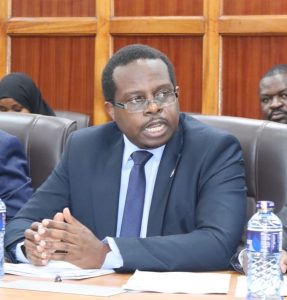
The Law Society of Kenya (LSK) has raised alarm over recent remarks by President Suluhu warning that any coordinated regional effort to suppress youth-led civic expression would undermine constitutional protections and the rule of law across East Africa.

Constitutional Rights Not Negotiable
Kanjama pointed to Articles 33, 36 and 37 of the Constitution, which guarantee freedom of expression, association and peaceful assembly. He stressed that these rights are not privileges granted by the State, but fundamental protections that underpin democratic governance.

“Demands for accountability, transparency and respect for human rights cannot be framed as disorder,” he said. “They are a core feature of any functioning constitutional democracy.”

Kanjama noted that similar protections exist across EAC member states, forming part of the region’s broader legal and democratic commitments.

LSK President Warns Against Curbing Civic Freedoms After Suluhu Remarks
Safeguards Against Abuse of Power
The Society also highlighted Articles 27, 28 and 29 of the Constitution, which protect equality, human dignity and freedom from cruel, inhuman or degrading treatment.

According to Kanjama, these safeguards are absolute and leave no room for the use of force or punitive measures against citizens exercising their rights peacefully.

Kenya’s democratic gains, Kanjama noted, were achieved through sustained struggle and resistance to arbitrary power. Preserving those gains requires continued respect for the rule of law and protection of civic space.

“The appropriate response to citizen engagement is dialogue, not deterrence,” he said.


Regional Focus

The LSK President called on governments within the East African Community to uphold constitutional norms and respect the rights of all persons.

He emphasized that constitutional rights are not subject to suppression through executive direction, political convenience or regional alignment.

Kanjama maintained that any attempt to undermine fundamental freedoms would be met with institutional resistance through legal, civic and regional accountability mechanisms.

The LSK President concluded by stating that the LSK is committed to defending the Constitution, protecting fundamental freedoms and advancing the rule of law across the region.


COTU Slams Gachagua Over Attacks on Trade Unions, Defends Labour Movement

The Central Organization of Trade Unions (COTU) has strongly condemned recent attacks by former Deputy President Rigathi Gachagua, terming them reckless, divisive, and politically motivated.

In a statement issued, the workers’ umbrella body accused Gachagua of launching sustained criticism against trade unions and their leadership, including Secretary General Francis Atwoli.

COTU argues that the remarks are not only unwarranted but also undermine the long-standing role of unions in safeguarding workers’ rights.

The organization linked Gachagua’s statements to his recent political troubles, suggesting that his attacks reflect frustration rather than substantive concerns about labour issues. It described his approach as a “dangerous mission” that risks destabilizing institutions that have historically played a critical role in Kenya’s socio-economic development.

COTU Slams Gachagua Over Attacks on Trade Unions, Defends Labour Movement
Labour Day Fallout and Political Undertones
COTU further questioned the timing of the attacks, pointing to the recent Labour Day celebrations attended by President William Ruto, during the event, the government announced a 12% increase in general wages and a 15% rise in minimum wages for agricultural workers.

According to COTU, these measures were widely welcomed by workers across sectors, making Gachagua’s criticism appear disconnected from the realities facing ordinary Kenyans. The union maintained that any leader genuinely concerned about workers would have supported such gains rather than dismissing them.

The statement also dismissed Gachagua’s proposal to establish a rival labour umbrella body, describing it as impractical and rooted in a misunderstanding of trade union structures.

Defending Labour History and Leadership
COTU defended its leadership and affiliated unions, highlighting their history of activism and sacrifice. It noted that Atwoli and other union leaders have faced arrests and harassment while advocating for workers’ rights, contrasting this with what it termed Gachagua’s limited track record in labour advocacy.

The organization also underscored the global and historical significance of Labour Day, linking it to broader struggles for fair wages, dignity, and humane working conditions.

COTU accused Gachagua of lacking both the historical understanding and ideological grounding necessary to critique the labour movement.

Concerns Over Workers’ Welfare
Additionally, COTU pointed to the government’s commitment to ratify key international labour conventions, including protections for domestic workers and safeguards against workplace harassment.

It suggested that opposition to such measures raises questions about Gachagua’s stance on workers’ welfare.

COTU concluded by warning that it will not tolerate continued attacks on the labour movement. It reaffirmed its commitment to defending workers’ rights, promoting social justice, and maintaining national unity.


Wandayi: Kenya Secure on Fuel Supply Despite Middle East Tensions

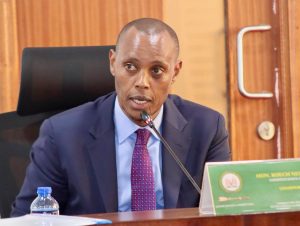
Energy CS Opiyo Wandayi has assured Kenyans that the country’s fuel supply remains stable despite rising geopolitical tensions in the Middle East, saying the Government has activated strategic interventions to protect consumers from global energy disruptions.

Wandayi stated before the Senate Plenary on Wednesday, May 6, 2026, that the Ministry of Energy and Petroleum is actively following global trends and collaborating with key partners to maintain consistent fuel availability and price stability across the country.

He noted that Kenya is still protected against supply shocks because of deliberate policy initiatives such as improved cooperation with suppliers and reinforced importation regulations.


Temporary Fuel Disruption Resolved
Opiyo Wandayi also addressed reports of fuel shortages experienced in parts of the country earlier in the week, clarifying that the disruption was temporary and caused by a technical and administrative hitch.

He confirmed that the issue had been fully resolved and normal fuel supply had resumed by Wednesday, urging Kenyans to remain calm and avoid panic buying.

Wandayi further highlighted the Government-to-Government (G2G) fuel importation arrangement as a key stabilising mechanism that has helped shield the country from volatility in global energy markets.

 
Wandayi: Kenya Secure on Fuel Supply Despite Middle East Tensions
Compensation for Affected Landowners Ongoing
Wandayi informed Senators that compensation for landowners affected by major transmission projects is ongoing, with 836 Project Affected Persons identified across key corridors including Kajiado–Namanga and Sultan Hamud–Loitoktok lines.

He noted that 108, 37, and 18 affected persons along different project routes are still awaiting compensation, attributing delays to documentation gaps and land ownership disputes.

The Ministry, he said, is working to clear all outstanding payments and prevent similar delays in future infrastructure projects.


Infrastructure Resilience Strengthened
Wandayi also addressed power disruptions in Nairobi caused by severe rains and flooding, stating that the government has adopted remedial measures such as drainage enhancements surrounding substations, storm water channel clearance, and vegetation control along power lines.

He said that long-term changes are being implemented to climate-proof the energy network, including smart grid technologies, underground cabling, and the replacement of timber poles with concrete structures to boost resilience.


Kenya Film Classification Board Issues 3-Month Compliance Grace Period for Filmmakers

The Kenya Film Classification Board (KFCB) has issued a public notice reminding filmmakers, distributors, broadcasters, and exhibitors to comply with provisions of the Films and Stage Plays Act.

The regulator emphasized that all film content must be licensed, examined, and classified before distribution or exhibition in Kenya.

Established under Kenya Film Classification Board, the Board is mandated to regulate the creation, broadcasting, possession, distribution, and exhibition of audiovisual content.

Its core objective is to ensure that all content aligns with Kenya’s cultural values and national standards while protecting children and vulnerable audiences from exposure to inappropriate material, in line with the Films and Stage Plays Act.


Legal Requirements for Filmmakers
In the notice, the Board expressed concern that a significant number of filmmakers continue to operate without securing filming licences or submitting their productions for classification.

This non-compliance has reportedly limited their ability to commercially exploit their work or participate in film festivals, ultimately reducing potential income streams and slowing the growth of the creative industry.

Kenya Film Classification Board Issues 3-Month Compliance Grace Period for Filmmakers
Three-Month Grace Period Announced
KFCB has granted a three-month grace period running from 4th March to 4th June 2026. During this window, filmmakers are encouraged to submit all films produced from 2018 onwards that have not met statutory requirements.

The Board stated that this initiative is intended to facilitate compliance and enable lawful distribution and monetisation of local content.

The regulator further warned that upon expiry of the grace period, any film that has not been duly licensed and classified for age appropriateness will not be allowed for public distribution, broadcasting, or exhibition.

KFCB reaffirmed its commitment to efficient service delivery and stakeholder engagement in line with its Citizens’ Service Delivery Charter.

The Board noted that the move is part of broader efforts to strengthen order in the film industry while supporting creators to operate within a clear and enabling legal framework.

Filmmakers are therefore urged to take advantage of the grace period to regularise their projects, avoid penalties, and secure distribution opportunities.

Tribunal Issues Fresh Directions in FKF Leadership Dispute Case

The Sports Disputes Tribunal has issued fresh directions in the ongoing case involving the FKF leadership. The matter came up for mention on May 5, 2026, primarily to confirm service, compliance, and guide case management moving forward.

The Tribunal noted that the Applicant has not yet been served with responses filed by counsel representing seven of the Respondents.

At the same time, the 9th Respondent, through their legal representative, requested additional time to file their response. This lack of complete service and documentation was identified as a key procedural issue that must be addressed before substantive progress can be made.

FIFA Inquiry Takes Centre Stage
A central issue emerging from the proceedings is the acknowledgment by both parties that the dispute is currently under inquiry by FIFA. The Tribunal recognized this process as an Internal Dispute Resolution Mechanism (IDRM), making it directly relevant to the matters before it.

The Tribunal emphasized that responses filed by the parties must expressly address the FIFA inquiry, given its significance in shaping the dispute’s outcome. This positions the international body’s involvement as a critical factor in the overall proceedings.

High Court Order Does Not Halt Proceedings
The Tribunal also addressed concerns regarding a separate order issued by the High Court in Kiambu under a different petition. It clarified that the High Court order, which was issued after the Tribunal’s earlier interim orders dated April 27, 2026, does not prevent the Tribunal from continuing with the case.

According to the Tribunal, there is no indication that its jurisdiction has been removed or that the proceedings have been stayed. This effectively allows the case to proceed concurrently despite the existence of parallel legal processes.

Tribunal Issues Fresh Directions in FKF Leadership Dispute Case
Focus on Procedural Compliance
In its assessment, the Tribunal stated that it will be better placed to manage the dispute once all procedural requirements are fulfilled. This includes proper service of responses to the

Applicant, submission of any replies, and filing of all relevant documents by all parties involved.

The Tribunal maintained that the reasons for preserving the subject matter of the case remain valid. It stressed the importance of ensuring that the proceedings are not rendered ineffective before all parties are fully heard.

Strict Timelines Issued
To streamline the process, the Tribunal issued clear timelines. Respondents have been directed to serve their responses within three days. The 9th Respondent has four days to file and serve their response.

The Applicant has been granted two days after service to file any reply, with a deadline set before noon on May 12, 2026. All parties must also submit any additional documents, including those related to the FIFA inquiry, within the same timeframe.


Wandayi: What Caused Nairobi Blackouts During March Heavy Rains

Energy CS Opiyo Wandayi has outlined the reasons behind the widespread power outages experienced in Nairobi and its environs during the March heavy rains. The explanation points to a combination of flooding and storm-related damage to critical electricity infrastructure.

Flooding emerged as a primary cause of the outages.
According to Wandayi, substations located in areas where surrounding built environments have constrained or obstructed natural water paths became highly vulnerable.
Storm water overflowed into these substations, leading to significant disruptions. The substations affected included Nairobi West, Industrial Area, Ridgeways, Kimati, and Syokimau

These substations play a key role in electricity distribution. They supply power to several areas including South C, Langata Road, Upper Hill, South B, Industrial Area, Ridgeways, Jogoo road, Mlolongo, Mavoko and Katani areas.

The flooding caused extensive technical damage. Water ingress into above-ground medium voltage switchgear resulted in total failure of equipment. In addition, electrical cables were damaged, further compounding the outages and slowing restoration efforts.

Wandayi: What Caused Nairobi Blackouts During March Heavy Rains
Storm Damage from Fallen Trees Disrupts Power Lines
Beyond flooding, the heavy rains were accompanied by strong winds that caused trees growing near power lines to fall.

These incidents led to damage across both high and low voltage power lines as well as transformers. The destruction of this infrastructure triggered widespread and prolonged outages in several parts of Nairobi.

Areas most affected by fallen trees included Dagorethi North, Langata, Westlands and Ngong. The scale of damage in these regions required extensive repair work before electricity supply could be restored.

Extended Outage Duration Due to Network Reconstruction
CS Wandayi indicated that the severity of the damage meant that full reconstruction of sections of the power network was necessary before customers could be reconnected.

As a result, the duration of outages ranged between 12 hours and 72 hours depending on the extent of the damage in each area.

To mitigate the impact on consumers, response teams moved to address the faults caused by the heavy rains as urgently as possible. This included repairing damaged infrastructure where feasible and transferring affected customers to alternative power sources.

Additional short-term measures were also implemented to maintain connectivity during the restoration period.


National Irrigation Authority Grilled Over Stalled Water Projects

Members of the National Assembly Public Investments Committee on Commercial Affairs and Energy have put the National Irrigation Authority (NIA) on the spot over delayed completion of several community irrigation projects, some of which have stalled for up to six years.

The concerns emerged as the Committee reviewed NIA’s financial records following queries raised by the Auditor General covering the period between the 2018/2019 and 2024/2025 financial years.

Delays Linked to Payments, Land Issues
During the session, the MPs cited multiple factors behind the delays. These include payment challenges, land ownership disputes, and failure by NIA to hand over projects that are already in their final stages to respective county governments.

Among the projects highlighted were the Water for Household Project Phase II in Mwatate, the rehabilitation works for Kerwa Dam in Mbeere South, the Kathanje Earth Dam in Tharaka Nithi, and the Iganjo/Silanga Water Pan in Murang’a.

The Committee also flagged stalled rehabilitation of major irrigation schemes such as Bura Irrigation and Settlement Scheme, Lower Nzoia Irrigation Scheme, and the delayed completion of Thiba Dam in Kirinyaga.

National Irrigation Authority Grilled Over Stalled Water Projects
Service Gaps and Economic Impact
MP Pkosing noted that the prolonged delays have denied Kenyans access to essential water and irrigation services. He added that the situation has also resulted in missed employment opportunities that would have been created through the projects.

He emphasized the need for faster completion and proper handover to relevant government agencies, noting that this would ensure accountability and proper utilization of public funds.

“Ensure you have a discussion with the host counties, especially for projects whose routine maintenance is under the relevant county governments. That is the only way Kenyans can get value for money,” said Pkosing.

Audit Queries Raise Accountability Concerns
Beyond project delays, the Committee also raised concerns over failure by NIA to implement an internal audit management system.

According to the Auditor General, the system was procured at a cost of Ksh 6,499,736, with Ksh 5,531,461.36 already paid. However, it was established that the system is not being utilized by internal auditors.

Further queries were raised regarding lack of ownership documents and valuation records for property, plant, and equipment under the Authority.

In response, the Committee recommended that NIA’s legal team engage relevant government agencies to facilitate drafting of ownership transfer agreements where necessary.

The lawmakers maintained that resolving these issues is critical to unlocking stalled projects and ensuring that investments made using public funds deliver tangible benefits to citizens.


CS Wandayi Assures Kenyans of Adequate Fuel Stocks

Temporary Hitch Disrupts Supply in Isolated Stations
The Ministry of Energy and Petroleum has moved to reassure the public following temporary fuel supply challenges reported in isolated filling stations across parts of the country.

In a statement issued by CS Opiyo Wandayi, the Ministry attributed the disruptions to a technical and administrative hitch that affected sections of the downstream petroleum supply chain.

According to Wandayi, the hitch curtailed the optimal uptake of petroleum products by a few oil marketing companies. This, in turn, led to supply gaps in select retail outlets, sparking concern among consumers in the affected areas.

However, the Energy CS confirmed that the issue has since been resolved, noting that the Ministry is working closely with industry stakeholders to ensure the situation is fully stabilised.

CS Wandayi expressed confidence that supply levels will return to normal across the country by the end of the day. This signals a rapid recovery from what it described as a temporary and isolated disruption rather than a systemic shortage.

CS Wandayi Assures Kenyans of Adequate Fuel Stocks
Government Reassures on Adequate Fuel Stocks
CS Opiyo Wandayi sought to calm public anxiety, emphasizing that the country currently holds adequate fuel stocks. He reiterated that there is no cause for alarm and urged Kenyans to avoid panic reactions that could strain the supply chain unnecessarily.

“The Ministry wishes to reassure Kenyans that the country has adequate fuel stocks. There should be no cause for alarm,” said Wandayi.

The government also reaffirmed its broader commitment to maintaining national energy security. Ensuring a stable and reliable fuel supply remains a key priority, particularly given the critical role of petroleum products in powering households, businesses, and industries.

The assurance comes at a time when fuel supply stability is closely monitored due to its direct impact on economic activity and cost of living. Even short-term disruptions can have ripple effects across transport, manufacturing, and other key sectors.

By addressing the technical and administrative issues promptly, the Ministry aims to reinforce confidence in the country’s fuel distribution systems.