


International Rights Groups Raise Concerns Over Religious Freedom in South Korea
SEOUL, South Korea, August 7, 2026 — Questions over religious freedom and freedom of expression are drawing international attention in South Korea, with human rights organisations calling for greater protection of religious minorities and stronger safeguards for due process.
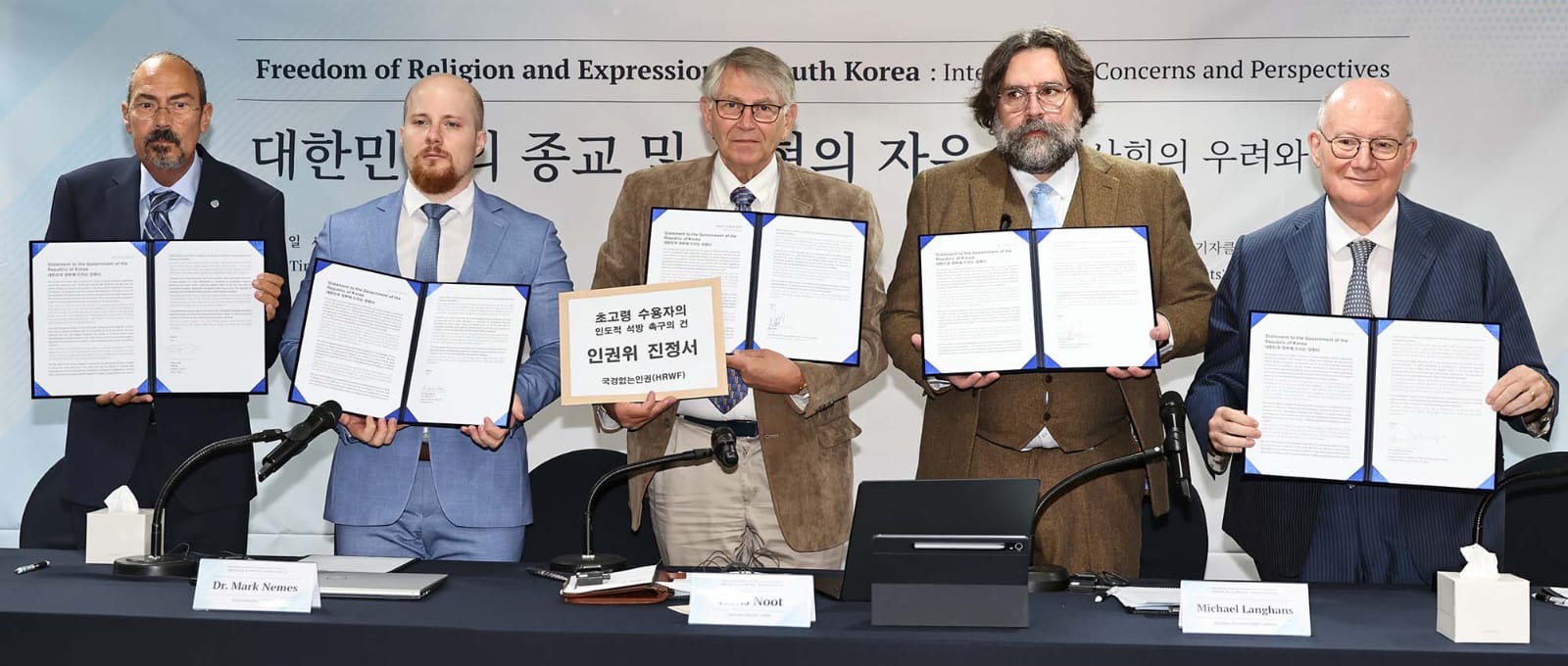
The concerns were raised during a press conference at the Seoul Foreign Correspondents’ Club by Human Rights Without Frontiers (HRWF), CAP Liberté de Conscience (CAP LC), FOREF, CESNUR and Bitter Winter.
The organisations focused on the treatment of elderly religious leaders in pretrial detention, including 95-year-old Lee Man-hee, Chairman of Shincheonji, and 83-year-old Hak-ja Han Moon of the Family Federation.
They questioned whether the legal measures being taken against elderly religious figures are proportionate and consistent with South Korea’s international human rights commitments.
Concerns Over the Detention of a 95-Year-Old Religious Leader
The detention of Lee Man-hee was one of the main issues discussed during the conference.
The rights groups questioned whether keeping the 95-year-old in pretrial detention is necessary and proportionate.
They also stressed the importance of the presumption of innocence.
Hans Noot, Associate Director of HRWF, said freedom of religion and freedom of expression are central to a democratic society.
He warned that when religious communities face stigma or restrictions on peaceful activities, the impact can go beyond individual cases.
Noot said the conference was not intended to defend one particular religious movement.
Instead, he said the focus was on the broader principle that fundamental rights should apply equally to everyone.
Thierry Valle, President of CAP Liberté de Conscience, also questioned whether Lee’s detention is compatible with South Korea’s international obligations.
South Korea ratified the International Covenant on Civil and Political Rights (ICCPR) in 1990.
It also ratified the Convention against Torture in 1995.
Valle argued that alternative measures could be considered for elderly detainees.
He referred to cases involving other elderly religious figures, including Cardinal Joseph Zen in Hong Kong.
Religious Freedom Debate Extends Beyond One Case
The organisations said concerns about religious freedom in South Korea extend beyond Lee’s detention.
They also highlighted the situation involving Segero Church in Busan, which they said has continued to face official scrutiny following the release of Pastor Son Hyun-bo.
Other issues discussed included conscientious objection to military service, opposition to a mosque project in Daegu and religious accommodation in schools.
HRWF said it has documented the imprisonment of hundreds of Jehovah’s Witnesses in South Korea over conscientious objection.
Although South Korea introduced an alternative civilian service system, critics have questioned its length and conditions.
The alternative service lasts 36 months, compared with a shorter period for regular military service.
International Impact of the Debate
The discussion also focused on the possible impact of developments in South Korea on religious communities overseas.
Márk Nemes, Deputy Director of CESNUR, pointed to Shincheonji congregations in Europe, Argentina and Australia.
He said research in these communities has identified growing hostility towards the movement.
Nemes argued that developments in South Korea could therefore affect members of the faith community outside the country.
He pointed to international protections for freedom of religion and expression under Articles 18 and 19 of the ICCPR.
Massimo Introvigne, Managing Director of CESNUR and Editor-in-Chief of Bitter Winter, described Lee’s arrest as a worrying development.
He also questioned whether the charges and detention measures are proportionate.
Call for Due Process and Equal Protection
The organisations are now calling on South Korean authorities to ensure that religious minorities are treated fairly.
They urged the government and international community to pay close attention to due process, proportionality and equal protection under the law.
The groups also called for continued scrutiny of developments affecting religious communities in South Korea.
At the end of the press conference, participating scholars signed an official letter calling on the Government of the Republic of Korea to immediately release Chairman Lee from custody.
The organisations said they would continue documenting developments and making information available as the debate over religious freedom and expression in South Korea continues.