


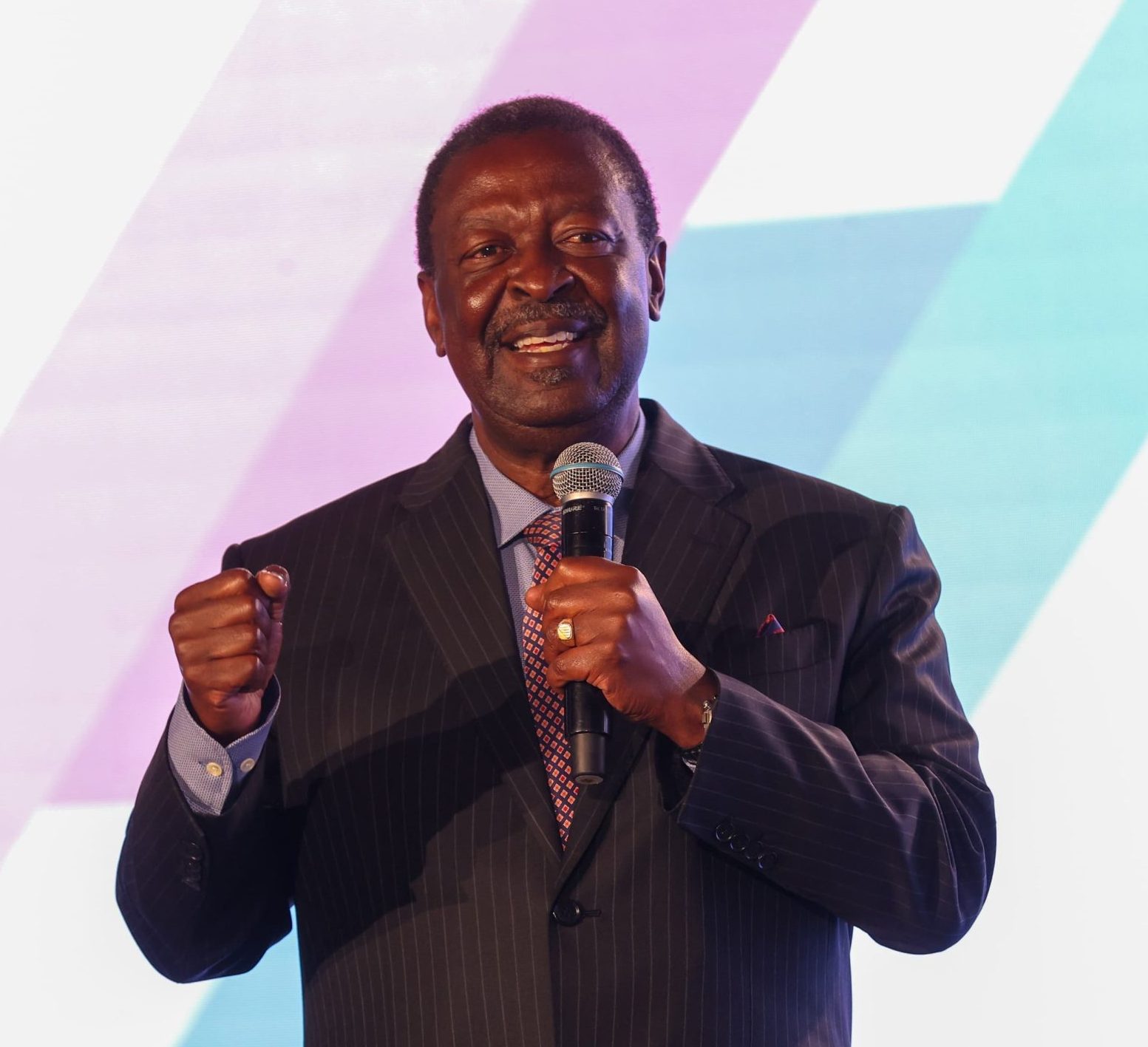
Prime CS Musalia Mudavadi has warned that Kenya and other developing economies should prepare for more economic pressure as global crises continue to disrupt markets, funding systems, and livelihoods.
Speaking during a forum in KICC, Nairobi, Mudavadi said the world has experienced a series of unprecedented shocks in recent years, beginning with the COVID-19 pandemic, followed by the Russian invasion of Ukraine and the ongoing Israel–Hamas war.
According to him, the cumulative impact of these crises has fundamentally altered global economic and development priorities.
He noted that the shocks have affected funding flows to multilateral institutions and research-driven organisations, forcing countries to rethink how they allocate resources and respond to emergencies.
Innovation Must Drive Faster Solutions
Mudavadi said the current situation demands a shift away from “business as usual,” adding that innovation and research institutions must now play a more urgent role in helping societies adapt to rapidly changing global realities.
He challenged innovators and researchers to accelerate the pace at which solutions are delivered to communities, especially in developing countries where economic vulnerabilities are often more severe.
“The speed and flexibility at which your innovation can respond will be very important in helping communities adjust to these global shocks,” he said.
The Prime Cabinet Secretary acknowledged that research processes are often lengthy and resource-intensive, but stressed that extraordinary times require faster and more adaptive approaches.
He argued that institutions involved in science, innovation, and technology must develop practical solutions capable of easing economic and social pressures before crises escalate further.
Middle East Crisis Expected to Have Lasting Impact
Mudavadi particularly pointed to the Middle East conflict, warning that its economic consequences are likely to persist long after fighting subsides.
He said the full effects of the crisis have not yet fully filtered into global and local economies, cautioning that Kenya could begin experiencing more pressure within the next three to four months.
According to him, governments have a responsibility to prepare citizens psychologically and economically for more difficult conditions ahead.
“We need to brace ourselves and start looking at how to manage some of the challenges that are ahead of us,” he said.