


The Pharmacy and Poisons Board (PPB) has issued a public alert over a falsified batch of Phesgo (Pertuzumab/Trastuzumab) circulating in the Kenyan market, warning that the product poses a serious risk to patient safety and public health.
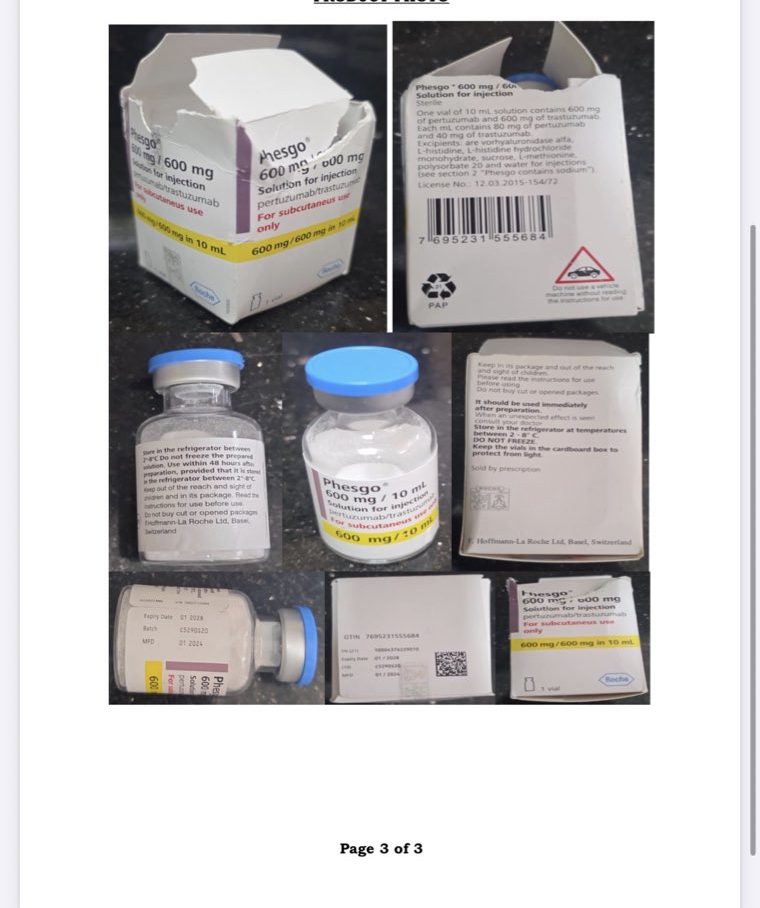
The product is identified as Phesgo 600mg/600mg in 10ml, Batch Number C5290S20. According to the regulator, the batch does not match any authentic batch produced by Roche, the manufacturer of the cancer treatment medicine.
Surveillance Detects Falsified Batch
PPB said the discovery was made during routine post-marketing surveillance activities conducted as part of its mandate under the Pharmacy and Poisons Act, Cap 244.
The Board is responsible for regulating the pharmacy profession and ensuring that health products and technologies in Kenya meet the required standards of quality, safety, and efficacy.
The Board noted that the suspicious vials contain a white powder, while authentic Phesgo is supplied as a ready-to-use liquid solution. Genuine Phesgo is described as a clear to opalescent, colourless to slightly brownish liquid intended for subcutaneous administration and does not require reconstitution.
Serious Public Health Risks
PPB warned that falsified medicines may contain harmful, incorrect, or insufficient ingredients, making their safety and effectiveness impossible to guarantee.
“Use of this product poses a serious risk to patient safety and public health,” the Board stated.
Phesgo is commonly used in the treatment of certain types of breast cancer, making the circulation of falsified oncology products particularly concerning for healthcare providers and patients.
The Poisons Board has directed procurement agencies, distributors, wholesalers, retailers, pharmacists, pharmaceutical technologists, healthcare professionals, and members of the public to immediately stop the distribution and use of the affected batch.
PPB warned that procuring medicines from unlicensed suppliers not only endangers patients but also violates Kenyan law.
To strengthen reporting and surveillance, PPB has encouraged the public and healthcare professionals to report suspected falsified or substandard medicines through its official reporting channels, including the online pharmacovigilance portal, the *271# USSD code, email or telephone hotline.