
Sunday, June 28, 2026
Google search engine
Home Blog Page 13

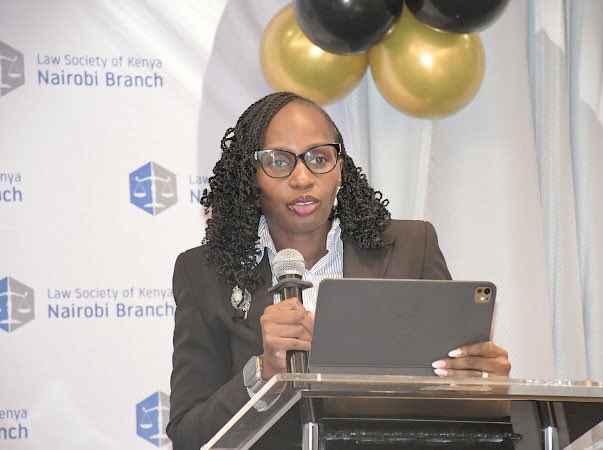
Faith Odhiambo on High Court Adolescent Rights Ruling

Former Law Society of Kenya President Faith Odhiambo has weighed in on a High Court judgment set to reshape how Kenya’s criminal justice system interprets adolescent sexuality under the Sexual Offences Act.

The High Court delivered a significant ruling in Petition, finding that the prosecution of adolescents engaged in consensual, non-coercive peer relationships under the Act violates constitutional protections on dignity, equality, privacy, health, education, and the best interests of the child.

Odhiambo described the decision as a defining moment in child rights jurisprudence and a critical turning point in criminal justice reform.

Tension Between Child Protection and Adolescent Autonomy
The Court observed a persistent tension between child protection laws and evolving adolescent autonomy.

While the Sexual Offences Act was designed to prevent abuse and exploitation, its broad application has increasingly captured consensual peer relationships, often exposing adolescents to criminal liability and deterring access to sexual and reproductive health services.

The judgment underscores that punitive interpretation of the law has created unintended rights violations within a framework meant to safeguard children.
Faith Odhiambo on High Court Adolescent Rights Ruling
Directives to ODPP, Police, and State Agencies
In its directives, the Court ordered the Office of the Director of Public Prosecutions (ODPP) to develop prosecutorial guidelines distinguishing consensual peer relationships from exploitative conduct.

The National Police Service was also directed to revise arrest protocols, while State agencies were tasked with ensuring coordinated policies that guarantee adolescents access to sexual and reproductive health information without fear of prosecution.

Faith Odhiambo stated that these reforms aim to align enforcement practices with constitutional protections and child welfare principles.


Concerns Over Legal Gaps and Enforcement Risks

However, Faith Odhiambo warned that without precise legislative safeguards the ruling may create interpretive gaps in an already fragile environment marked by rising gender-based violence and femicide cases.

“Without precise legislative safeguards, we risk creating interpretive gaps that undermine hard-won protections for children particularly girls who bear the burden of sexual violence. Who determines genuine consent among adolescents of varying maturity levels?” Odhiambo added.

Odhiambo emphasized that reform of the Sexual Offences Act remains urgent but must be survivor-centered and context-sensitive.

Any legislative amendments, she argue, must protect adolescents from criminalization for age-appropriate relationships while strengthening enforcement against coercion and abuse.


DPK Faults Government Over Fuel Prices, Fiscal Policies

The Democratic Party of Kenya(DPK), has accused the Kenya Kwanza administration of misleading Kenyans over the rising cost of fuel and the broader cost-of-living crisis, arguing that domestic fiscal policies not global tensions alone are driving economic hardship.

In a statement issued by Party Leader Justin Muturi, the party said the government has continued to blame instability in the Middle East and disruptions around the Strait of Hormuz for high fuel prices while ignoring what it termed as “reckless fiscal management” at home.

The party argued that excessive taxation, opaque borrowing arrangements, and the securitization of future public revenues have placed an unsustainable burden on ordinary Kenyans.

Fuel Levy Structure Comes Under Scrutiny
At the center of the criticism is the Road Maintenance Levy Fund, where Kenyans currently pay KSh 25 per litre in fuel levies.

According to Muturi, KSh 12 from every litre has already been committed toward securing infrastructure bonds and financing arrangements through Special Purpose Vehicles (SPVs). The arrangements are said to have raised nearly KSh 300 billion upfront.

Justin Muturi claims that the structure effectively forces citizens to service long-term financial obligations created through off-book borrowing mechanisms that conceal the country’s actual debt exposure.

“This means wananchi are no longer simply paying for road maintenance,” Muturi said. “They are now servicing long-term financial obligations created through off-book borrowing structures that conceal the country’s true debt exposure from the public.” Muturi added.

DPK Faults Government Over Fuel Prices, Fiscal Policies
Concerns Over Transparency and Accountability
The party further raised concerns over the continued securitization of fuel levy revenues.

It argued that mortgaging future tax revenues without sufficient public participation undermines transparency and prudent public finance management as envisioned under the Constitution.

The statement also criticized continued spending on road agencies such as Kenya Rural Roads Authority and Kenya Urban Roads Authority despite worsening economic conditions.

“Billions continue to flow into duplicated and procurement-heavy agencies such as KeRRA and KURA despite worsening economic hardship across the country,” added the Party Leader.

According to DPK, many urban and rural road functions are already substantially devolved, while Members of Parliament receive NG-CDF allocations capable of supporting local infrastructure projects.

Calls for Immediate Action
DPK is now calling for the immediate suspension and parliamentary review of all fuel levy securitization arrangements.

It also wants full public disclosure of all infrastructure bond agreements linked to fuel levy collections, a 50 percent reduction in the budgets of KeRRA and KURA, and a comprehensive audit of pending road contracts and contractor payments.

The party additionally urged the government to redirect spending toward food security, healthcare, job creation, and household economic relief.

“The government cannot continue blaming foreign conflicts while ignoring its own fiscal excesses and policy failures,” Justin Muturi said.


Duale Highlights Taifa Care, UHC Reforms at 79th World Health Assembly

Health CS Aden Duale has positioned Africa as a rising force in shaping global health systems, calling for stronger partnerships, innovation and community-led resilience during a high-level side event at the 79th World Health Assembly.

Speaking during the session, Duale reflected on the outcomes of the World Health Summit Regional Meeting held in Nairobi, describing it as a major turning point for the continent’s health agenda.

He said the Nairobi meeting demonstrated that Africa is no longer a passive recipient of global health solutions, but an active architect of resilient, innovative and sustainable healthcare systems.

CS Duale emphasized that resilience must be built from the grassroots, drawing lessons from both the COVID-19 pandemic and climate-related shocks that exposed vulnerabilities in health systems across the continent.

Taifa Care and UHC Reforms in Focus
He pointed to Kenya’s ongoing Universal Health Coverage rollout and the Taifa Care reforms as examples of how governments can strengthen healthcare delivery through people-centered policies.

According to Duale, the reforms are focused on expanding primary healthcare, accelerating digitalisation and ensuring health services reach every household across the country.

Innovation, he noted, should now be treated as a continental public good.

He highlighted Africa’s growing capabilities in digital health, biotechnology and local pharmaceutical manufacturing, adding that Kenya is positioning itself as a regional hub for health innovation and medical advancement.

Duale Highlights Taifa Care, UHC Reforms at 79th World Health Assembly
Call for Partnerships and Accountability
The CS further called for stronger cross-sector collaboration involving governments, development partners, private sector players and research institutions.

He urged stakeholders to move beyond high-level discussions and focus on implementation, accountability and measurable outcomes that directly improve healthcare access for citizens.

“Africa is ready to lead through co-creation, shared leadership and meaningful contribution to global health security,” Duale said.

His remarks come at a time when many African countries are pushing for greater self-reliance in healthcare financing, manufacturing and disease response systems following the disruptions witnessed during the pandemic.

Duale was joined at the event by Nicholus Muraguri, who represented the Ministry of Foreign and Diaspora Affairs in advancing Kenya’s global health diplomacy agenda.

The side event brought together policymakers, health experts and international partners to discuss Africa’s evolving role in shaping the future of global health governance.


Gashiki Gashiki Opens Up on Acting Hiatus, Comeback and Life Beyond the Spotlight

Gashiki Gashiki Opens Up on Acting Hiatus, Comeback and Life Beyond the Spotlight
From Theatre Stages to a 10-Year Break

In an industry where many careers are defined by constant visibility, Gashiki Gashiki has taken a different path. Her story is one of pause, resilience, reinvention, and an unwavering return to the craft she loves most.

Now starring as the bold and unapologetic Mrs. Obama in Adam to Eve, Gashiki is embracing a new chapter in her acting journey after spending nearly a decade away from the screen.

The gender-bending dramedy follows Adam, played by Blessing Lung’aho, a charming Nairobi playboy who mysteriously transforms into a woman portrayed by Ellah Maina. The transformation pushes the character into a chaotic but eye-opening journey of redemption, self-discovery, and unexpected lessons about life and society.

For Gashiki, acting has always been more than a career.

“My name is Gashiki Gashiki, born Kenyan, raised African. A lot of people don’t even know what Gashiki means, but simply put, Gashiki is an actor,” she says.

The actress describes acting as something deeply natural to her. She enjoys the freedom that comes with becoming different people through storytelling.

“Acting comes first for me. It’s natural. I love that I can be anything a doctor today, a mad woman tomorrow. That is the beauty of it,” she explains.

Away from the cameras, however, she says she lives a much quieter life than many people would expect.

“I am not the bubbly, loud personality people expect. I’m more of an ambivert. I enjoy stillness and being grounded,” she says.

Like many Kenyan actors, Gashiki began her career in theatre under Afrika Nasaha before transitioning to television in 2013 through the show Parasites on Swahili Africa Magic.

However, shortly after entering the industry, life took a different turn.

“Something very personal happened. I can’t really get into it, but it forced me to step back,” she reveals.

The realities of surviving in Kenya’s film industry also played a role in her decision to pause acting.

“Let’s be real… you can’t always live off film in Kenya. I had to survive,” she says.

She later joined the Murang’a County Government as an information officer, a role she held during her 10-year break from acting.

Returning to Screen Through Powerful African Stories

Despite the long hiatus, Gashiki says acting never truly left her.

“Acting is addictive. It keeps calling you. No matter how long you stay away, it pulls you back,” she says.

Her comeback began in 2023 with Haki Mwitu on Maisha Magic, produced by Phil-It Productions, where she played the role of Bi Dokta.

Since then, she has slowly rebuilt her acting career, appearing in the youth drama Jiji in 2024 and starring in the 2025 short film Transaction.

The film, written and directed by Wanjeri Gakuru, became especially meaningful for the actress because of its focus on authentic African storytelling.

“Transaction was special to me. I manifested it. It told a raw African woman’s story,” she says.

The short film premiered at the International Film Festival Rotterdam and also earned her a nomination at the 2026 Kalasha Awards for Best Lead Actress in a Short Film.

Gashiki describes her return to set as emotional and refreshing, especially while working with the Phil-It Productions team.

“It reminded me why I love this craft,” she says.

She also praised fellow actors including Xwaya Xavier and Nungari Kiore for creating a supportive environment during filming.

One of the scenes that stood out to her emotionally involved confronting domestic violence.

“I really went there emotionally. That’s the kind of storytelling that matters,” she explains.

Why Adam to Eve Felt Different

According to Gashiki, one of the reasons she was drawn to Adam to Eve was its unique storytelling approach.

“The story is different. It is not forced comedy. You’ll laugh, you’ll cry, but then it’s a laughable cry,” she says.

She says watching Adam struggle with suddenly becoming Eve created both humor and emotional depth.

“If you woke up one morning as the opposite sex, it would make you feel crazy,” she says.

Interestingly, Gashiki reveals she was not initially cast as Mrs. Obama. She had first auditioned for a butler role before producers changed direction.

“They were like, ‘You know what, let her do Mrs. Obama,’” she recalls.

She describes the character as confident, assertive, and fully aware of her power.

“She knows she’s got it and she doesn’t care about flaunting it,” Gashiki says with a laugh.

Speaking Out on Humanity and Public Service

Beyond acting, Gashiki also reflected on how society often forgets that actors are human beings with personal struggles.

“Sometimes people forget that actors are also people,” she says.

She criticized what she calls “tea culture,” where people constantly gossip about celebrities without considering their emotions and personal lives.

Her years in public service also shaped how she views people and leadership.

While working at the Murang’a County information office, she says she always wanted citizens to leave feeling heard and helped.

“I always hoped people would leave fulfilled,” she says.

She also expressed concern about how some Kenyans are treated in public offices.

“You are there because of the people. They are our employers, not the other way around,” she says.

Looking Ahead

As she continues rebuilding her acting career, Gashiki says her biggest dream is to tell authentic African stories that resonate globally.

“Everyone dreams of Hollywood, but I believe our stories should start here,” she says.

She hopes that by telling African stories honestly and powerfully, the world will better understand the continent and its people.

The actress also revealed her admiration for celebrated Kenyan filmmakers Wanuri Kahiu and Judy Kibinge, saying she hopes to work with them someday.

For now, audiences can watch Gashiki bring Mrs. Obama to life in Adam to Eve, currently streaming on DStv Stream.

 Matiang’i Blasts Government Over Tax Hikes, IMF Audit Row

Jubilee Party Deputy Leader Fred Matiang’i has intensified criticism of the government, accusing it of overtaxing Kenyans to plug widening fiscal gaps, rejecting transparency under the International Monetary Fund (IMF) programme, and adopting what he describes as a short-term approach to economic management.

Speaking in Nairobi, Matiang’i argued that the rising tax burden is worsening living conditions for Kenyan workers and eroding public trust in government economic policy.

He further claimed that state interventions have relied on temporary fixes rather than structural reforms, warning that continued pressure on households could deepen inequality and economic strain across sectors.


IMF Programme and Audit Dispute
Matiang’i alleged that Kenya’s exit from the International Monetary Fund programme was linked to disagreements over audit requirements, claiming that the government had resisted financial scrutiny.

He argued that the IMF had pushed for a comprehensive audit process as part of fiscal accountability measures, but suggested that authorities opted out to avoid exposing financial irregularities.

The IMF continues to engage member states through structured support programmes aimed at fiscal discipline, debt sustainability, and macroeconomic stability.

 Matiang’i Blasts Government Over Tax Hikes, IMF Audit Row
Matiang’i Blasts Government Over Tax Hikes, IMF Audit Row
Criticism of Short-Term Economic Management
He further criticised what he termed as “short-termism” in government policy, alleging that authorities rely on temporary interventions such as targeted payments, coercive measures, or political bargaining to address systemic economic challenges.

Matiang’i said such approaches fail to resolve underlying structural issues in taxation, debt management, and public service delivery. He also warned against attempts to divide communities or politicise economic hardship, stating that cost-of-living pressures are felt uniformly across regions.

According to him, sustainable recovery requires long-term planning, institutional integrity, and consistent policy implementation rather than reactive decision-making.


Call for Policy Shift and Transparency Agenda
Outlining an alternative approach, Matiang’i said a future administration should prioritise transparency in public finance, especially in sectors such as energy and petroleum levies.

He proposed stricter accountability in the use of public funds, including clear reporting on road maintenance and petroleum development levies. He also emphasised the need to eliminate conflicts of interest in key economic sectors, arguing that regulators should not participate in commercial activities within the industries they oversee.

Matiang’i maintained that Kenya requires renewed leadership focus on accountability, fairness, and efficient service delivery to restore public confidence in governance and ensure equitable economic growth.


East Africa Law Society Pushes for Regional AI Rules as Adoption Accelerates

The East Africa Law Society (EALS) is calling for urgent regional cooperation on artificial intelligence governance, warning that East Africa risks falling behind as AI adoption accelerates across critical sectors.

The position was outlined after the EALS Governing Council retreat held in Diani in January 2026, followed by a council meeting in Zanzibar on May 15.

The meetings brought together presidents of law societies and bar associations from across the East African Community.

AI expert Linda Bonyo facilitated the retreat discussions, which focused on the rapid penetration of artificial intelligence in East Africa and the legal, ethical, and regulatory challenges emerging from its adoption.

Regional Gaps Raise Governance Concerns
EALS noted that AI is already shaping sectors such as healthcare, agriculture, manufacturing, legal services, and public administration across the region. However, the society warned that governance structures remain fragmented.

According to EALS, only Kenya, Rwanda, Uganda, and Ethiopia have fully articulated AI strategies. Tanzania’s framework remains in draft form, while Burundi and South Sudan are yet to establish dedicated AI governance policies.

The lawyers’ body said the absence of harmonised standards on data governance, algorithmic accountability, and regulatory oversight exposes the region to significant legal and ethical vulnerabilities.

EALS is now proposing the development of EAC Model AI Guidelines aimed at creating a unified, rights-based framework for all partner states.

The proposed guidelines would focus on ethical deployment, transparency, and human oversight while also protecting local innovation and ensuring that regional realities are reflected in AI policy development.

East Africa Law Society Pushes for Regional AI Rules as Adoption Accelerates

Human Rights and Legal Oversight Take Centre Stage

The society also called for mandatory human rights and algorithmic impact assessments for foreign AI service providers operating in East Africa.

It singled out high-risk applications such as predictive policing, judicial analytics, and biometric identification systems, arguing that such technologies require strict legal and ethical review before deployment.

At the same time, EALS pledged to strengthen capacity building among legal professionals through specialised AI training programmes for judges, lawyers, and policymakers.

The organisation also proposed the establishment of AI research and policy hubs to support evidence-based regulation and cross-border cooperation. EALS further signalled its readiness to pursue strategic litigation and advocacy aimed at ensuring the safe and accountable use of artificial intelligence across East Africa.

Ndindi Nyoro Pushes Fuel Tax Cuts to Ease Cost of Living

Kiharu MP Ndindi Nyoro has unveiled a fresh proposal in Parliament seeking to lower fuel prices through a series of tax and levy reductions, in what could significantly ease the cost of living for Kenyan households and businesses.

Parliamentary Process Begins
Ndindi Nyoro confirmed that the parliamentary process has already begun following the submission of proposed amendments targeting taxes imposed on petroleum products. He said the proposals are expected to be discussed before relevant parliamentary committees next week.

Nyoro noted that while rising fuel prices have had a direct impact on the transport sector, the ripple effects are being felt across the wider economy through increased prices of goods and services.

VAT and Fuel Levy Targeted
Key among the proposals is the removal of the current 8% VAT on petroleum products by classifying fuel as a VAT-exempt item under the VAT Act.

The amendment seeks to delete Section 5 subsection 2A of the VAT Act Cap 476, effectively reducing VAT on fuel from 8% to zero.

Nyoro is also seeking to reverse part of the Road Maintenance Levy Fund (RMLF) increase introduced in 2024. Under the proposal, the levy would be reduced by KSh 7 per litre, bringing it down from the current KSh 25 to KSh 18 per litre.

In addition, the MP wants profit margins for fuel importers and distributors reviewed downward as part of broader efforts to stabilize retail fuel costs.

Ndindi Nyoro Pushes Fuel Tax Cuts to Ease Cost of Living
Proposed Subsidy and Price Impact
The proposals further include an additional KSh 5 billion subsidy allocation for the petroleum sector to cushion consumers against persistent global fuel price volatility.

According to Nyoro, the combined measures could reduce the price of diesel by approximately KSh 54 per litre if implemented.

The proposed amendments have been presented as short-term interventions aimed at easing inflationary pressure and addressing the broader economic strain caused by high energy costs.

Fuel prices remain a sensitive issue in Kenya due to their direct influence on transportation, food prices, manufacturing costs, and overall inflation.

Any reduction in pump prices is likely to have a wider economic impact, especially for households and businesses already grappling with high living expenses.


Rights Groups Demand Action on Femicide, Violence Against Women

Kenyan rights organisations and stakeholders have issued a joint statement warning that femicide and violence against women and girls has reached crisis levels, calling for urgent national intervention to prevent further loss of life.

The statement, spearheaded by FIDA-Kenya, highlights daily reports of brutal killings, including strangulation, stabbing, acid attacks, and burning, underscoring what they describe as a deepening national emergency affecting women and girls across Kenya.

Recent Cases Highlight Nationwide Scope of Violence
The groups cites recent tragedies involving university students and professionals, including cases at Multimedia University and Ramogi Institute of Advanced Technology, as well as incidents involving members of the security services and public figures, reflecting a pattern of intimate-partner and targeted violence.

According to data from Amnesty International Kenya and FIDA-Kenya, at least eight femicide cases are reported weekly in the country, with women aged 18 to 35 making up the majority of victims, many of them students in higher education institutions.

Perpetrators Often Known to Victims
The organisations warn that most perpetrators are intimate partners or family members, and that many victims had previously reported abuse or sought help that was not acted upon, pointing to systemic gaps in protection, enforcement, and accountability.

Despite a strong constitutional and legal framework, including protections under the Constitution of Kenya 2010 and laws such as the Sexual Offences Act (2006) and the Protection Against Domestic Violence Act (2015), implementation remains weak, leaving survivors vulnerable.

Rights Groups Demand Action on Femicide, Violence Against Women
Government Response Under Scrutiny
The organisations further note the government’s Technical Working Group on Gender-Based Violence and Femicide has issued recommendations, but key actions including declaring GBV a national crisis and establishing a dedicated fund, remain unimplemented, despite rising deaths.

FIDA Kenya together with the organisations have outlined a 40-day ultimatum, demanding a national crisis declaration, a GBV fund, rapid response systems, strengthened police accountability, and a nationwide awareness campaign to address root causes and improve reporting mechanisms.

If no action is taken within the timeframe, the groups say they will mobilise peaceful demonstrations and pursue strategic public interest litigation to compel the state to meet its constitutional obligations to protect women and girls.

The organisations urge coordinated action from government agencies, security services, civil society, faith-based groups, and the private sector, warning that continued delays will result in further preventable deaths and deepening national outrage.

The groups have called for immediate accountability and measurable progress across all duty bearers without further delay.


Africa CDC Receives 2.5M USD Ebola Funding from South Africa

Continental Solidarity in Ebola Response
The Africa Centres for Disease Control and Prevention has welcomed a 2.5 million USD pledge from the Government of South Africa to support the ongoing Ebola response in the Democratic Republic of the Congo and Uganda through the Africa Epidemics Fund.

The funding is aimed at strengthening emergency operations as the continent responds to renewed public health risks linked to Ebola outbreaks.

This contribution follows communication from the Chairperson of the AUC, to African Heads of State and Government on the evolving Ebola outbreak and the urgent need for strengthened continental solidarity and coordinated action.

Africa CDC expressed appreciation to the government of South Africa and to African Union Champion on Pandemic Prevention, Preparedness and Response, for what it described as timely leadership and solidarity in advancing Africa’s collective health security.

Africa CDC Receives 2.5M USD Ebola Funding from South Africa
Strengthening Emergency Response Systems
Africa CDC stated that the support will strengthen critical response operations including continental coordination, surveillance systems, laboratory capacity, rapid response deployment, infection prevention and control, cross-border preparedness, and support for affected communities.

It also reinforces African-led financing mechanisms and the vision of a resilient, self-reliant and health-secure continent, demonstrating practical solidarity in addressing public health emergencies.

Africa CDC has called on all African Union Member States, development partners, donor countries, philanthropic institutions and the private sector to contribute to the Africa Epidemics Fund and support ongoing response efforts.

The current outbreak requires urgent, coordinated and adequately financed action to contain transmission, save lives and prevent regional escalation across affected countries.

The Africa Epidemics Fund is designed to enable swift mobilization of resources, ensuring that response teams can be deployed without delays commonly associated with external funding cycles.

Africa CDC stated that it remains fully committed to working closely with affected Member States, the African Union Commission, regional economic communities, and global partners to ensure a rapid, effective and Africa-led response.


Kenya, Kazakhstan Sign Wide-Ranging Bilateral Deals in Astana During State Visit

President William Ruto has overseen the signing of multiple bilateral agreements between Kenya and Kazakhstan during his State Visit to Astana, marking a significant step in strengthening diplomatic and economic relations between the two countries.

The agreements are designed to deepen cooperation across key sectors and place the partnership on a structured and forward-looking trajectory.

Broad Sectoral Cooperation Framework
The signing ceremony, witnessed by President Ruto, reflects a shared commitment by Kenya and Kazakhstan expand collaboration beyond traditional diplomacy into strategic development areas.

The agreements span information and communication technology (ICT) and e-government services, agriculture, transport and infrastructure, finance, tourism, climate action, mining, as well as exploration and space technology.

The wide scope signals an intention by both governments to build a multi-sectoral partnership anchored in innovation, trade expansion, and knowledge exchange.

Kenya, Kazakhstan Sign Wide-Ranging Bilateral Deals in Astana During State Visit

At the core of the engagements is a push to leverage digital transformation and governance systems to improve public service delivery.

ICT and e-government cooperation is expected to support efficiency in state operations, while agricultural collaboration is aimed at strengthening food security through technology transfer and shared expertise.

Transport and infrastructure agreements are also expected to enhance connectivity and facilitate smoother trade flows between the two nations.

Kenya, Kazakhstan Sign Wide-Ranging Bilateral Deals in Astana During State Visit
Finance, Tourism, Climate Action, and Emerging Sectors
Finance, tourism, and climate action form another critical pillar of the partnership. Both countries are seeking to unlock new investment channels, promote tourism exchanges, and strengthen resilience against climate-related challenges.

The inclusion of mining and exploration reflects a shared interest in resource development, while space technology cooperation points to a growing ambition to engage in advanced scientific and technological collaboration.

The agreements signed in Astana are expected to serve as the foundation for sustained cooperation, strengthening ties between Kenya and Kazakhstan while delivering long-term benefits for citizens of both nations.