


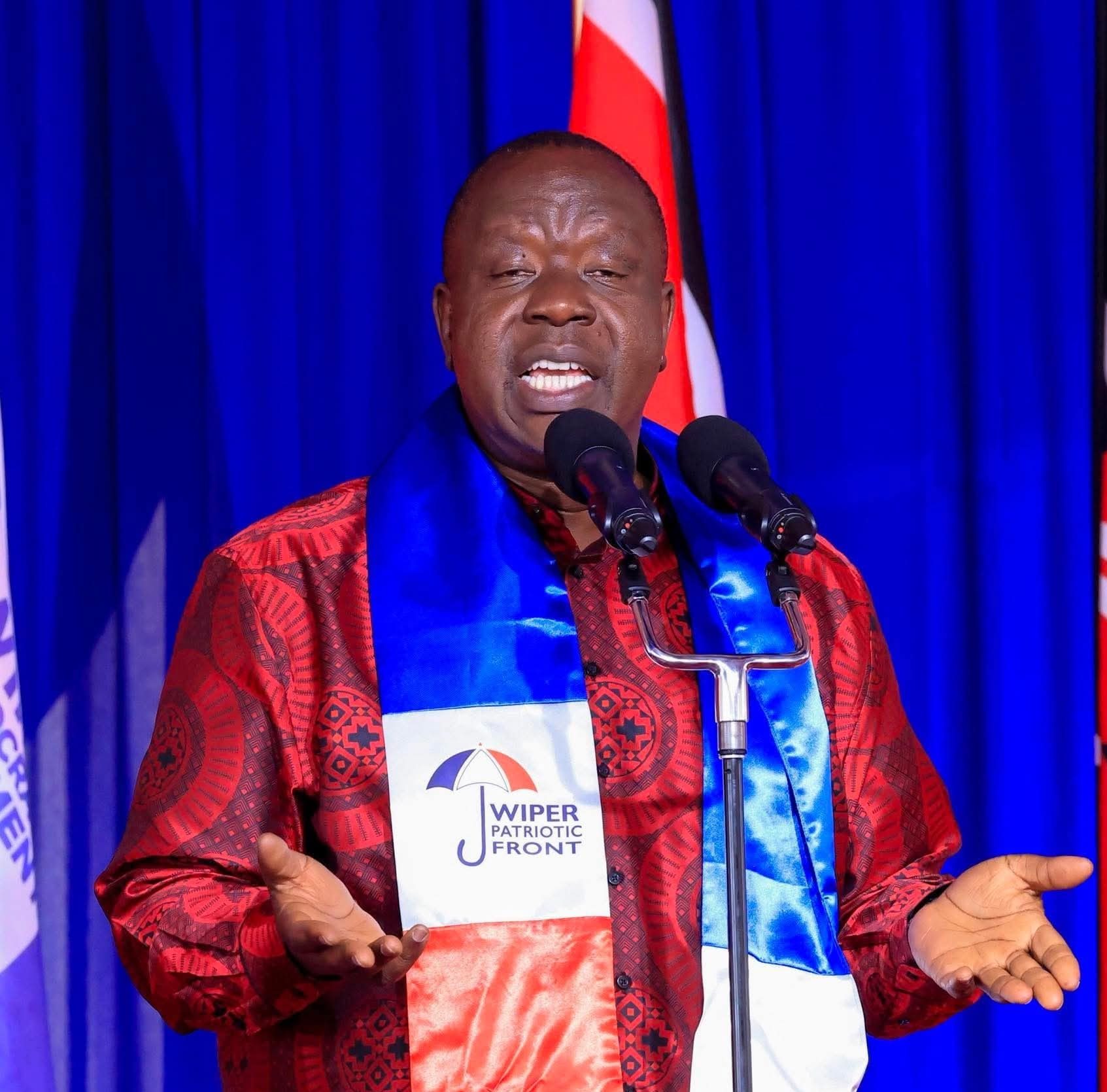
Jubilee Party Deputy Leader Fred Matiang’i has intensified criticism of the government, accusing it of overtaxing Kenyans to plug widening fiscal gaps, rejecting transparency under the International Monetary Fund (IMF) programme, and adopting what he describes as a short-term approach to economic management.
Speaking in Nairobi, Matiang’i argued that the rising tax burden is worsening living conditions for Kenyan workers and eroding public trust in government economic policy.
He further claimed that state interventions have relied on temporary fixes rather than structural reforms, warning that continued pressure on households could deepen inequality and economic strain across sectors.
IMF Programme and Audit Dispute
Matiang’i alleged that Kenya’s exit from the International Monetary Fund programme was linked to disagreements over audit requirements, claiming that the government had resisted financial scrutiny.
He argued that the IMF had pushed for a comprehensive audit process as part of fiscal accountability measures, but suggested that authorities opted out to avoid exposing financial irregularities.
The IMF continues to engage member states through structured support programmes aimed at fiscal discipline, debt sustainability, and macroeconomic stability.
Criticism of Short-Term Economic Management
He further criticised what he termed as “short-termism” in government policy, alleging that authorities rely on temporary interventions such as targeted payments, coercive measures, or political bargaining to address systemic economic challenges.
Matiang’i said such approaches fail to resolve underlying structural issues in taxation, debt management, and public service delivery. He also warned against attempts to divide communities or politicise economic hardship, stating that cost-of-living pressures are felt uniformly across regions.
According to him, sustainable recovery requires long-term planning, institutional integrity, and consistent policy implementation rather than reactive decision-making.
Call for Policy Shift and Transparency Agenda
Outlining an alternative approach, Matiang’i said a future administration should prioritise transparency in public finance, especially in sectors such as energy and petroleum levies.
He proposed stricter accountability in the use of public funds, including clear reporting on road maintenance and petroleum development levies. He also emphasised the need to eliminate conflicts of interest in key economic sectors, arguing that regulators should not participate in commercial activities within the industries they oversee.
Matiang’i maintained that Kenya requires renewed leadership focus on accountability, fairness, and efficient service delivery to restore public confidence in governance and ensure equitable economic growth.