
Sunday, June 28, 2026
Google search engine
Home Blog Page 30

Kalonzo Calls for Unity Following Deadly Tseikuru Incident

0

Wiper leader Kalonzo Musyoka has called for restraint and unity following the killing of seven people in Tseikuru, describing the incident as both tragic and deeply alarming.

In a  statement, the former Vice President stated that the killings, which occurred in broad daylight, should serve as a wake-up call to both leaders and communities. He cautioned that raising tensions through reprisal would simply worsen an already precarious situation.

“What happened in Tseikuru is painful, unacceptable, and deeply troubling. Seven lives lost in broad daylight is not just a tragedy, it is a wakeup call to all of us,” he said.

Call for Calm Amid Rising Tensions
Former VP emphasised the need for immediate de-escalation, urging affected communities to resist the urge for revenge.

He cautioned that retaliatory violence would not deliver justice for the victims, but instead risk plunging the region into a prolonged cycle of conflict.

“Revenge will not bring back those we have lost. It will only deepen the wounds and push us further into a cycle of violence that benefits no one,” he added.

His remarks come amid growing concern over security in the region, with fears that the killings could trigger further clashes if not contained.

Kalonzo Calls for Unity Following Deadly Tseikuru Incident
Leaders Step In to Defuse Crisis
The Wiper leader praised the efforts of regional leaders who have already taken action to solve the issue. He singled out Julius Malombe and Nathif Jama Adam for starting the dialogue, praising their participation as a key step toward restoring calm.

Kalonzo also acknowledged the contributions of MPs, notably Enoch Wambua and Abdul Haji, who are in discussions to resolve the problem.

“These are the kind of steps we must all support,” he noted, stressing the importance of collective leadership during moments of crisis.

Community Dialogue Seen as Key
Beyond political intervention, Kalonzo highlighted the role of local elders in sustaining peace efforts. He urged Wazee from both communities to come together for open dialogue, noting that long-term stability cannot be achieved through force alone.

According to him, community-level engagement remains essential in addressing underlying tensions and rebuilding trust between groups. He also revealed that he is in ongoing communication with leaders from both sides and is prepared to travel to Mwingi to participate in ground-level discussions involving all stakeholders.

Push for Lasting Peace
The Wiper leader concluded his appeal with a broader message on national unity, warning against divisions driven by grief and anger. He stressed that Kenyans must prioritise peace and cohesion, particularly in moments of crisis.

“We must choose peace. We must choose each other. Kenya cannot afford another conflict built on pain and division,” he said.

The incident has once again placed a spotlight on insecurity in parts of the country, with leaders now under pressure to deliver both immediate calm and long-term solutions.


KeNHA alerts Public over Fake Recruitment Scams Linked to Road Projects

0

The Kenya National Highways Authority (KeNHA) has issued a public alert, warning Kenyans about fake recruitment messages circulating in connection with ongoing road projects along the Rironi–Gilgil (A8) and Rironi–Mai Mahiu–Naivasha (A8 South) corridors.

KENHA says that fraudsters are impersonating project officials and sending SMS messages and notices claiming to offer employment opportunities in exchange for payments or personal documents.

Fraudsters Demand Payments and Personal Documents
In a written statement KENHA noted that scammers are requesting applicants to submit personal documents through unofficial email addresses or personal phone numbers, while others are being asked to send money via M-Pesa for alleged application, medical processing, document verification, or recruitment fees.

KeNHA has dismissed these claims, stressing that all recruitment processes linked to the projects are free of charge and not conducted through informal channels.

The Authority outlined several precautions for the public, advising Kenyans not to send money to any individual or group claiming to offer jobs on behalf of KeNHA, the China Road and Bridge Corporation (CRBC), the National Social Security Fund (NSSF), or the project itself.

KENHA further warned against submitting personal documents to unofficial emails, phone numbers, or unauthorized recruitment agents.

KeNHA alerts Public over Fake Recruitment Scams Linked to Road Projects
Verification Through Official Channels Urged
KeNHA has urged members of the public to verify any recruitment information through official communication channels before taking action. Legitimate project-related announcements will only be issued through authorised platforms.

The Authority has encouraged citizens to report suspicious messages, emails, phone calls, or payment requests to the nearest police station, local administration office, or relevant KeNHA or project offices.

KENHA reaffirmed its commitment to protecting the public from fraud and ensuring transparency in all communications related to ongoing infrastructure projects.

It emphasized that no recruitment fees are required at any stage of employment processing and urged kenyans to remain vigilant against increasingly sophisticated scams targeting job seekers.


Millie Odhiambo Rejects Zoning, Calls for Open Democracy in Coalition Politics

0

Suba North MP Millie Odhiambo has firmly rejected calls for zoning in political party nominations, arguing that democracy should prevail within the broader coalition arrangement between ODM and UDA.

Her remarks come amid ongoing internal debates within the political coalition over how constituencies should be shared among allied parties ahead of upcoming elections.

Response to Online Criticism
In a written statement, Odhiambo dismissed criticism of her position, notably online comments implying she was opposed to Homa Bay Governor Gladys Wanga.

She dismissed such accusations as naive and intellectually weak, arguing that debate within a party should not be misunderstood as personal rivalry.

“I find it utterly amusing that when I express a view different from some people in my party, then they send bloggers with a standard ‘you are jealous of Gladys Wanga’ comment,” she said.

“Other than the statement depicting intellectual deficiency, I wonder what you hope to achieve with it.”

She further emphasized that strong women leaders should be celebrated rather than used as tools for political division. According to her, excellence in leadership among women should be viewed as collective progress rather than competition.

“If I am jealous of Wanga, and yet I am superb as a leader, that is good. It means as a woman leader she is doing exceedingly well. That is a plus for us women,” she added.

Millie Odhiambo Rejects Zoning, Calls for Open Democracy in Coalition Politics
Call for Merit-Based Political Competition
Odhiambo has strongly opposed zoning, claiming that it undermines democratic choice and reduces competition within political parties. She requested that all coalition partners be given the freedom to run candidates in all areas.

“I do not support zoning. Let democracy prevail. We are in Broad-based Coalition with UDA. Let them field candidates anywhere,” she stated.

She further noted that elected leaders should be judged based on performance rather than negotiated political allocations, arguing that service delivery should be the primary basis for re-election.

“Let what we have done under our respective mandates be our defender,” she reiterated, signaling a shift toward merit-based political competition.

Her statement is expected to intensify debate within coalition ranks, especially as parties negotiate power-sharing arrangements ahead of 2027.


TVETA Cracks Down on Non-Compliant Institutions in Machakos County

0
The Technical and Vocational Education and Training Authority (TVETA) has stepped up its enforcement operations in Machakos County, sending closure notices to two private training institutes in Yatta Sub-County for failing to fulfill regulatory criteria.

The action indicates a tighter stance by the government as it strives to restore integrity and quality in Kenya’s technical and vocational education sectors.

Enforcement Action Targets Non-Compliance
Digitex Technical Driving College, based in Kithimani, is one of the impacted institutions. Following a recent TVETA compliance audit, the institution was given a 21-day closure notice after scoring only 16% in compliance audit.

TVETA claims that despite past recommendations, the college failed to implement corrective measures. As part of the mandate, the institution must immediately discontinue Technical and Vocational Education and Training (TVET) programs.

It has also been directed to rename and operate only as a driving school licensed by the National Transport and Safety Authority (NTSA), essentially eliminating it from the TVET training framework.

A second school, Dennis Motor Vehicle Training & Driving School in Matuu, was also cited for noncompliance. When the plant was inspected, it had already halted operations.

TVETA Cracks Down on Non-Compliant Institutions in Machakos County

However, TVETA noted that the premises were in a state of disrepair, raising safety and quality concerns. As a result, the authority issued a mandatory 21-day closure notice requiring the complete shutdown of the facility.

The institution must also remove all signage to prevent misleading members of the public into believing it is operational or accredited.

Government Coordination and Public Awareness
To strengthen enforcement on the ground, TVETA engaged the office of the Deputy County Commissioner in Yatta. The collaboration aims to enhance compliance monitoring while also boosting public awareness on the importance of enrolling in accredited institutions.

TVETA emphasized that local administrative support is critical in ensuring that enforcement actions are implemented effectively and that unregistered providers do not continue operating unlawfully.

At the same time, TVETA is increasing sensitization campaigns to guide prospective students and parents in verifying the accreditation status of training institutions before enrollment.

Regulatory Standards and Sector Integrity
The crackdown reflects larger concerns about the rise of inferior training providers in the TVET industry. Non-compliant schools not only impair educational quality, but also run the danger of generating graduates who lack the requisite job market skills.

TVETA emphasized that all schools must follow specified criteria for curriculum delivery, infrastructure, trainer credentials, and student safety requirements.

“Compliance is not optional,” the authority stated, warning that institutions failing to meet regulatory thresholds will face closure or deregistration.

Public Advisory Issued
As part of its enforcement update, TVETA issued a public advisory urging Kenyans to exercise due diligence when selecting training institutions.

Prospective students are encouraged to verify registration and accreditation status through official TVETA channels to avoid enrolling in unrecognized programmes.

The authority maintains that sustained enforcement, combined with public vigilance, is essential in safeguarding the credibility and effectiveness of Kenya’s technical and vocational training system.


GRAMMYs Chief Panos Panay to Visit Kenya in Major Music Industry Push

Panos Panay, President of the Recording Academy is set to visit Nairobi from May 26 to 29, 2026, for formal engagements with the President and other government officials.

The tour aims to improve cultural diplomacy and expand engagement in the global music ecosystem.

The high-level tour emphasizes the rising strategic importance of Africa’s creative economy, with Kenya serving as a crucial gateway for music, talent development, and industrial innovation across the continent.

During his visit, Panay plans to meet with President Ruto to explore practical potential for collaboration in areas including as talent development, creative industry infrastructure, and international market access for Kenyan artists and music professionals.


Engagement with Artists and Industry Stakeholders
Panay’s interactions with Kenyan musicians, producers, and music industry stakeholders will be a key aspect of the tour.

These events are intended to encourage direct communication between global and local music professionals, with an emphasis on increasing cooperation opportunities, skill development, and access to worldwide markets.

The Recording Academy has shown an interest in expanding its influence in Africa by assisting behind-the-scenes people who play an important part in sustaining the global music value chain.

GRAMMYs Chief Panos Panay to Visit Kenya in Major Music Industry Push
Strengthening US –Kenya Music Cooperation through AMMP
The visit also reinforces ongoing cooperation between the United States and Kenya through the American Music Mentorship Program (AMMP).

Launched in 2024 as a partnership between the U.S. Department of State’s Bureau of Educational and Cultural Affairs and the Recording Academy, AMMP connects international music professionals with experienced US based mentors.

The program focuses on developing industry expertise beyond performance, including production, management, and technical roles essential to thriving music markets.

Kenya’s continued participation in AMMP marks a significant milestone, with the country selected for a second consecutive year.

A new cohort is expected to join the program in fall 2026, further deepening professional ties and knowledge exchange between Kenyan music practitioners and global industry leaders.


Education CS orders Disciplinary Action against Alliance Girls Principal over Fee hike

0

Education CS has recommended disciplinary action against the Principal of Alliance Girls High School following allegations of implementing an unauthorized school fees structure that imposed a significant financial burden on parents, in violation of government regulations.

CS directs TSC to initiate disciplinary proceedings
In a written statement dated 29 April 2026, CS Julius Migos directed the Teachers Service Commission (TSC) to initiate disciplinary proceedings against Mrs. Margaret Njeru who serves as Principal of the institution. The directive follows findings from an investigative assessment conducted by the Ministry on 28 April 2026.

According to Ogamba, the inquiry found that the principal oversaw the implementation of a fee structure that charged parents and guardians Ksh 120,179 more than the government-approved limit of Ksh 53,558.

CS Ogamba emphasized that the extra fees were imposed without the Cabinet Secretary’s permission, which violated the legislative criteria for basic education finance.

In the statement, it further stated that the unapproved charges put a significant financial struggle on families and were not sanctioned by the Ministry’s recognized parameters for secondary school fees.


Education CS orders Disciplinary Action against Alliance Girls Principal over Fee hike
Violation of Basic Education Act cited
In the letter addressed to the TSC CEO, Ms. Evaleen Mitei, the Cabinet Secretary emphasized that the principal’s conduct contravened Section 29(2)(b) of the Basic Education Act, 2013.

The provision prohibits the imposition of unauthorized levies and requires strict adherence to approved fee structures in public learning institutions.

Additionally, the Ministry highlighted concerns over the school’s budgeting practices, noting that the principal facilitated the adoption and implementation of a budget containing what it termed “non-essential and unrealistic expenditure items.”

These budgetary decisions, according to the report, contributed to the inflated fees structure and further exacerbated the financial burden on parents.

The Ministry has now recommended that the Teachers Service Commission undertakes appropriate disciplinary action in line with its mandate over teacher conduct and administration in public schools.

It stressed the importance of ensuring compliance with education policies and safeguarding parents from unauthorized financial demands.

“The Principal failed to comply and ensure compliance with the provisions of the Basic Education Act, 2013 and the resultant government policies and directives,” the Cabinet Secretary stated.

The Ministry of Education has also indicated its readiness to provide further information should it be required during the disciplinary process, underscoring its commitment to accountability and governance within the education sector.

Public scrutiny on school fee governance intensifies
The development has sparked renewed attention on financial governance in public schools, particularly regarding fee structures and administrative oversight. It also highlights ongoing efforts by the Ministry of Education to enforce compliance and protect parents from unauthorized levies.

As the matter proceeds to the TSC for review, stakeholders in the education sector are expected to closely follow the outcome, given its implications for school administration and regulatory enforcement nationwide.


PS Bitok Explains Primary School Capitation Structure After Public Concerns

Education PS Julius Bitok has moved to clarify the structure and disbursement of capitation funds for primary schools, following growing scrutiny over funding adequacy and allocation.

In a statement issued, PS Bitok outlined how the annual capitation of Ksh 1,400 per learner is determined and distributed. The clarification seeks to address confusion surrounding recent figures shared in official circulars.

According to Bitok, the Ksh 1,400 capitation per learner is not disbursed at once. Instead, the funds are released in three phases aligned with the school calendar. The National Treasury channels the funds on a termly basis using a 50:30:20 ratio across the first, second, and third terms respectively.

This means that the amount schools receive at any given time reflects only a portion of the total annual allocation.

Breakdown Based on Vote Heads
PS Bitok noted that the capitation amount is calculated from particular spending lines known as vote heads. These are determined using the projected cost of assisting each student over the academic year.

Once funds are received from the National Treasury, the Ministry of Education produces a circular outlining how the funds should be distributed among these vote headings. The allocations are thus determined by the exact amount released in each tranche.

It was observed that the figures now in circulation are based on second-term disbursements. This distinction is crucial since it explains why the figures look lower than the total yearly capitation.


Per Learner, Not Per School

The Ministry also clarified that all figures indicated in the circular are calculated on a per-learner basis, not as lump sums allocated to schools.

For instance, Ksh 95.25 per learner has been designated for learning materials, including textbooks and stationery. Meanwhile, Ksh 93.08 per learner is allocated for school operations such as staff support, maintenance, utilities, and examinations.

These figures, Bitok said, reflect only the second term tranche and should not be interpreted as the total funding available for these categories across the year.

PS Bitok Explains Primary School Capitation Structure After Public Concerns
Addressing Public Concerns
The clarification comes amid public concern from parents and education stakeholders who have questioned whether schools are receiving sufficient funds to sustain operations under the Competency-Based Curriculum (CBC).

Some stakeholders had interpreted the lower figures in the circular as a reduction in capitation, prompting debate over the government’s commitment to funding basic education.

However, the Ministry maintains that the capitation framework remains unchanged. Instead, it attributes the confusion to misinterpretation of partial disbursement figures.

Ongoing Scrutiny on Education Financing
While the clarification provides insight into the mechanics of capitation funding, it is unlikely to fully settle concerns about the adequacy of resources in public schools.

As the debate continues, the Ministry’s explanation offers a clearer picture of how funds flow through the system but also highlights the broader question of whether the current allocation is sufficient to meet evolving educational needs.


Kenya Railways Issues Travel Advisory Amid Heavy Rains

0

Kenya Railways has issued a public notice advising passengers using the Madaraka Express to arrive at their departure stations at least one hour before scheduled travel time.

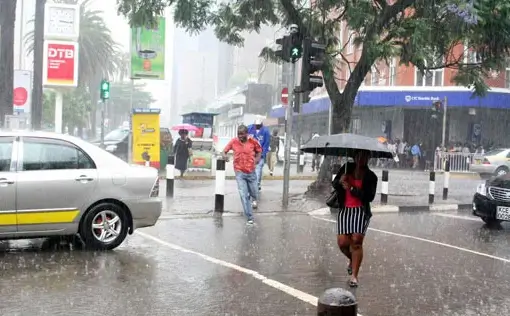
The advisory comes in response to ongoing heavy rains and resulting traffic congestion affecting access to train stations. According to the notice, the measure is aimed at minimizing delays and ensuring passengers complete pre-boarding procedures in good time.

Passengers are now expected to factor in potential road delays when planning their journeys. This includes allocating extra travel time to reach stations, particularly in urban areas where traffic snarl-ups have intensified due to poor weather conditions.

Operational Efficiency Remains a Priority
Despite the current weather issues, Kenya Railways stated that trains will continue to depart exactly as scheduled, with no changes to departure timings.

This underlines Kenya Railways’ timeliness strategy, notably for the Standard Gauge Railway (SGR) service, which has earned a reputation for on-time performance and efficiency.

By encouraging early arrival, the operator hopes to preserve smooth passenger flow during ticket verification, security screening, and boarding procedures. These practices are crucial for ensuring terminal safety and preventing last-minute congestion.

The regulation also incorporates larger logistical planning for the railway system. Late passenger arrivals can interrupt boarding procedures and cause operational issues, particularly during busy travel times.

Kenya Railways Issues Travel Advisory Amid Heavy Rains
Weather Impact Disrupts Transport Networks
The advisory highlights the wider impact of heavy rains on Kenya’s transport infrastructure, flooding and slow-moving traffic have increasingly affected mobility, particularly in key access routes.

The notice serves as both a caution and a coordination tool, aligning passenger behavior with operational timelines to reduce friction across the travel chain.

Passenger Experience and Service Continuity
Kenya Railways noted that early arrival will help ensure a smooth and seamless travel experience. This includes avoiding missed trains, reducing congestion at entry points, and improving overall service delivery.

The SGR remains a critical transport link between Nairobi and Mombasa, handling thousands of passengers daily. Maintaining consistency in its operations is therefore essential not only for customer satisfaction but also for broader economic activity tied to the corridor.

The corporation also reiterated its commitment to service efficiency and punctuality, signaling that despite external disruptions, core service standards will remain intact.

Communication and Customer Support Service
Passengers seeking additional information have been encouraged to contact Kenya Railways through its official communication channels, including customer service lines, email, and digital platforms.

As heavy rains continue, the advice emphasizes the significance of planning and time management for travelers. While rail operations remain steady, access to stations has become the important variable, and travelers must now proceed with caution.


National Police Issue Safety Advisory as Heavy Rains Raise Flood Risks

0

The National Police Service has issued a nationwide safety advisory following persistent heavy rains that have triggered flooding and heightened severe weather risks across several regions.

NPS said it remains on high alert in coordination with other government agencies, citing growing disruption and damage linked to the ongoing rains. It has warned that the situation remains volatile, with conditions likely to worsen if the downpour continues.

Within Nairobi, concern is mounting over rapidly rising water levels in key rivers, including the Nairobi, Mathare, Ngong, Kamiti and Athi rivers. These waterways drain into the larger Athi River system, which is currently running at critically high levels.

Rising River Levels Increase Downstream Risk
The Police Service stated that swollen rivers represent a considerable danger not just within the city but also to downstream settlements.

Even in locations with little or no rainfall, inhabitants remain at danger of floods owing to overflow from upstream catchment areas. This makes the situation especially unpredictable, as flash floods may erupt quickly and without notice.

Authorities have cautioned that such floods might catch inhabitants unknowing, particularly in low-lying and informal areas, where drainage systems are frequently overloaded.

Transport Disruptions and Road Safety Concerns
Several crucial highways are in danger of becoming inaccessible, increasing worries about mobility and access to vital services. The combination of low vision, slippery roads, and unpredictable road conditions has significantly raised the likelihood of an accident.

Motorists and pedestrians have been advised to be extremely cautious. The Police Service particularly advised against driving or walking across flowing water, pointing out that even weak currents can be powerful enough to wash away cars and people.

National Police Issue Safety Advisory as Heavy Rains Raise Flood Risks
Public Urged to Take Preventive Measures
The advisory places strong emphasis on personal responsibility and preparedness among residents. Communities living in flood-prone areas have been advised to remain alert and be ready to relocate to higher ground if necessary. Early action, authorities say, is critical in preventing loss of life.

The public has also been encouraged to stay informed through regular updates from the Kenya Meteorological Department and local authorities. Timely access to weather forecasts and emergency alerts can help residents make informed decisions.

In addition, residents have been urged to follow all community alerts and evacuation instructions without delay, as hesitation could place lives at greater risk.

Multi-Agency Response on High Alert
The National Police Service reaffirmed its commitment to safeguarding lives and property during the ongoing weather crisis.

Working alongside other government agencies, NPS is monitoring the situation closely and remains ready to respond to emergencies as they arise. Emergency response systems have been activated to ensure rapid intervention where needed.

Members of the public have been reminded that emergency assistance is available through the national hotlines 999 and 911.

As heavy rains continue, authorities are urging kenyans to remain vigilant, prioritise safety, and take proactive steps to protect themselves and their communities from the growing threat of floods.


NACADA Extends School Essay Deadline to End-May

The National Authority for the Campaign against Alcohol and Drug Abuse (NACADA) has extended the deadline for its national secondary school essay competition to 29th May 2026, giving students across Kenya more time to participate in the initiative aimed at combating substance abuse.

The extension is in response to student complaints about managing academic and extracurricular activities, like examinations, sports, and everyday study. NACADA acknowledged these pressures, encouraging students to use the extra time to create meaningful and compelling contributions.

“You now have extra days to write your way to victory,” the authority said in its announcement, encouraging students to consult their teachers, refine their ideas, and actively engage in the competition.

Platform for Awareness and Student Voice
The essay competition, which is open to senior secondary school students around the country, seeks to encourage serious discussions on alcohol and drug misuse. It also aims to position young people as major participants in preventative activities in schools and communities.

NACADA highlighted that the effort is more than just writing, it is also a platform for raising awareness, conversation, and advocacy. Students are invited to discuss their thoughts, provide solutions, and educate their peers about the reality of substance use.

The competition aligns with broader national efforts to curb rising cases of drug and alcohol abuse, particularly among young people. By engaging students directly, NACADA aims to foster early awareness and promote responsible decision-making.

NACADA Extends School Essay Deadline to End-May
Encouraging Creativity and Critical Thinking
At its core, the competition promotes creative expression and critical thinking through writing. Students are expected to explore themes related to prevention, peer influence, mental health, and community responsibility.

Teachers are also playing a supportive role, guiding students in research, structuring arguments, and refining their essays. NACADA has encouraged schools to actively participate, noting that the competition can serve as a valuable learning experience beyond the classroom.

The extended deadline is expected to increase participation, particularly among students who may have previously struggled to meet the initial timeline. It also allows for more thoughtful engagement with the subject matter, potentially leading to higher-quality submissions.


National Impact and Long-Term Vision

The NACADA program represents a rising appreciation of young people’s ability to shape societal change. By engaging students in discussions on substance usage, the authority is raising an informed, aware and proactive generation.

The essays are designed to highlight challenges while also presenting unique, youth-driven solutions that can inform policy and community activities.

As the new deadline approaches, students are being reminded that their voices matter. Through this competition, NACADA is not just identifying talented writers it is empowering young advocates in the fight against alcohol and drug abuse.

With weeks now added to the timeline, the message is clear, more time means more opportunity to think, write, and contribute to a healthier, drug-free future.