


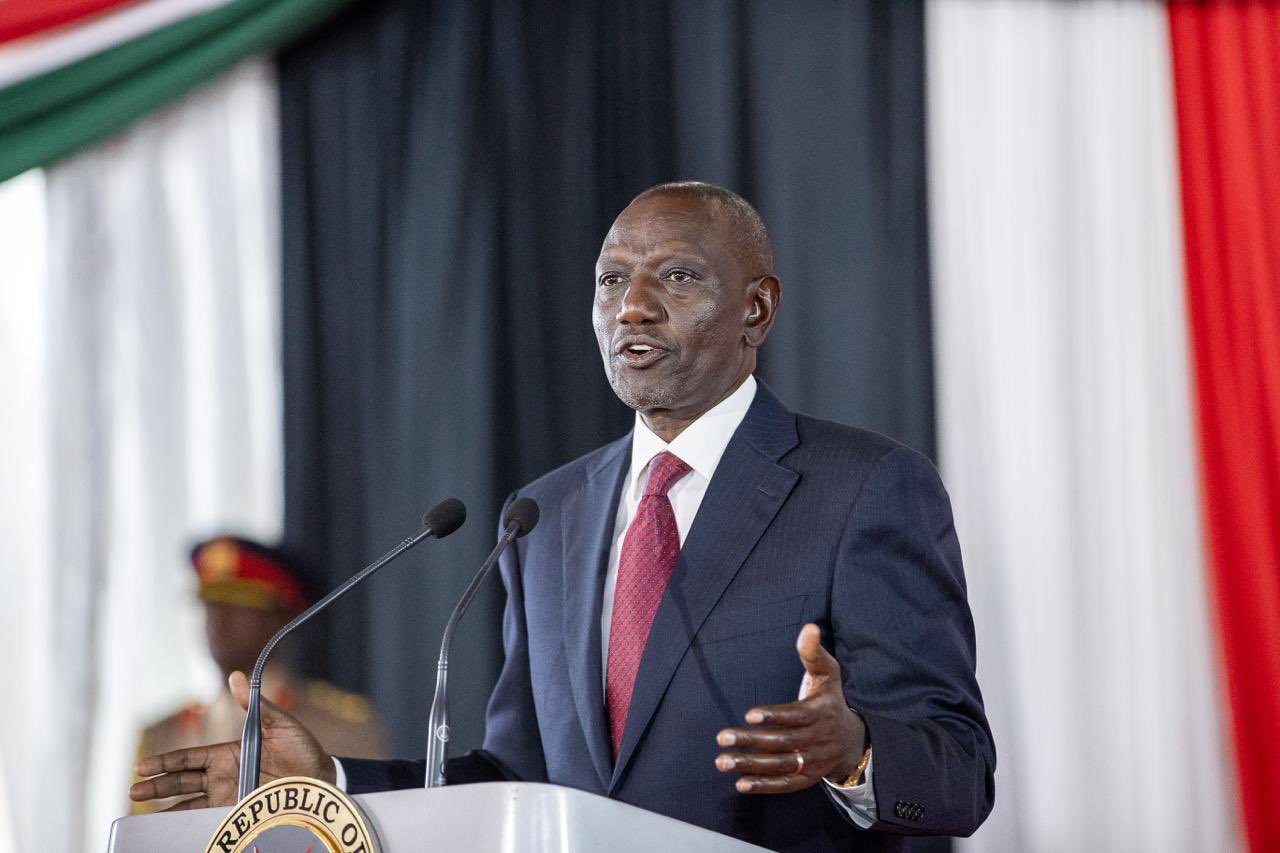
President William Ruto has said that he met transport sector leaders in Mombasa last week to address concerns surrounding fuel availability and pricing, defending his administration’s subsidy approach as a necessary corrective measure to past policy failures.
He said the three-hour engagement revisited the 2022 fuel crisis, when long queues, dollar shortages, and panic buying disrupted supply chains.
President Ruto argued that reckless subsidies had previously cost the country over KSh 150 billion without securing fuel stability, warning against repeating historical mistakes.
Current Fuel Stability and Pricing
The President stated that current interventions have ensured stable fuel availability across petrol stations, contrasting the situation with earlier shortages.
He noted that diesel prices, which would otherwise stand at KSh 273, are currently retailing at KSh 232 due to government subsidies amounting to KSh 88 billion in the last two months.
Ruto added that oil marketers acknowledged the situation after reviewing the facts presented during the meeting, with reports indicating they called off a planned strike following the engagement. He maintained that the decision was not coerced but informed by data and sector realities.
He further described a moment of prayer after the meeting, using it to emphasise national unity and faith-driven governance. Ruto said Kenya’s ability to manage economic pressures reflects a combination of prudent policy choices and belief in collective resilience.
Lessons from Past Economic Disruptions
Concluding his remarks, Ruto urged leaders to learn from historical economic disruptions and avoid policy errors that could destabilise essential sectors such as transport and energy.
The President also framed the subsidy programme as a targeted intervention aimed at stabilising transport costs, noting its role in cushioning households and preventing inflationary pressure across essential commodities linked to fuel prices.
He emphasized that fiscal discipline remains central to his administration’s energy policy, insisting that future subsidies will continue to be guided by data-driven assessments and economic sustainability considerations.
Away from the immediate policy outcomes, the President used the occasion to reinforce his broader governance message, urging national cohesion and resilience in the face of recurring economic shocks.