Michuki Hinga Takes 2WD Victory in Action-Packed AutoX Rally
The engines roared and the dust flew at Stoni Athi in Machakos County as Kenya’s top autocross drivers battled it out in the fifth round of the 2026 Shell AutoX Rally Championship.
Michuki Hinga, alongside navigator Dennis Yaya, emerged victorious in the 2WD Non-Turbo Senior Car category, clocking 10:39 minutes to take the top spot in a competitive field.
The event, organised by 254 Motorsports Club, also saw Ankush Shah claim victory in the 4WD Turbo Car Restricted category with a time of 09:41 minutes, while Eann Bengi won the Cadet Junior 2WD Non-Turbo Buggy category in 10:43 minutes.
A celebration of speed and talent
For Vivo Energy Kenya, which markets Shell products in the country, the championship is as much about the people behind the wheel as it is about speed.
Vivo Energy Kenya Marketing Manager Joanne Nyaga said Shell’s partnership with AutoX is focused on celebrating performance, supporting local motorsport talent and giving fans memorable experiences.
She noted that the fifth round provided another opportunity to showcase Shell’s performance credentials while supporting the passion and talent driving Kenya’s motorsport scene.
Shell backs 2026 AutoX season
Vivo Energy Kenya is the title sponsor of the seven-leg 2026 AutoX Rally Championship, which runs from February to November.
This marks the second consecutive year that Shell has taken up title sponsorship of the championship, following its partnership with AutoX in the 2025 season.
With more rounds still to come, the competition is heating up as drivers chase points, podium finishes and the overall championship glory.
If you have ever wondered what Nairobi orders when Friday evening finally arrives, Glovo’s latest data has an answer: burgers and mostly chicken ones.
New ordering insights from Glovo Kenya show that chicken burgers made up 83.15% of all burger orders in the first half of 2026. Beef followed at 15.36%, while veggie and paneer burgers together accounted for just 1.50%.
The figures come just as Nairobi Burger Week gets underway, offering a fun look at the city’s food habits and the flavours people keep coming back to.
Chicken takes the lead
Nairobi’s love for chicken burgers is pretty clear.
While classic beef burgers still have their fans, chicken has taken a comfortable lead, with familiar names such as KFC, Chicken Inn and Galito’s accounting for a large share of burger deliveries.
At the same time, newer gourmet burger spots are beginning to attract attention. Brands such as Drip Burgers are adding more variety to the scene, suggesting that Nairobians are not only sticking to what they know they are also curious about new takes on an old favourite.
It’s all about the deal
There is another thing Nairobi’s burger orders reveal: people love a good deal.
Glovo’s data shows that Galito’s Juicy Value Burgers Deal was the most-ordered burger product during the first half of the year. Its Buy 1 Get 1 Free offer appears to have been a major draw for customers looking for more food without spending more.
Nairobi Is Definitely a Chicken Burger City
And honestly, who doesn’t love a two-for-one burger deal?
Then came the donut burger
Nairobi’s burger lovers are also willing to have a little fun with their food.
In May, Chicken Inn’s Donut Chicken Burger became the most-ordered individual burger on Glovo. The unusual creation swapped the traditional burger bun for a donut, giving customers something familiar with a very different twist.
It is the kind of food experiment that may sound strange until you see someone else eating it and suddenly you want to try it too.
Friday at 8pm is burger o’clock
The data also reveals when Nairobi is most likely to reach for a burger.
Friday at 8pm is the busiest burger-ordering hour.
It makes perfect sense. The working week is winding down, people are meeting friends, settling in for movie nights or simply deciding that cooking dinner is somebody else’s problem.
That Friday-night craving has become part of Nairobi’s food culture, with delivery apps making it easier to get a favourite meal without leaving the house.
Kilimani and Westlands lead the burger race
When it comes to where the orders are coming from, Kilimani and Westlands are at the top.
Both neighbourhoods have a mix of offices, apartments, restaurants and a lively after-work scene, making them natural hotspots for food delivery.
But the bigger picture is perhaps more interesting. Nairobi’s food culture is changing alongside the way people live. Eating out, ordering in, catching up with friends and trying new restaurants have increasingly become part of the city’s social life.
As Glovo Kenya County Managing Director Caroline Mutuku put it, the ordering data offers a glimpse into everyday Nairobi life from the importance of value to the willingness to experiment with new food.
More than just a burger
Nairobi Burger Week is giving the city another reason to explore its burger scene, with restaurants offering special menus, deals and new creations. The 2026 edition runs through September 6, bringing together restaurants and diners across the city.
And if Glovo’s numbers are anything to go by, there is plenty of appetite for it.
Chicken may be firmly in first place, but Nairobi’s burger culture is becoming more varied, more adventurous and increasingly tied to how the city spends its free time.
So, next Friday at 8pm, if your phone suddenly suggests a burger, just know you are probably not alone.
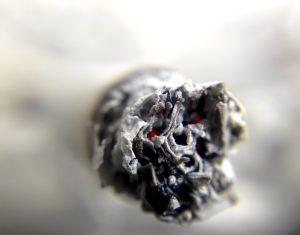
Tobacco Bill Debate: Why Traders Want Kenyans to Have a Bigger Say
A new debate around Kenya’s proposed tobacco control law is putting an old but important question back in the spotlight: who gets to have a say when a law is being made?
Business owners under the Bars, Hotels and Liquor Traders Association of Kenya (BAHLITA) are asking Parliament to give Kenyans more opportunities to weigh in on the Tobacco Control (Amendment) Bill, 2024.
Their concern is not simply about the proposed restrictions. They say the people who will have to deal with the changes every day including traders, retailers and other businesses should be part of the conversation before Parliament makes its final decisions.
The debate has become more relevant as the Bill moves through Parliament, with stakeholders raising questions about everything from nicotine products and flavours to licensing, enforcement and the possibility of increased illegal trade.
Why traders are asking for more public participation
For someone following the debate from a distance, the Tobacco Control Bill may sound like another piece of legislation being discussed in Parliament.
But for a shop owner, bar operator, hotelier or retailer, changes to the rules can have a direct impact on how they run their business.
BAHLITA says its members should therefore be given an opportunity to explain what the proposed changes could mean on the ground.
The association represents more than 54,000 traders across the country, according to recent statements from its Secretary General Boniface Gachoka.
The group argues that public participation should not be limited to meetings in Nairobi or consultations with a small group of stakeholders. It wants wider engagement across the country so that people affected by the proposed law can make their views known.
That call comes as similar concerns have been raised by traders in different parts of the country.
Tobacco Bill Debate: Why Traders Want Kenyans to Have a Bigger Say
What is the Bill trying to change?
The Tobacco Control (Amendment) Bill, 2024 seeks to update Kenya’s tobacco control laws to cover newer nicotine products, including vapes and nicotine pouches.
It also proposes tighter controls around the production, sale, advertising and use of tobacco and nicotine products.
Some of the proposed restrictions have attracted particular attention, including plans to restrict or ban certain flavours in nicotine products.
Supporters of stronger controls argue that tighter regulation is important, particularly when it comes to protecting young people from products that could encourage nicotine use.
Traders, however, have raised concerns about what could happen if legal products become harder to access.
The concern about the black market
One of the biggest issues raised by BAHLITA is illicit trade.
The association argues that if certain products are pushed out of the legal market without addressing consumer demand, illegal sellers could fill the gap.
That could create problems for both businesses and consumers.
A customer looking for a product may simply turn to an unregulated source, while a legitimate shop that follows the rules could lose business.
There are also concerns about lost tax revenue and the difficulty of controlling products that enter the market outside the formal system.
This is why traders are calling for the legislation to look beyond simply adding more restrictions.
They want Parliament to consider how the rules would actually work once they reach shops, bars, hotels and other businesses across the country.
It is not just a business conversation
The discussion also touches on something much bigger than the tobacco industry: how Kenya makes laws that affect everyday life.
Public participation is part of Kenya’s constitutional framework. Article 10 recognises public participation as one of the country’s national values, while Article 118 requires Parliament to facilitate public participation in its legislative work.
For BAHLITA, that means affected communities should not simply hear about a law after the major decisions have already been made.
The association wants the National Assembly to keep the process open and allow different groups to present their experiences and concerns.
Finding the middle ground
There are clearly different interests involved.
There is the need to protect young people and public health.
There is the need to regulate newer nicotine products that were not fully covered by Kenya’s older tobacco laws.
And there is the reality of thousands of businesses that operate within the legal economy and depend on regulated products and customers for their livelihoods.
Finding a solution that takes all these concerns seriously will not be easy.
But that may be exactly why wider conversations are important.
The debate does not have to be about choosing between public health and business interests. It can also be about finding rules that protect people, make enforcement practical and prevent legitimate businesses from being pushed aside by illegal operators.
What happens next?
The Tobacco Control (Amendment) Bill has already generated strong reactions from different sides of the debate and continues to attract attention as it moves through Parliament.
BAHLITA is now asking lawmakers not to repeat what it describes as limited consultation during the earlier stages of the Bill.
For ordinary Kenyans, the bigger lesson may be that public participation is not only about showing up at a meeting.
It is about having the opportunity to explain how a proposed law could affect your work, your business, your community or your everyday life and knowing that someone is listening.
As Parliament considers the next steps on the Tobacco Control Bill, many traders are hoping their voices will be part of that conversation this time around.
How Kenyan Football Fans Can Use Statistics Before Betting
Football betting has become increasingly popular among sports fans in Kenya. With access to local and international competitions, Kenyan football fans can bet on matches from leagues such as the English Premier League, UEFA competitions, and other major football tournaments.
However, making betting decisions based only on team popularity, emotions, or personal loyalty can be risky. Using statistics can help bettors make more informed decisions.
Why Football Statistics Matter
Football is unpredictable, and no statistic can guarantee a winning bet. However, statistics provide useful information about how teams have performed in different situations. Instead of simply choosing the team with the bigger name, bettors can use data to understand recent form, goalscoring patterns, defensive performance, and home or away records.
Statistics can therefore help turn a betting decision from a guess into a more structured assessment.
Analyze Recent Team Form
One of the easiest statistics to examine is recent form. Before placing a bet, look at how both teams have performed in their last five to ten matches.
Consider the number of wins, draws, and defeats, as well as the goals scored and conceded. A team that has consistently won its recent matches may have strong momentum, while a team experiencing several defeats could be struggling.
However, recent form should not be viewed in isolation. The strength of the opponents faced during those matches is also important.
How Kenyan Football Fans Can Use Statistics Before Betting
Check Home and Away Performance
Home advantage can have a significant influence on football matches. Some teams perform exceptionally well at home but struggle when playing away.
Before betting, compare the home team’s home record with the visiting team’s away record. Look at wins, draws, defeats, goals scored, and goals conceded in those specific situations.
This can provide more useful information than looking at a team’s overall league position alone.
Study Goals and Scoring Trends
Goals are particularly important for bettors interested in markets such as Over/Under and Both Teams to Score.
Check how frequently each team scores and concedes. You can also examine how often their matches finish with more than 1.5 or 2.5 goals.
For example, if both teams regularly score and concede goals, the Both Teams to Score market may deserve further consideration. Similarly, teams involved in consistently high-scoring matches may be worth analyzing for Over 2.5 Goals markets.
These statistics should be viewed as indicators rather than guarantees.
Look at Expected Goals and Shots
Expected Goals, commonly known as xG, can provide additional insight into a team’s attacking performance. It estimates the quality of scoring opportunities created during matches.
A team may have several poor results while still creating many good chances. Conversely, another team might be winning regularly despite creating relatively few opportunities.
Shots, shots on target, big chances created, and possession can also help explain how a team is performing beyond the final score.
Consider Injuries and Team News
Statistics become more useful when combined with current team information. Before placing a bet, check whether important players are injured or suspended.
The absence of a key striker, goalkeeper, or defender can significantly affect a team’s performance. Line-up changes, fixture congestion, and player rotation can also influence the outcome.
Compare Statistics With Betting Odds
Another important step is comparing your statistical assessment with the available odds. A team may have a strong chance of winning but offer very low odds, meaning the potential return may not justify the perceived risk.
Instead of asking only which team is likely to win, bettors should consider whether the available odds represent reasonable value based on the information available.
Use Reliable Information
Kenyan football fans should use reliable sources when researching statistics. Match statistics, official team announcements, competition information, and reputable sports platforms can provide valuable data.
Technology has also made research easier. Fans can use their smartphones to check team form, fixtures, player news, statistics, and betting markets before making decisions. Those looking for a Kenyan betting platform can visit the official JetBet site and combine the available markets with their own research.
Fans can also explore JetBet Kenya when reviewing football betting options, while remembering that betting outcomes are never guaranteed.
Avoid Emotional Betting
Football loyalty can influence betting decisions. Supporting a particular club does not necessarily mean that the team is the best statistical choice for every match.
Using statistics encourages bettors to focus on evidence rather than emotions or rivalry.
Bet Responsibly
Statistics can improve the way football fans analyze matches, but they cannot eliminate uncertainty. Injuries, tactical changes, refereeing decisions, unexpected mistakes, and other factors can influence results.
Kenyan football fans should therefore use statistics as a research tool rather than a guarantee of profit. Set a betting budget, avoid chasing losses, and treat sports betting as entertainment.
By combining recent form, home and away records, goalscoring trends, xG, player availability, and betting odds, football fans can approach their betting decisions in a more informed and disciplined way.
Java House Opens Second Thika Branch as the Town Grows Into a Bustling Urban Hub
Thika is changing, and Java House wants to be part of that change.
The restaurant brand has opened its second branch in the town, this time at Shell Makongeni, bringing its familiar coffee, food and social space closer to residents as Thika moves towards becoming Kenya’s sixth city.
The new outlet is Java House’s 111th branch in East Africa and comes two years after the brand first opened in Thika.
For a town that has long been known for its industrial base, Thika is developing a different side too. New residential developments, schools, universities, businesses and services are bringing in a growing and increasingly youthful population.
And with that growth comes a changing lifestyle.
People are looking for places where they can grab a coffee before work, meet friends, have a meal, catch up on emails or simply spend a little time away from home.
That is the space Java House hopes to fill.
Growing with Thika
Speaking during the opening, Naima Hassan, Java House Africa Chief Operations Officer, said the new branch reflects the changes taking place across the town.
“We are witnessing a new phase of urban growth in Thika,” she said, pointing to the town’s expanding population and growing residential and commercial developments.
The company first arrived in Thika in 2024 and says the response from residents encouraged it to return with a second location.
“We first came into Thika in 2024, and the town received us with open arms. Now we are returning for our second branch in what will soon become a city,” Hassan said.
The new location at Shell Makongeni is positioned to serve residents and people passing through one of the town’s growing areas.
Java House Opens Second Thika Branch as the Town Grows Into a Bustling Urban Hub
More Than Just a Coffee Stop
Thika has traditionally been associated with factories and manufacturing, but its economy has become increasingly diverse.
Education, banking, retail, hospitality and other services now form an important part of the town’s daily life.
Its location also gives it an advantage.
With connections to Nairobi through the Thika Superhighway, as well as railway and road links to the Central Highlands and northeastern Kenya, Thika has continued to attract people and businesses.
The town’s population was placed at 284,727 in figures presented to the Senate committee that considered its application for city status.
As more people settle, work and study in Thika, the way they spend their free time is changing too.
Restaurants, cafés and other lifestyle spaces are becoming part of the experience of living in a growing urban centre.
For Java House, that presents an opportunity to become part of everyday life in the town rather than simply another place to eat.
“Beyond buildings and infrastructure, urban growth is about how people experience and interact with their city,” Hassan said.
Java House Keeps Expanding
The Thika opening is part of Java House’s wider expansion across East Africa.
Founded in Kenya in 1999, the brand has grown from its original focus on gourmet coffee into a casual dining business with 111 outlets across 18 cities in Kenya, Uganda and Rwanda.
It has also expanded its portfolio through brands including Planet Yoghurt, 360 Degrees Pizza and Kukito.
Beyond its restaurants, Java House says its foundation supports initiatives involving local farmers, artists and school feeding programmes, including its partnership with Food4Education.
For Thika residents, however, the newest branch is likely to be judged by something much simpler: whether it becomes one of those places people naturally find themselves returning to.
And as Thika gets closer to city status, Java House is hoping to grow alongside it.
Think about how quickly mobile money became part of everyday life. Today, sending money, paying a bill, buying something from a small shop or running a business from a phone feels completely normal.
That is part of what makes Kenya’s digital story interesting. Some of the country’s biggest technology successes were not copied from somewhere else. They grew out of problems Kenyans needed to solve.
Now, as artificial intelligence and other new technologies begin changing the way we work and live, Kenya faces a similar moment.
Should we simply follow what other countries are doing, or should we take the lessons that make sense and create our own way of doing things?
Fred Waithaka, Safaricom’s Director of Regulatory and Public Policy, believes Kenya should do the latter.
Kenya has always had its own digital story
There is a reason mobile money took off so strongly in Kenya.
For many people, the mobile phone was more accessible than a traditional bank. Small businesses needed simple ways to receive payments. Families needed an easy way to send money to one another. And millions of people were already comfortable using their phones for everyday communication.
The technology fitted the way people lived.
That is an important lesson as Kenya looks at what comes next.
The country’s digital economy is expected to keep growing, with technology already playing a major role in business, finance, communication and access to services.
Safaricom’s own evolution also reflects how quickly this space is changing. M-PESA, launched in 2007, has grown from a mobile money service into a much wider financial and digital ecosystem.
The next chapter could be even bigger.
AI is changing the conversation
Artificial intelligence is no longer something that only belongs in science-fiction movies or big technology companies.
People are using AI to write, learn, create images, analyse information and make everyday tasks easier. Businesses are also beginning to explore how AI can improve customer service, payments and operations.
Kenya is therefore having to think about how these technologies should be managed.
And there is plenty to learn from other countries.
Europe, for example, has developed major rules around artificial intelligence and digital platforms. Such frameworks can offer useful ideas about safety, consumer protection and accountability.
But Kenya is not Europe.
A Kenyan student using affordable mobile data, a small trader running a business through their phone and a European corporation operating in a highly digitized market do not have the same needs.
So copying rules word for word may not always be the answer.
Sometimes the basics matter more
There is also a temptation to talk about the future while forgetting that many people are still trying to get properly connected to the present.
For some Kenyans, the biggest technology challenge is not how to use AI.
It is the price of a smartphone.
Or the cost of data.
Or unreliable connectivity.
Or simply not knowing how to use some of the digital services that are already available.
That is why Kenya’s digital future has to be about more than the latest technology.
It also has to be about making sure ordinary people can participate.
Affordable devices, reliable internet, digital skills and good infrastructure may not sound as exciting as artificial intelligence, but they can make a much bigger difference to someone’s everyday life.
The government has also recognized the importance of expanding digital infrastructure, skills and access as part of the country’s wider digital transformation agenda.
We don’t have to get everything right on day one
One interesting idea is giving new technologies room to be tested before creating permanent rules around them.
This is where regulatory sandboxes come in.
The concept is fairly simple: allow businesses to test new products or ideas within a controlled environment while regulators observe what works, what doesn’t and where the risks might be.
That can be particularly useful in technology because things change so quickly.
By the time a rule is written, approved and implemented, the technology itself may already have moved on.
Testing and learning can help regulators keep up without unnecessarily slowing down innovation.
Kenya Must Find Its Own Path in the Digital Age
Kenya can teach too
Perhaps the most important part of this conversation is remembering that Kenya is not always the learner.
Sometimes, the country has something to teach the rest of the world.
M-PESA is probably the clearest example.
What began as a solution designed around everyday Kenyan needs grew into one of the world’s best-known mobile money success stories. Safaricom itself describes M-PESA as a platform that has expanded beyond simple money transfers into payments, financial services and wider digital opportunities.
That experience should give Kenya confidence as it enters the AI era.
Instead of always asking, “What are other countries doing?”, perhaps we should also ask, “What do Kenyans actually need?”
How can AI help a small business keep track of its money?
How can technology make learning easier for a student?
How can digital services make healthcare more accessible?
How can a farmer get useful information without needing to understand complicated technology?
Those are the kinds of questions that can lead to solutions that work not just in Kenya, but across Africa.
The future should feel Kenyan
Kenya does not need to choose between learning from the world and doing things its own way.
There is plenty of value in watching what other countries are getting right. But there is just as much value in understanding what works for Kenyan people.
After all, some of Kenya’s most successful digital ideas came from doing exactly that.
The next big innovation may not necessarily be the one with the most impressive technology.
It could be the one that solves an ordinary problem in a simple way.
As Kenya moves deeper into the digital age, perhaps the goal should be straightforward: take the good ideas from everywhere, adapt them to our reality and create solutions that actually make life better.
Because Kenya’s digital future does not have to look like anyone else’s.
Serie A Is Back: Inter Begin Title Defence as Milan, Napoli and Juventus Chase Glory
The wait is over. Italian football is back, and the opening weekend of the new Serie A season already has plenty to get fans talking.
Inter Milan return as champions, but their title defence begins with a familiar problem: everyone wants to knock them off the top.
The Nerazzurri welcome Monza to San Siro on Saturday as new manager Cristian Chivu begins his first league campaign in charge. The former Inter defender knows the pressure that comes with taking over the champions and admits his team is still finding its rhythm.
“We’re the team to beat,” Chivu said, while acknowledging that Inter still have work to do before reaching their best.
That makes the opening game an interesting one. Inter have the status of champions, but Chivu’s first few weeks will be about finding the right balance and making his ideas work in a competitive setting.
Napoli Have the Summit in Their Sights
Napoli will also be looking to start strongly when they travel to Genoa.
After winning the Scudetto two seasons ago, Napoli will be eager to return to the top of Italian football. An away trip on the opening weekend is rarely straightforward, however, and Genoa will have every reason to make life uncomfortable for the visitors.
The result could provide an early indication of whether Napoli are ready to mount another serious title challenge.
Milan Start a New Chapter
Sunday brings one of the weekend’s most intriguing fixtures when Torino host Milan.
Milan enter the season with renewed expectations under Ruben Amorim, who arrives with plenty to prove after a disappointing previous campaign.
The Portuguese coach has already given Milan fans something to smile about after guiding the club to a 4-2 pre-season victory over his former side Manchester United.
For Amorim, there is no awkwardness about facing his old club.
“It’s a normal game,” he said, insisting that his focus is now firmly on Milan.
The real test begins when the points count. Milan will be expected to compete near the top of the table, and an away victory in Turin would be an encouraging way to begin.
Serie A Is Back: Inter Begin Title Defence as Milan, Napoli and Juventus Chase Glory
Juventus Look to Make a Statement
Juventus also begin their campaign away from home, travelling to Frosinone on Sunday.
The Bianconeri remain one of the biggest names in Italian football and will be expected to challenge towards the top of the table.
Frosinone, however, will see the fixture as an opportunity to make an early statement. An upset against Juventus would immediately turn heads around the league.
Lazio Need a Response
Lazio head into the opening weekend with a very different mood.
Their competitive season got off to a difficult start after they suffered a shock 2-0 home defeat to Serie B side Mantova in the Coppa Italia.
Coach Gennaro Gattuso did not hide from the disappointment.
“We took a punch to the face,” he admitted, taking responsibility for the result.
Lazio will have little time to dwell on it, with a trip to Bologna awaiting them on Monday.
Roma and Fiorentina Meet in Early European Battle
Monday’s other major fixture sees Roma welcome Fiorentina.
Both sides have ambitions of challenging for European football, with the Champions League places likely to be particularly competitive this season.
An early victory could therefore prove valuable, even if the final league positions remain many months away.
Opening Weekend Fixtures
The first round also features Udinese against Como and Parma against Cagliari on Saturday.
Sunday sees Venezia take on Lecce, while Atalanta welcome promoted Sassuolo.
The weekend concludes on Monday with Bologna hosting Lazio and Roma facing Fiorentina.
The opening fixtures will not decide the Scudetto, but they could offer the first clues about who is ready for the long race.
Inter have a crown to protect. Napoli want it back. Milan are looking to rebuild their reputation, while Juventus will be hoping to return to the summit.
And with a full season ahead, Serie A is already promising plenty of drama.
Where to Watch in Kenya
All times are East Africa Time (EAT).
Saturday, 22 August
18:30 — Udinese vs Como
18:30 — Inter Milan vs Monza
20:45 — Parma vs Cagliari
20:45 — Genoa vs Napoli
Sunday, 23 August
18:30 — Venezia vs Lecce
18:30 — Frosinone vs Juventus
20:45 — Torino vs Milan
20:45 — Atalanta vs Sassuolo
Monday, 24 August
18:30 — Bologna vs Lazio
20:45 — Roma vs Fiorentina
Selected matches will be broadcast live on SuperSport Football, SuperSport Africa 2, SuperSport Maximo 360 and SuperSport Variety.
20 African Entrepreneurs Arrive in Nairobi for Africa’s Business Heroes Semi-Final
From healthcare and fintech to climate technology and agritech, 20 entrepreneurs from across Africa are in Nairobi this weekend, hoping to secure a place in the Africa’s Business Heroes 2026 grand finale.
The entrepreneurs are taking part in the semi-final of the Africa’s Business Heroes (ABH) Prize Competition, which is being held in Nairobi from August 21–22.
For many of them, the journey to this stage began with an application submitted alongside thousands of other entrepreneurs across the continent.
This year, ABH received more than 24,000 applications from all 54 African countries. The 20 entrepreneurs who made it to the semi-final represent 12 countries and 11 sectors, with their businesses collectively generating about $85 million in revenue in 2025.
Now, they have two days to convince a panel of investors, business leaders and experienced entrepreneurs that their businesses deserve a place among the final 10.
Beyond the Pitch
While the semi-final is ultimately about securing a place in the grand finale, the conversations around the competition are increasingly focused on what it takes to build businesses that can survive and grow in Africa’s changing business environment.
Kome Oruade-Etim, Global Programme Manager for Acumen Angels and a judge in this year’s competition, said entrepreneurs are facing increasing pressure to build businesses that are commercially sustainable while also addressing real social and environmental challenges.
She pointed to sectors such as healthcare, energy, education and technology as areas where African entrepreneurs have an opportunity to tackle some of the continent’s most persistent challenges.
For her, the most exciting innovations are those that adapt technology to the realities of African communities.
“How do you bring technology to where people are at as opposed to the other way around?” she asked.
20 African Entrepreneurs Arrive in Nairobi for Africa’s Business Heroes Semi-Final
Know Your Business
For entrepreneurs standing before the judges, having a good idea is only part of the equation.
Abraham Mutian, CEO and co-founder of Kuza Point and a 2025 ABH runner-up, encouraged the semi-finalists to make their stories easy to understand and back their pitches with strong financial knowledge.
“Sharpen your story. Know your numbers. Articulate them clearly,” he advised.
But he also encouraged the entrepreneurs to look beyond the formal judging process.
The Nairobi gathering brings together entrepreneurs, investors, mentors, potential customers and business leaders, creating opportunities for connections that could continue long after the competition ends.
“Don’t just exchange business cards, build relationships,” Mutian said.
Can the Business Go Further?
For Wandia Gichuru, co-founder and CEO of Vivo Fashion Group and one of this year’s judges, one of the questions entrepreneurs need to answer is whether their businesses have room to grow beyond their current markets.
“The scale of the business matters,” she said.
“Is this something that you’re building that can take you much wider, much further? Can it go beyond the borders that you’re in now?”
That question is particularly relevant for a competition bringing together entrepreneurs from different parts of the continent, each operating in markets with their own opportunities and challenges.
Kenya Among the Contenders
Kenya is represented by four entrepreneurs at this year’s semi-final.
They are Ikechukwu Anoke of Zuri Health, Naom Monari of Bena Care, Joseph Mungai of AceleAfrica and Louisa Gathecha of Bottle Logistics East Africa.
They are joined by entrepreneurs from Egypt, Nigeria, Morocco, Ethiopia, South Africa, Rwanda, Tanzania, Benin, Côte d’Ivoire, Madagascar and Ghana.
Their businesses span areas including agritech, healthcare, renewable energy, manufacturing, fintech, education, climate technology and technology.
Nairobi to Kigali
The Nairobi semi-final marks a return to the city for Africa’s Business Heroes. Nairobi hosted the competition’s inaugural semi-final in 2019.
This year’s finalists are competing for more than recognition. The ABH Prize Competition is a philanthropic initiative of the Alibaba Foundation that provides $1.5 million in annual grant funding to African entrepreneurs, alongside mentorship, visibility and access to a wider business network.
By the end of the Nairobi semi-final, 10 entrepreneurs will earn their place in the grand finale, scheduled to take place in Kigali in December.
For the 20 entrepreneurs currently pitching their ideas, however, the Nairobi experience is already about more than winning.
It is a chance to put their businesses in front of people who could help them grow, find new markets and turn promising ideas into companies capable of making an even bigger impact across Africa.
Bupa Healthy Cities Challenge Records More Than 17 Million Steps in Kenya
A month of walking has brought together health, community and environmental action, with participants in Kenya clocking more than 17 million steps through the Bupa Global Healthy Cities Challenge.
The inaugural Kenya edition of the challenge recorded a total of 17,012,696 steps from Bupa employees, customers, brokers and partners.
The month-long initiative wrapped up with a community walk at Karura Forest, where 130 participants came together to celebrate healthier lifestyles and the power of collective action.
Beyond counting steps, the challenge was designed to encourage people to become more physically active while generating charitable funding through the Bupa Foundation.
Healthy Cities is part of Bupa’s global movement focused on creating healthier and more climate-resilient cities. The initiative recognizes that rising temperatures, air pollution and limited access to green spaces can increasingly affect people’s wellbeing, particularly in urban areas.
More Than Just a Walk
For Bupa, the Kenya challenge builds on several community-focused initiatives aimed at improving health and wellbeing.
In recent years, the organization has supp orted medical outreach programmes through its partnership with Lifecare and worked with Griot Impact on community borehole projects aimed at improving access to clean water.
Bupa is also exploring further opportunities to support environmental conservation and healthier communities, including a potential collaboration with Friends of Karura Forest.
The focus reflects a growing understanding that health is influenced by more than access to healthcare. The environment people live in, the spaces available for physical activity and access to basic resources can all contribute to healthier communities.
Bupa Healthy Cities Challenge Records More Than 17 Million Steps in Kenya
Every Step Counts
Uditha Jayaratne, CEO & Principal Officer, Kenya and Managing Director, Africa, said the initiative demonstrated how personal wellbeing and environmental responsibility can work together.
“In a changing climate, supporting people’s health and protecting our environment goes hand in hand,” he said.
According to Jayaratne, every step recorded during the challenge contributed towards funding for greener and healthier communities while encouraging participants to adopt healthier lifestyles.
He also described the initiative as an expression of Bupa’s wider purpose of helping people live longer, healthier and happier lives while contributing to a better world.
A Global Movement
The Kenya challenge forms part of a wider Bupa Healthy Cities movement that has expanded internationally since 2023.
Globally, the initiative has helped unlock more than KSh 1.4 billion for projects focused on bringing nature back into urban environments and has reached more than one million people across over 50 cities in 24 countries.
The Kenya edition adds another chapter to that journey, bringing together people from across Bupa’s network around a simple idea: healthier people and healthier cities can be built through everyday choices and collective action.
With more than 17 million steps recorded in just one month, the challenge has shown that even a simple walk can become part of something much bigger.
Premier League Opens Up Referee Decisions as Fans Get a Closer Look at VAR
Premier League fans are set to get something they have been asking for: a clearer look at how controversial referee and VAR decisions are judged.
The Premier League is introducing a new level of transparency this season by publishing the full judgements of its Key Match Incidents (KMI) Panel.
The move means supporters will no longer have to rely solely on post-match debates, club leaks or pundit analysis to understand whether a major decision was considered correct.
The KMI Panel has been reviewing major incidents since the 2022-23 season, but its full judgements have previously remained private.
Now, fans will be able to see the panel’s assessment of key incidents involving goals, penalties, red cards and VAR decisions.
What Actually Happens Behind the VAR Screen?
The KMI Panel meets every week to examine major incidents from Premier League matches.
It has five members, including three former players and coaches, alongside representatives from the Premier League and Pro Ref, the body responsible for refereeing.
The panel first assesses the decision made by the on-field officials before considering the VAR’s involvement.
And there is an important distinction.
A referee can be judged to have made the wrong decision while the VAR can still be considered correct for not intervening because VAR operates under the “clear and obvious” threshold.
The panel also considers incidents that cannot be reviewed by VAR, including situations involving a missed second yellow card.
A simple majority is required for the panel to decide whether a decision was correct.
The judgements also include comments explaining why the panel reached its conclusion.
Fans Will Hear More From Officials
The Premier League is also changing how it communicates individual decisions.
Selected direct quotes from referees and VAR officials will be shared through the Premier League’s Match Centre account on X, as well as the league’s website and app.
Instead of simply explaining what happened, the updates will include the officials’ own reasoning.
That could mean hearing why a referee awarded a penalty or understanding why a VAR decided that an incident did not meet the threshold for intervention.
The league is also expanding its use of RefCam, with selected broadcasts including audio of conversations between referees and players.
The audio will not be broadcast live and will not include conversations between referees and VAR officials. It is expected to be used once or twice during each round of fixtures.
VAR Errors Fell Last Season
The new transparency measures come as the Premier League continues efforts to improve officiating.
According to judgements from the 2025-26 season seen by BBC Sport, the KMI Panel identified 25 VAR errors.
That was an increase from 18 in the previous season, but still below the 31 errors recorded in 2023-24 and 38 in 2022-23.
The judgements are also used to determine performance-related payments for referees at the end of the season.
Premier League Opens Up Referee Decisions as Fans Get a Closer Look at VAR
Which Clubs Were Most Affected?
The KMI data for the 2025-26 Premier League season shows Chelsea with the highest positive net balance, recording four errors in their favour and none against them.
Arsenal followed with three errors in their favour and none against, while Bournemouth recorded four in their favour and two against.
At the other end, Crystal Palace had three errors against them and none in their favour, giving them the lowest net figure of -3.
Everton and Brighton & Hove Albion each recorded a net figure of -2.
Liverpool, Manchester United and several other clubs also finished with more errors against them than in their favour.
The VAR Conversation Continues
Despite the new measures, one major piece of the puzzle remains off-limits.
The International Football Association Board (IFAB), which sets the laws of the game, does not currently allow live broadcasting of conversations between VAR officials and referees.
The Premier League and Pro Ref say they will continue discussions with IFAB about whether more VAR communication can eventually be made available to the public.
For fans, the changes could make those controversial moments a little easier to understand.
Rather than simply arguing over whether a referee “got it right”, supporters will increasingly be able to see how the decision was reached, how the KMI Panel judged it and why VAR did or did not get involved.
And in a game where a single decision can change an entire weekend, knowing what happened behind the whistle could make the conversation a little less about speculation and a little more about the facts.